Hydrochloric Acid → 1H-Imidazole-4-carboxaldehyde, 5-chloro-2-propyl-
Reaction equation

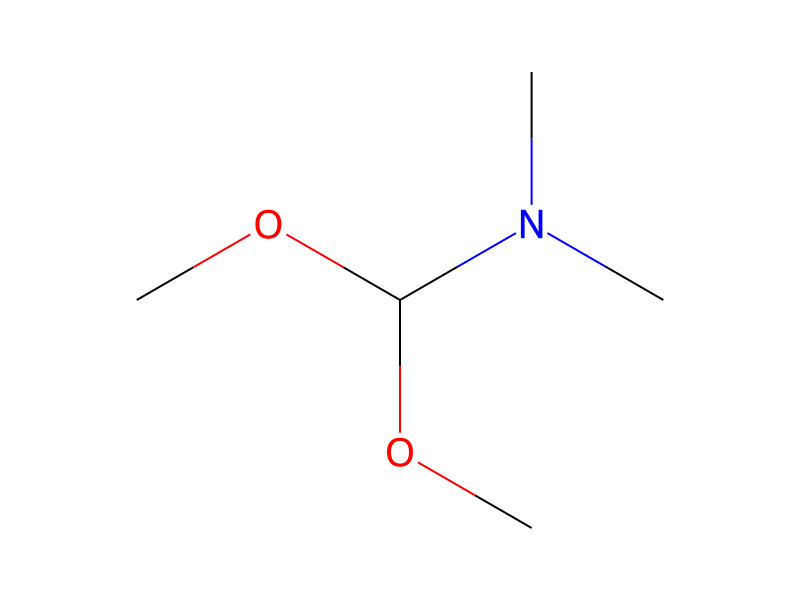
[Cl:1][C:2]1[NH:6][C:5]([CH2:7][CH2:8][CH3:9])=[N:4][CH:3]=1.[CH3:10][O:11]C(N(C)C)OC.C(N(CC)CC)C.Cl.[OH-].[Na+]>ClC1C=CC=CC=1>[CH2:7]([C:5]1[NH:6][C:2]([Cl:1])=[C:3]([CH:10]=[O:11])[N:4]=1)[CH2:8][CH3:9]Participants





Procedure
A solution of 5-chloro-2-propyl-1H-imidazole (1.45 g, 10 mmol), dimethoxymethyldimethylamine (1.55 g, approximately 92 percent pure, 12 mmol) and triethylamine (0.10 g, 1 mmol) in chlorobenzene (50 ml) was heated for 1 hour at 80° C. and 2.5 hours under reflux, cooled to room temperature and poured into 2M hydrochloric acid (100 ml). The pH was adjusted to pH 1.97 by addition of 30 percent strength sodium hydroxide solution (19 ml) and the mixture was extracted three times, each time with 50 ml of ethyl acetate. The combined organic phases were dried and concentrated on a rotavapor. The yield of the product was 1.27 g (approximately 90 percent pure according to H--NMR), 66 percent based on 5-chloro-2-propyl-1H-imidazole. Other data concerning the product was:
Workup
- temperatureunder reflux
- extractionthe mixture was extracted three times
- customThe combined organic phases were dried
- concentrationconcentrated on a rotavapor
Sources & evidence
- ORD record
- ord-ad3d25c0447c40c393d9c4fb1465d50e
- Source dataset
- uspto-grants-1997_12
- Patent number
- US05698707
Reaction notes
Loading…