Benzyl Chloride → HCID 178429177, compound
Reaction equation

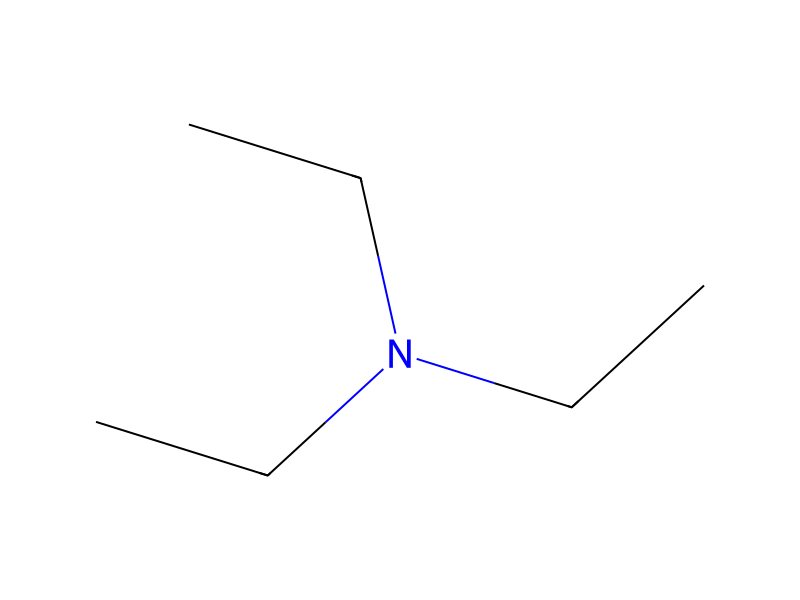
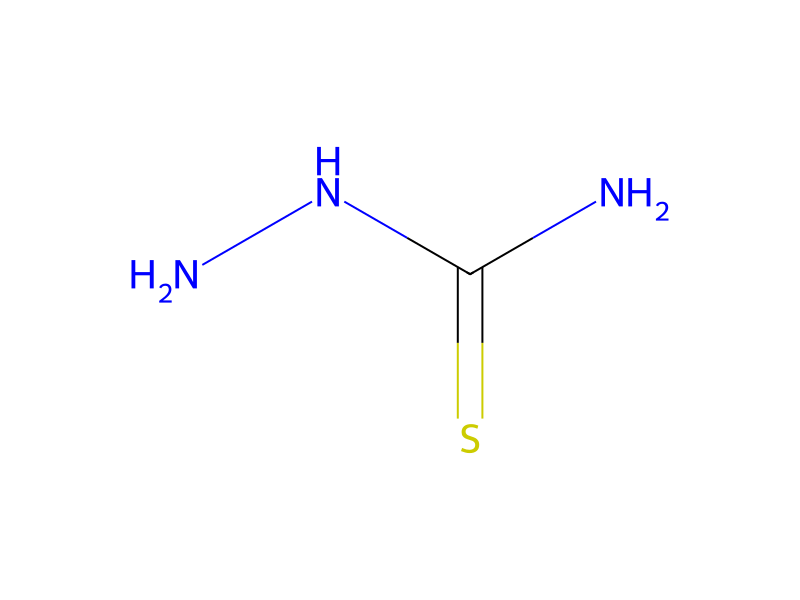
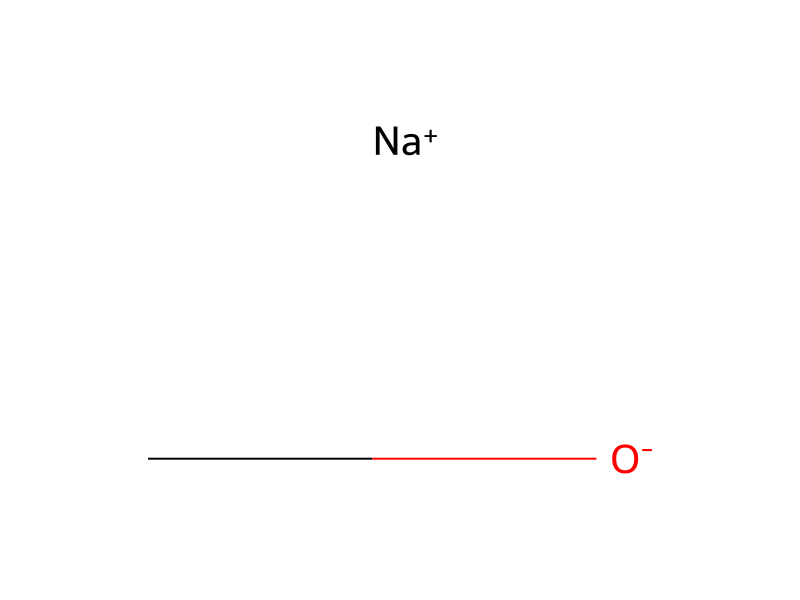
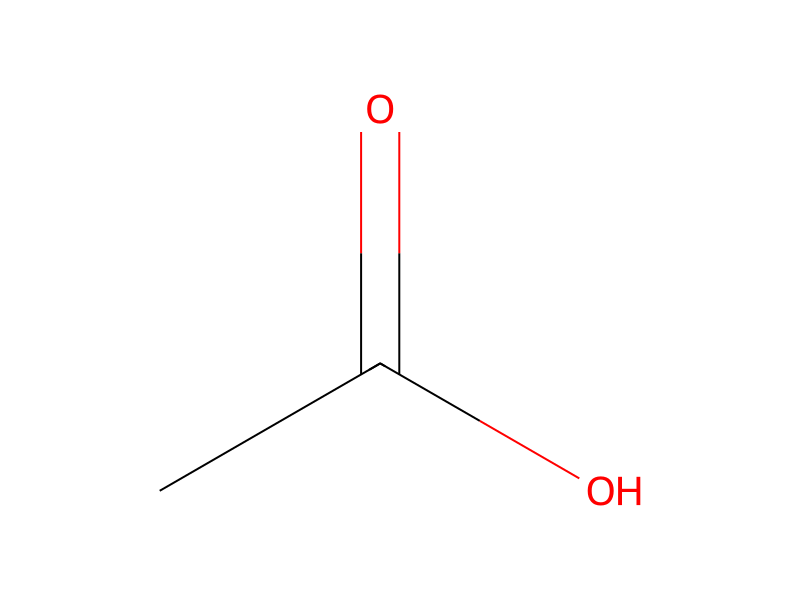
[NH2:1][NH:2][C:3]([NH2:5])=[S:4].[CH2:6](Cl)[C:7]1[CH:12]=[CH:11][CH:10]=[CH:9][CH:8]=1.C[CH:15]1[C:21](=[O:22])O[C:18](=O)[CH:17]=[CH:16]1.[CH2:23](N(CC)CC)C.C[O-].[Na+]>CC(O)C.CO.C(OCC)(=O)C.C(O)(=O)C>[CH2:6]([S:4][C:3]1[N:5]=[C:18]2[CH:17]=[C:16]([CH3:23])[CH:15]=[C:21]([OH:22])[N:1]2[N:2]=1)[C:7]1[CH:12]=[CH:11][CH:10]=[CH:9][CH:8]=1Participants
Reactant 5


Product 1

Reagents, catalysts & solvents 4
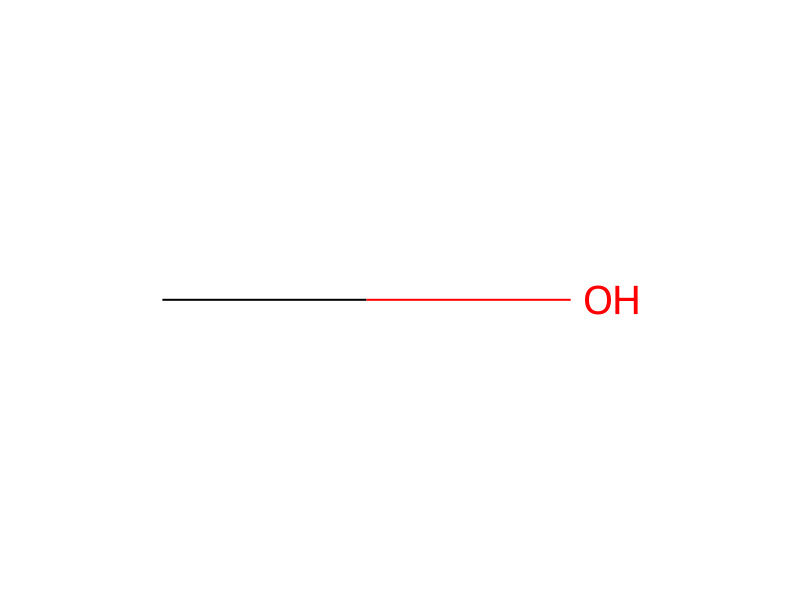

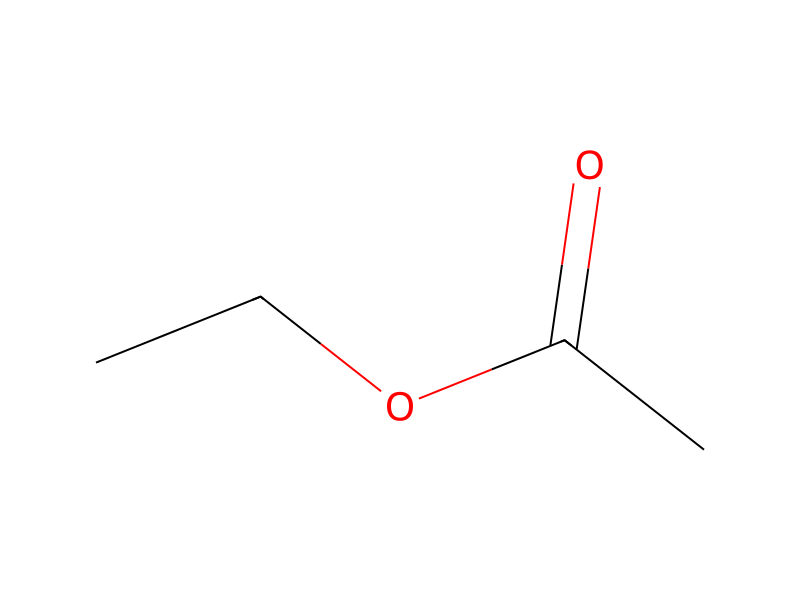
Procedure
A mixture of thiosemicarbazide (50.0 g, 0.554 mol) and benzyl chloride (67.1 g, 0.53 mol) in 2-propanol (1 L) was heated to reflux with stirring for 2 hours. The reaction mixture was then cooled and 4-methylglutaconic anhydride (60.8 g, 0.482 mol) and triethylamine (75 mL, 53.6 g, 0.53 mol) were added. The reaction mixture was again heated at reflux with stirring for an hour. Sodium methoxide in methanol solution (250 mL of 25 percent, 1.09 mol) was then added and the yellow-brown mixture obtained was heated at reflux with stirring for 2.5 hours. The volatiles were removed by evaporation under reduced pressure and the residue obtained was combined with dilute aqueous acetic acid (150 mL) and ethyl acetate. The organic phase was recovered, washed well with water and concentrated by evaporation under reduced pressure. The residue obtained was heated with a heat gun under reduced pressure for 30 minutes until the bubbling had stopped and the reaction mixture had solidified. The mixture was cooled and diluted with methanol and the resulting solids were recovered by filtration to obtain 54.5 g (41 percent of theory) of the title compound as a yellow-brown powder melting at 214°-216° C.
Workup
- temperaturewas heated
- temperatureto reflux
- temperatureThe reaction mixture was then cooled
- temperatureThe reaction mixture was again heated
- temperatureat reflux
- stirringwith stirring for an hour
- customthe yellow-brown mixture obtained
- temperaturewas heated
- temperatureat reflux
- stirringwith stirring for 2.5 hours
- customThe volatiles were removed by evaporation under reduced pressure
- customthe residue obtained
- customThe organic phase was recovered
- washwashed well with water
- concentrationconcentrated by evaporation under reduced pressure
- customThe residue obtained
- temperaturewas heated with a heat gun under reduced pressure for 30 minutes until the bubbling
- temperatureThe mixture was cooled
- filtrationthe resulting solids were recovered by filtration
Sources & evidence
- ORD record
- ord-ca2bf68ad374429092a014e60801d74c
- Source dataset
- uspto-grants-1997_12
- Patent number
- US05700940
Reaction notes
Loading…