Hydrochloric Acid → 4-Phenylpiperidine-1-carbonyl chloride
Reaction equation

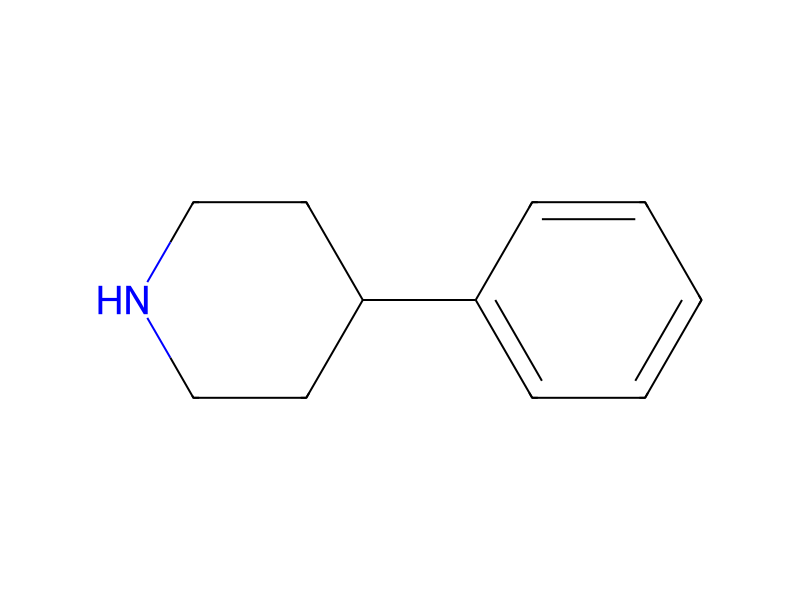
[Cl:1][C:2](Cl)([O:4]C(=O)OC(Cl)(Cl)Cl)Cl.N1C=CC=CC=1.[C:19]1([CH:25]2[CH2:30][CH2:29][NH:28][CH2:27][CH2:26]2)[CH:24]=[CH:23][CH:22]=[CH:21][CH:20]=1.Cl>ClCCl>[C:19]1([CH:25]2[CH2:26][CH2:27][N:28]([C:2]([Cl:1])=[O:4])[CH2:29][CH2:30]2)[CH:24]=[CH:23][CH:22]=[CH:21][CH:20]=1Participants
6
Reactant 4



Product 1

Reagents, catalysts & solvents 1

Procedure
To 0.68 g (2.26 mmol) triphosgene in 6,8 mL dichloromethane at −80° C. is added 0.52 mL (6.5 mmol) pyridine. Then 1.05 g 4-phenylpiperidine (6.5 mmol) is added over a period of 10 minutes. The reaction mixture is allowed to warm to room temperature and stirred for another 2 hours. 4.5 mL 1N hydrochloric acid is added for hydrolization. The organic phase is separated, washed with saturated sodium bicarbonate solution and dried with sodium sulfate. After evaporation of the solvent the crude product is purified via column chromatography on silica gel using dichloromethane as eluent
Workup
- customThe organic phase is separated
- washwashed with saturated sodium bicarbonate solution
- dry with materialdried with sodium sulfate
- customAfter evaporation of the solvent the crude product
- customis purified via column chromatography on silica gel
Sources & evidence
- ORD record
- ord-8f59d6352d3c4c15a02a4db48874db0b
- Source dataset
- uspto-grants-2013_03
- Patent number
- US08389555B2
Reaction notes
Loading…