Benzaldehyde → 2,4-O-Benzylidene-D-glucitol
Reaction equation

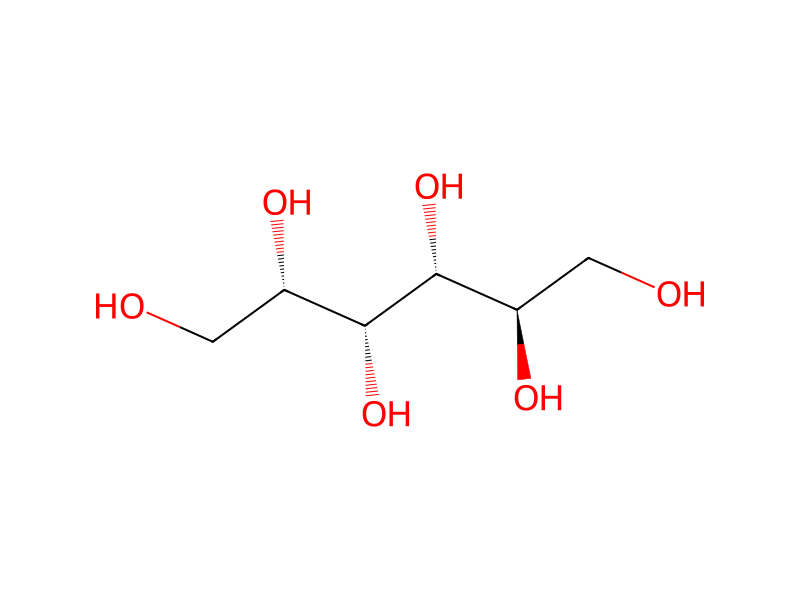
[OH:1][CH2:2][C@@H:3]([C@H:5]([C@@H:7]([C@@H:9]([CH2:11][OH:12])[OH:10])[OH:8])[OH:6])[OH:4].[CH:13](=O)[C:14]1[CH:19]=[CH:18][CH:17]=[CH:16][CH:15]=1>Cl.O>[CH:17]1[CH:18]=[CH:19][C:14]([CH:13]2[O:6][C@H:5]([C@H:3]([OH:4])[CH2:2][OH:1])[C@H:7]([OH:8])[C@H:9]([CH2:11][OH:12])[O:10]2)=[CH:15][CH:16]=1Participants
5


Reagents, catalysts & solvents 2


Procedure
The synthesis of the cyclic sulfate 197, as depicted in Scheme 43, started from the commercially available D-sorbitol (198). Following the reported method by Kuszmann et al.,98 D-sorbitol was first treated with benzaldehyde in hydrochloric acid and water to give 2,4-O-benzylidene-D-glucitol (199). Compound 199 was then reacted with 2,2-dimethoxypropene to afford the 2,4-O-benzylidene-5,6-O-isopropylidene-D-glucitol (200).98 The glucitol derivative 200 was then converted to the cyclic sulfite by treatment with thionyl chloride and pyridine, and the sulfite was then oxidized with sodium periodate and ruthenium(III) chloride as a catalyst to yield the desired cyclic sulfate 197, as a crystalline solid in 75% yield.
Sources & evidence
- ORD record
- ord-d8840ff491fd400a8e524153b83f1788
- Source dataset
- uspto-grants-2013_03
- Patent number
- US08389565B2
Reaction notes
Loading…