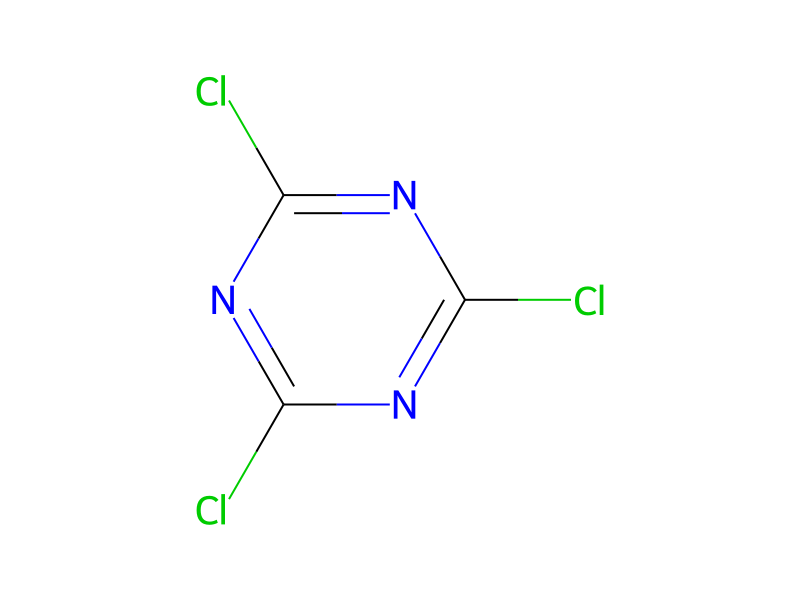
Cyanuric chloride → HCID 58065263, compound
Reaction equation

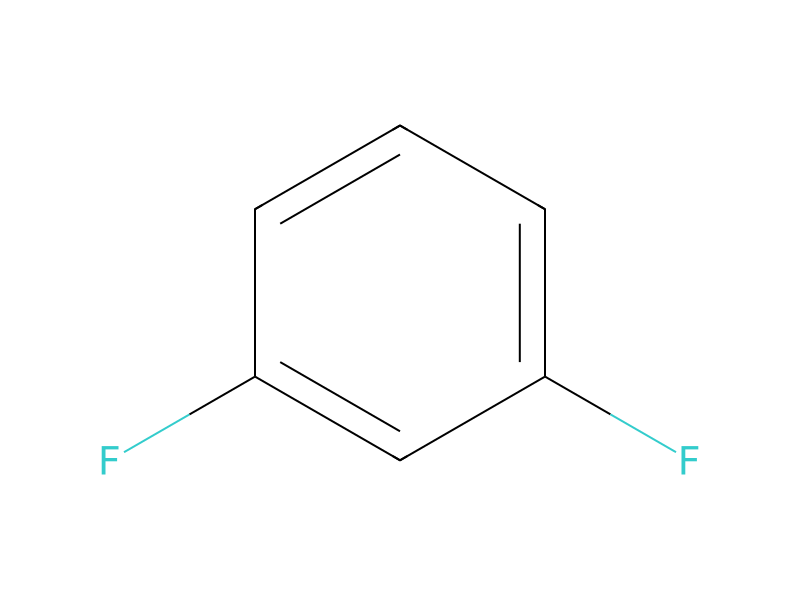
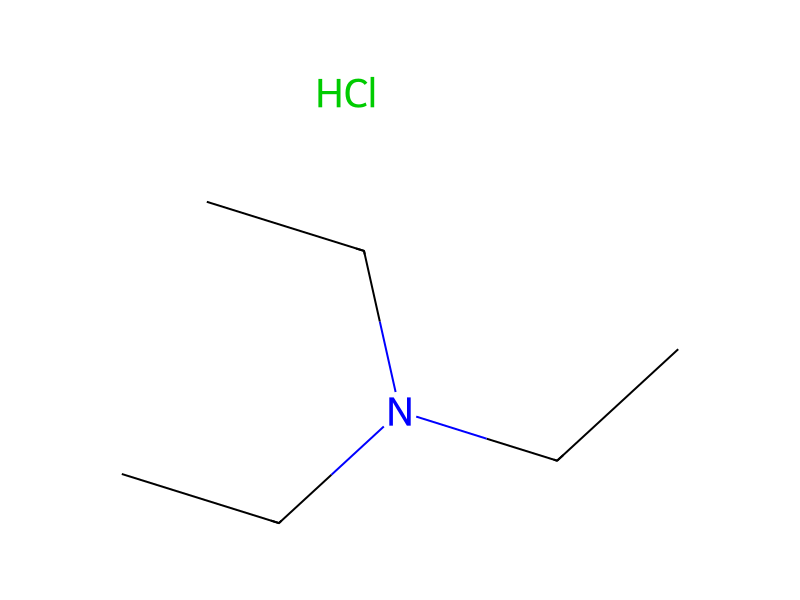
ClC1C=CC(NC2N=C(C3C(F)=CC=CC=3F)N=C(NN=CC3C=CC(OC(F)(F)F)=CC=3)N=2)=CC=1.C(NC(C)C)(C)C.[Li].Cl.C(N(CC)CC)C.[F:53][C:54]1[CH:59]=[CH:58][CH:57]=[C:56]([F:60])[CH:55]=1.[N:61]1[C:68]([Cl:69])=[N:67][C:65](Cl)=[N:64][C:62]=1[Cl:63]>O1CCCC1.C(Cl)Cl>[Cl:63][C:62]1[N:61]=[C:68]([Cl:69])[N:67]=[C:65]([C:55]2[C:54]([F:53])=[CH:59][CH:58]=[CH:57][C:56]=2[F:60])[N:64]=1Participants
Reactant 5


Product 1

Reagents, catalysts & solvents 2


Conditions
- Temperature
- -78 °C
Procedure
Also Example 1 For this general method we also provide a specific detailed example, i.e. Example 1, which is the compound named N-(4-chlorophenyl)-4-(2,6-difluorophenyl)-6-(2-(4-(trifluoromethoxy)benzylidene)hydrazinyl)-1,3,5-triazin-2-amine (1). See also Example Scheme 1, above. A solution of lithium diisopropylamine in tetrahydrofuran (THF) (15 mL, 2M, 30 mmol) was added dropwise to a room temperature stirred suspension of triethylamine hydrochloride (0.25 g, 1.8 mmol) in dry tetrahydrofuran (THF; 10 mL). When the mixture became homogeneous, the solution was cooled to −78° C. in a dry-ice/acetone bath. Neat 1,3-difluorobenzene (3 mL, 30.4 mmol) was added dropwise and the solution stirred for 15 minutes. The −78° C. solution was poured rapidly into a −78° C. solution of cyanuric chloride (5.5 g, 30 mmol) in dry THF (25 mL). The dry-ice/acetone cold bath was removed and the mixture allowed to come to room temperature. Once at room temperature the orange-red mixture was poured into 100 mL of saturated aqueous bicarbonate solution. The mixture was allowed to stand for 15 minutes. Hexanes (100 mL) were added and after thorough mixing the organic layer was separated from the aqueous layer. The organic layer was dried over magnesium sulfate and then filtered to remove the magnesium sulfate. The solution was concentrated on a rotary evaporator to yield an oil. The oil was dissolved in a minimal amount of methylene chloride and loaded onto 100 g of silica gel. The silica gel was eluted with 10% ethyl acetate in hexanes. The organic eluent was concentrated on a rotary evaporator and the product precipitated from methylene chloride and hexane to yield 0.7 g of 2,4-dichloro-6-(2,6-difluorophenyl)-1,3,5-triazine (XXV). ESI/MS 261.9, 263.9, 265.8 (M+H).
Workup
- customAlso Example 1 For this general method we also provide a specific detailed example, i.e. Example 1, which
- stirringthe solution stirred for 15 minutes
- customThe dry-ice/acetone cold bath was removed
- customto come to room temperature
- additionOnce at room temperature the orange-red mixture was poured into 100 mL of saturated aqueous bicarbonate solution
- additionHexanes (100 mL) were added
- additionafter thorough mixing the organic layer
- customwas separated from the aqueous layer
- dry with materialThe organic layer was dried over magnesium sulfate
- filtrationfiltered
- customto remove the magnesium sulfate
- concentrationThe solution was concentrated on a rotary evaporator
- customto yield an oil
- washThe silica gel was eluted with 10% ethyl acetate in hexanes
- concentrationThe organic eluent was concentrated on a rotary evaporator
- customthe product precipitated from methylene chloride and hexane
Sources & evidence
- ORD record
- ord-b77001f92470474ba1f0145a8c0ff9a0
- Source dataset
- uspto-grants-2013_03
- Patent number
- US08389718B2
Reaction notes
Loading…