Hydrochloric Acid → HCID 57475115, compound
Reaction equation

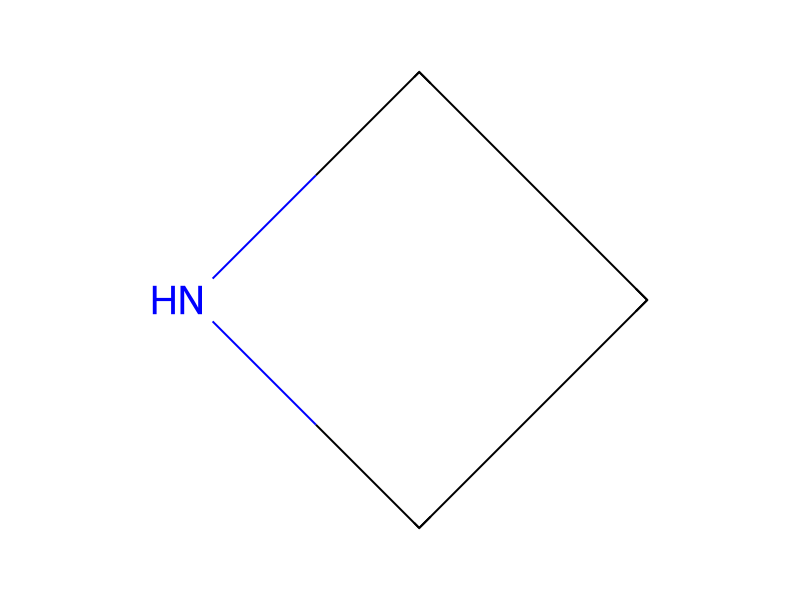
[O:1]1[C:5]2([CH2:10][CH2:9][C:8](=O)[CH2:7][CH2:6]2)[O:4][CH2:3][CH2:2]1.[C-:12]#[N:13].[K+].Cl.[NH:16]1[CH2:19][CH2:18][CH2:17]1>O.CO>[N:16]1([C:8]2([C:12]#[N:13])[CH2:9][CH2:10][C:5]3([O:4][CH2:3][CH2:2][O:1]3)[CH2:6][CH2:7]2)[CH2:19][CH2:18][CH2:17]1Participants
7
Reactant 4



Product 1

Reagents, catalysts & solvents 2


Procedure
Firstly 1,4-dioxaspiro[4,5]decan-8-one (4.84 g, 31 mmole) followed by potassium cyanide (4.85 g, 74.4 mmole) in water (15 ml) were added while cooling with ice to a mixture of 4 N hydrochloric acid (8.1 ml), methanol (4.9 ml) and azetidine (8.5 g, 10 ml, 149 mmole). The mixture was stirred for 5 days at room temperature, water (50 ml) was then added, and the mixture was extracted with diethyl ether (3×50 ml). The combined organic phases were dried with sodium sulfate and concentrated by evaporation in vacuo.
Workup
- additionwere added
- extractionthe mixture was extracted with diethyl ether (3×50 ml)
- dry with materialThe combined organic phases were dried with sodium sulfate
- concentrationconcentrated by evaporation in vacuo
Sources & evidence
- ORD record
- ord-a18a6a68207541e195d4c6232e2367a3
- Source dataset
- uspto-grants-2013_03
- Patent number
- US08399503B2
Reaction notes
Loading…