1-Bromo-3-chloropropane → HCID 19068116, compound
Reaction equation

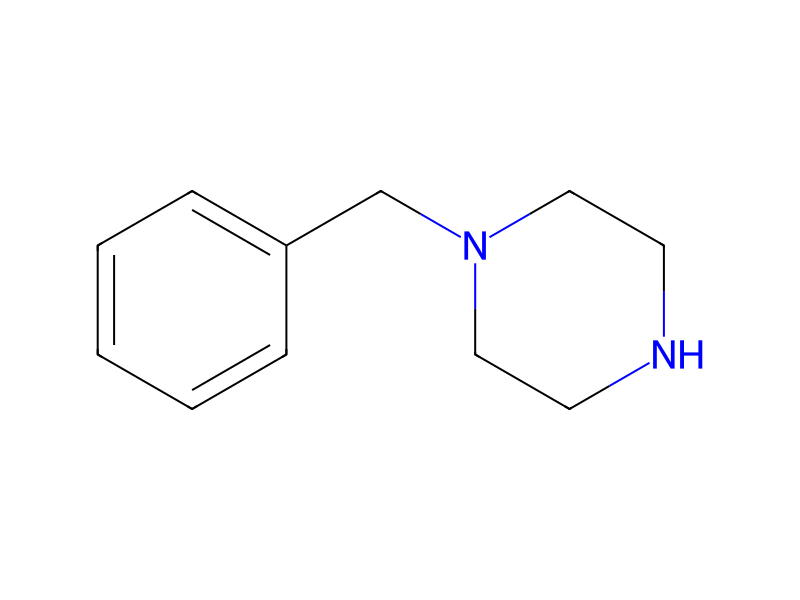
[CH2:1]([N:8]1[CH2:13][CH2:12][NH:11][CH2:10][CH2:9]1)[C:2]1[CH:7]=[CH:6][CH:5]=[CH:4][CH:3]=1.C1COCC1.Cl[CH2:20][CH2:21][CH2:22]Br.[C:24]1(=[O:34])[NH:28][C:27](=[O:29])[C:26]2=[CH:30][CH:31]=[CH:32][CH:33]=[C:25]12.[K]>C(O)C.C(N(CC)CC)C>[CH2:1]([N:8]1[CH2:13][CH2:12][N:11]([CH2:20][CH2:21][CH2:22][N:28]2[C:24](=[O:34])[C:25]3[C:26](=[CH:30][CH:31]=[CH:32][CH:33]=3)[C:27]2=[O:29])[CH2:10][CH2:9]1)[C:2]1[CH:3]=[CH:4][CH:5]=[CH:6][CH:7]=1Participants






Procedure
44 g benzylpiperazine, 200 ml absolute THF, 39.4 g 1-chloro-3-bromopropane and 76 g triethylamine are heated for 8 hours under reflux. After separating the precipitate the tetrahydrofuran is concentrated by evaporation, the residue is dissolved in 500 ml ether, treated twice with carbon and subsequently the solvent is removed by distillation. After distillation in a high vacuum 1-benzyl-4-(3-chloropropyl)piperazine with a boiling point of 145°-148° C./0.3 mm Hg is obtained. 22.75 g of this distillate was dissolved in 200 ml ethanol and admixed with 15 g potassium phthalimide and it was heated for 56 hours under reflux. Subsequently the solvent was evaporated, the residue was dissolved in 150 ml dichloromethane and the organic phase was washed three times with 50 ml two molar sodium hydroxide solution and three times with 50 ml water. Afterwards the organic phase was dried and evaporated. 30 g 2-[3-(4-benzylpiperazin-1-yl)propyl]isoindol-1,3-dione is obtained as a viscous oil. TLC (mobile solvent: heptane/methyl ethyl ketone/ammonia atmosphere 2:1), Rf=0.32.
Workup
- temperatureunder reflux
- customAfter separating the precipitate the tetrahydrofuran
- concentrationis concentrated by evaporation
- dissolutionthe residue is dissolved in 500 ml ether
- additiontreated twice with carbon
- customsubsequently the solvent is removed by distillation
- distillationAfter distillation in a high vacuum 1-benzyl-4-(3-chloropropyl)piperazine with a boiling point of 145°-148° C./0.3 mm Hg
- customis obtained
- temperaturewas heated for 56 hours
- temperatureunder reflux
- customSubsequently the solvent was evaporated
- dissolutionthe residue was dissolved in 150 ml dichloromethane
- washthe organic phase was washed three times with 50 ml two molar sodium hydroxide solution and three times with 50 ml water
- customAfterwards the organic phase was dried
- customevaporated
Sources & evidence
- ORD record
- ord-281e708634a94d5cbd1678458e50c0b3
- Source dataset
- uspto-grants-1998_07
- Patent number
- US05786371
Reaction notes
Loading…