Oxygen → 4-tert-Butylbenzaldehyde
Reaction equation

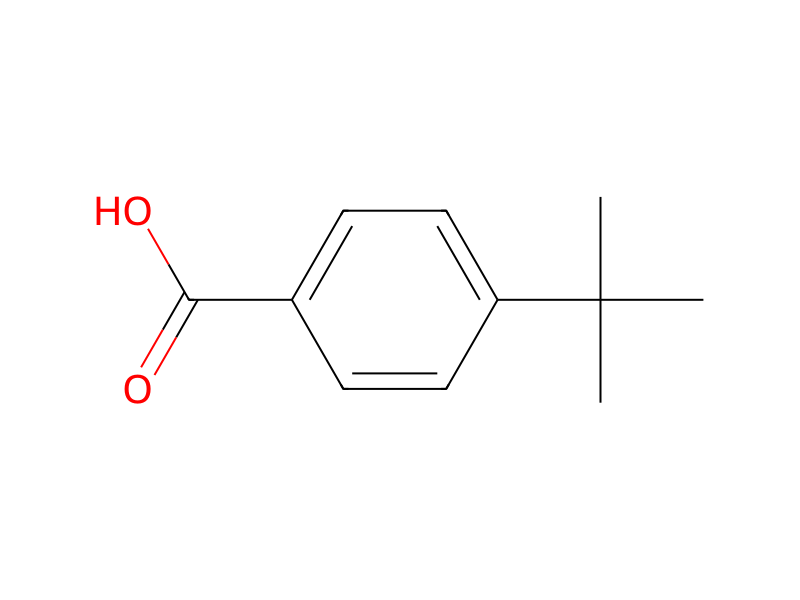
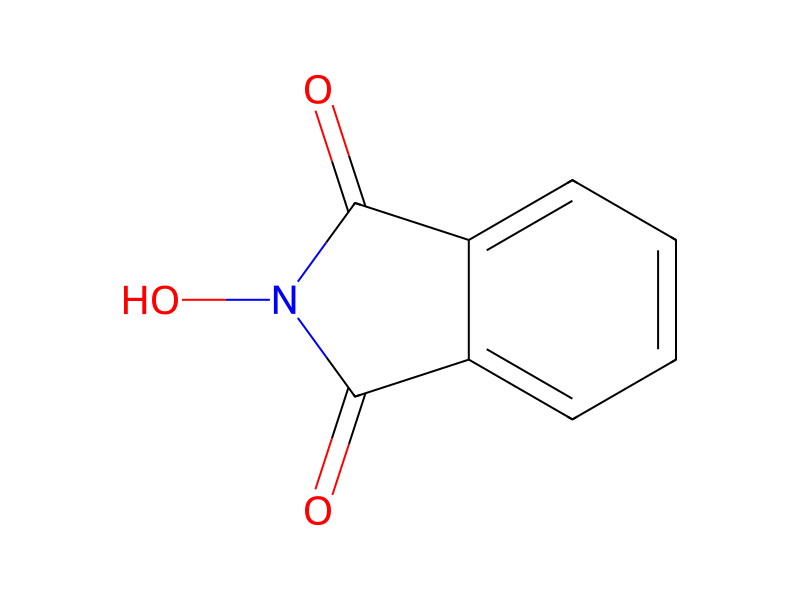
C(C1C=CC(C)=CC=1)(C)(C)C.ON1C(=O)C2=CC=CC=C2C1=O.O=O.[C:26]([C:30]1[CH:38]=[CH:37][C:33]([C:34](O)=[O:35])=[CH:32][CH:31]=1)([CH3:29])([CH3:28])[CH3:27]>C(O)(=O)C>[C:26]([C:30]1[CH:31]=[CH:32][C:33]([CH:34]=[O:35])=[CH:37][CH:38]=1)([CH3:29])([CH3:27])[CH3:28]Participants
Reactant 4


Product 1

Reagents, catalysts & solvents 1

Procedure
In 3 mL of acetic acid was dissolved 300 mg of p-t-butyltoluene to give a solution, and the solution was further combined with 150 mg of the catalyst A and 33 mg of N-hydroxyphthalimide, followed by stirring at 100° C. in an oxygen atmosphere for 6 hours. The reaction mixture was analyzed through gas chromatography to find that p-t-butylbenzoic acid and p-t-butylbenzaldehyde were obtained in yields of 66.5% and 3.8%, respectively, with a conversion from p-t-butyltoluene of 82.2%. The catalyst A was separated from the reaction mixture through filtration, washed with ethyl acetate two times, dried at room temperature (25° C.) under reduced pressure, and recovered as a catalyst A1. The cobalt ion concentration in the reaction mixture, from which the catalyst A1 had been separated through filtration, was measured through atomic absorption spectrometry and was found to be 24 ppm.
Workup
- customto give a solution
Sources & evidence
- ORD record
- ord-372e9163a0b944958962306d959ca0a2
- Source dataset
- uspto-grants-2013_04
- Patent number
- US08410308B2
Reaction notes
Loading…