Pyrazole → HCID 68910663, compound
Reaction equation

CS(OCCC(N1C=C([C:15]2[CH:20]=[CH:19][N:18]=[C:17]3[N:21]([CH2:24][O:25][CH2:26][CH2:27][Si:28]([CH3:31])([CH3:30])[CH3:29])[CH:22]=[CH:23][C:16]=23)C=N1)C)(=O)=O.[NH:32]1[CH:36]=[CH:35][CH:34]=[N:33]1.C[N:38]([CH:40]=O)C.[H-].[Na+]>>[CH3:17][CH:16]([C:23]1([C:22]2[N:21]([CH2:24][O:25][CH2:26][CH2:27][Si:28]([CH3:29])([CH3:30])[CH3:31])[C:17]3=[N:18][CH:19]=[CH:20][CH:15]=[C:16]3[CH:23]=2)[CH2:40][NH:38][N:21]=[CH:22]1)[CH2:15][CH2:20][C:35]1[CH:36]=[N:32][NH:33][CH:34]=1Participants
5
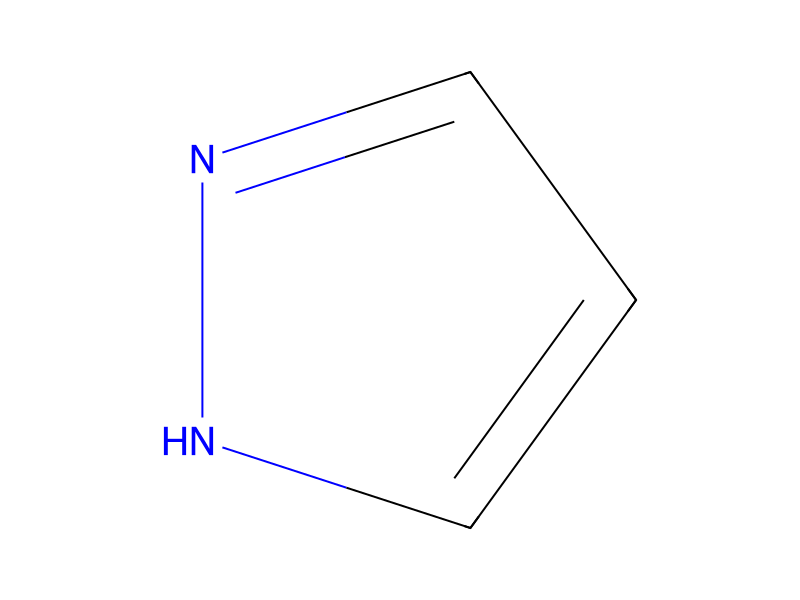




Procedure
To a 0° C. solution of 3-[4-(1-[2-(trimethylsilyl)ethoxy]methyl-1H-pyrrolo[2,3-b]pyridin-4-yl)-1H-pyrazol-1-yl]butyl methanesulfonate (prepared by mesylation of the alcohol as in Example 59, Step 1) (0.055 g, 0.00012 mol) and 1H-pyrazole (0.025 g, 0.00036 mol) in DMF (1 mL, 0.01 mol) was added sodium hydride (0.014 g, 0.00036 mol). The resulting solution was stirred overnight and then partitioned between ethyl acetate and 0.1 N HCl, water. The organic phase was separated and washed with brine. The organic layer was then concentrated to give 49 mg of a pale orange glass (87% yield).
Workup
- custompartitioned between ethyl acetate and 0.1 N HCl, water
- customThe organic phase was separated
- washwashed with brine
- concentrationThe organic layer was then concentrated
Sources & evidence
- ORD record
- ord-42ec3a49e129492d8726a91cfd4bc20b
- Source dataset
- uspto-grants-2013_04
- Patent number
- US08415362B2
Reaction notes
Loading…