3'-Hydroxyphenylacetic acid → [3-(4-Bromo-2-formyl-phenoxy)-phenyl]-acetic acid
Reaction equation

[OH:1][C:2]1[CH:3]=[C:4]([CH2:8][C:9]([OH:11])=[O:10])[CH:5]=[CH:6][CH:7]=1.[Br:12][C:13]1[CH:14]=[CH:15][C:16](F)=[C:17]([CH:20]=1)[CH:18]=[O:19].[H-].[Na+]>CN(C=O)C>[Br:12][C:13]1[CH:14]=[CH:15][C:16]([O:1][C:2]2[CH:3]=[C:4]([CH2:8][C:9]([OH:11])=[O:10])[CH:5]=[CH:6][CH:7]=2)=[C:17]([CH:18]=[O:19])[CH:20]=1Participants
5
Reactant 3


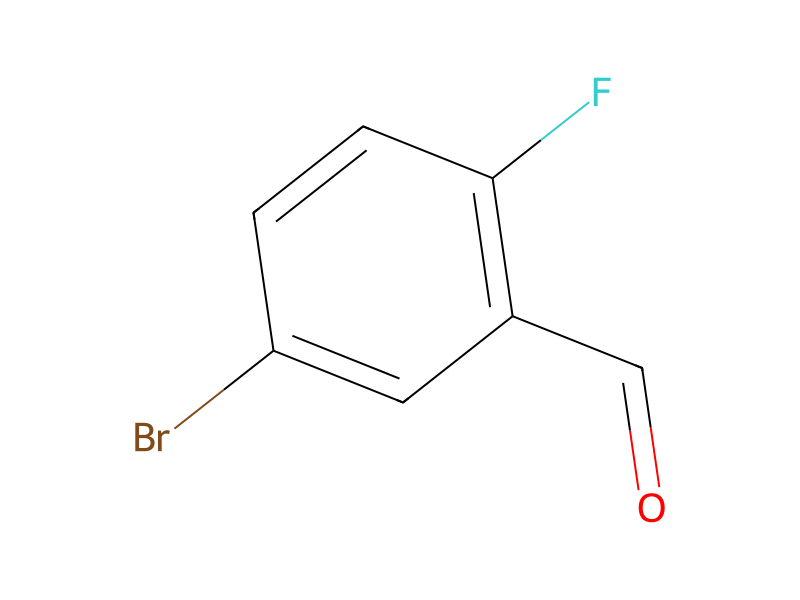
Product 1

Reagents, catalysts & solvents 1

Conditions
- Temperature
- 70 °C
Procedure
3-Hydroxyphenylacetic acid (1.34 g, 8.8 mmol) and 5-bromo-2-fluorobenzaldehyde (1.78 g, 8.8 mmol) were combined in DMF (30 mL) at room temperature. Sodium hydride (60% in mineral oil; 0.72 g, 18.0 mmol) was added, and the reaction was stirred at 70° C. for 2 hours. Aqueous work-up yielded the title compound.
Sources & evidence
- ORD record
- ord-1b02aa2f91f44396b82a40aac6e06efa
- Source dataset
- uspto-grants-2013_04
- Patent number
- US08426449B2
Reaction notes
Loading…