Isobutanol → Quinacridone
Reaction equation

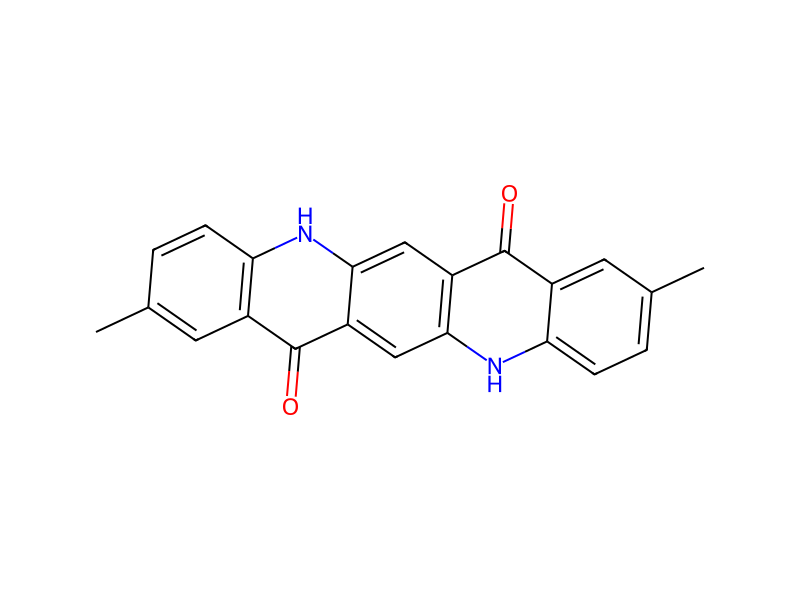
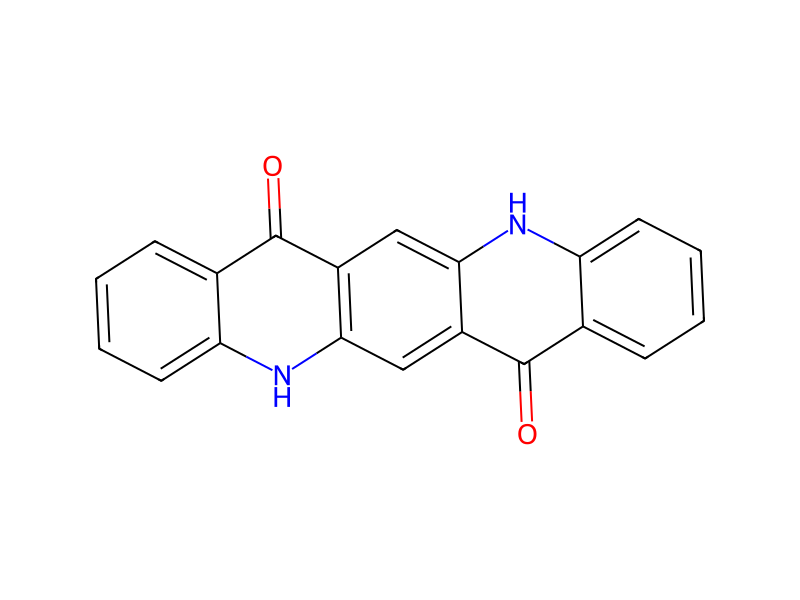
C[C:2]1[CH:7]=[CH:6][C:5]2[NH:8][C:9]3[C:14]([C:15](=[O:16])[C:4]=2[CH:3]=1)=[CH:13][C:12]1[NH:17][C:18]2[CH:25]=[CH:24][C:23](C)=[CH:22][C:19]=2[C:20](=[O:21])[C:11]=1[CH:10]=3.C(O)C(C)C>O>[CH:23]1[CH:22]=[C:19]2[C:20]([C:11]3[C:12]([NH:17][C:18]2=[CH:25][CH:24]=1)=[CH:13][C:14]1[C:15]([C:4]2[C:5]([NH:8][C:9]=1[CH:10]=3)=[CH:6][CH:7]=[CH:2][CH:3]=2)=[O:16])=[O:21]Participants
Reactant 2

Product 1
Reagents, catalysts & solvents 1

Conditions
- Temperature
- 130 °C
Procedure
A mixture of 70 weight parts of “Fastogen Super Magenta RTS (produced by Dainippon Ink Chemical Co., Ltd.)”, (C.I. Pigment Red 122), 290 weight parts of isobutanol and 380 weight parts of water was stirred at 130° C. for 7 hours in a reaction vessel with a stirrer. Thereafter, the resulting mixture was cooled to room temperature, and the resulting precipitates were filtered off, washed with hot water, dried and pulverized. Thus, quinacridone pigment was obtained. This quinacridone pigment was designated as Quinacridone Pigment 13. The number average primary particle size, the major axis direction length, the minor axis direction length and the ratio of the major axis direction length to the minor axis direction length of Quinacridone Pigment 13 are as shown in Table 1.
Workup
- temperatureThereafter, the resulting mixture was cooled to room temperature
- customthe resulting precipitates
- filtrationwere filtered off
- washwashed with hot water
- customdried
Sources & evidence
- ORD record
- ord-f8db8cdad9a04a3e852d9bec8f5b39ba
- Source dataset
- uspto-grants-2013_04
- Patent number
- US08431295B2
Reaction notes
Loading…