Dichloromethane → Imidazo(1,2-a)pyridine
Reaction equation

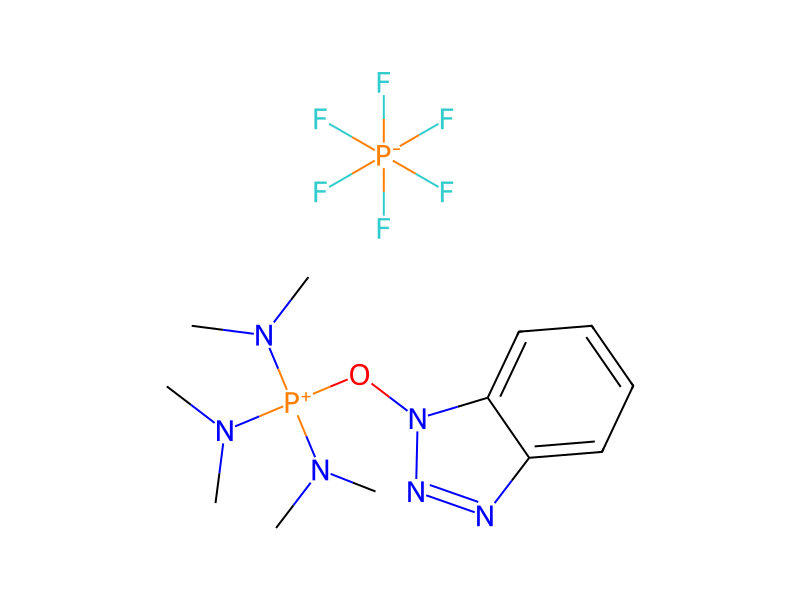
[NH2:1][C:2]1[CH:7]=[CH:6][CH:5]=[C:4](C(O)=O)[N:3]=1.F[P-](F)(F)(F)(F)F.N1(O[P+](N(C)C)(N(C)C)N(C)C)[C:22]2C=CC=C[C:21]=2N=N1.C(Cl)Cl.CCN(C(C)C)C(C)C>CN(C=O)C>[N:1]1[CH:21]=[CH:22][N:3]2[CH:4]=[CH:5][CH:6]=[CH:7][C:2]=12Participants
6





Procedure
In Scheme 2, 2-amino-6-pyridine carboxylic acid 8 is reacted with an amine 9 using a coupling agent such as, but not limited to, BOP or DMC in an organic solvent such as DCM or DMF in the presence of an organic base such as Hunig's base. The resulting amide 10 is reacted with alpha halocarbonyl 11 to give the imidazo[1,2-a]pyridine 12. Alternatively 10 can be reacted with the alpha haloaldehyde 13 to give the imidazo[1,2-a]pyridine 14.
Sources & evidence
- ORD record
- ord-96b0d1e03ad64ed2a4f955b004a2a723
- Source dataset
- uspto-grants-2013_04
- Patent number
- US08431593B2
Reaction notes
Loading…