Acetic Anhydride → Benzofuran
Reaction equation

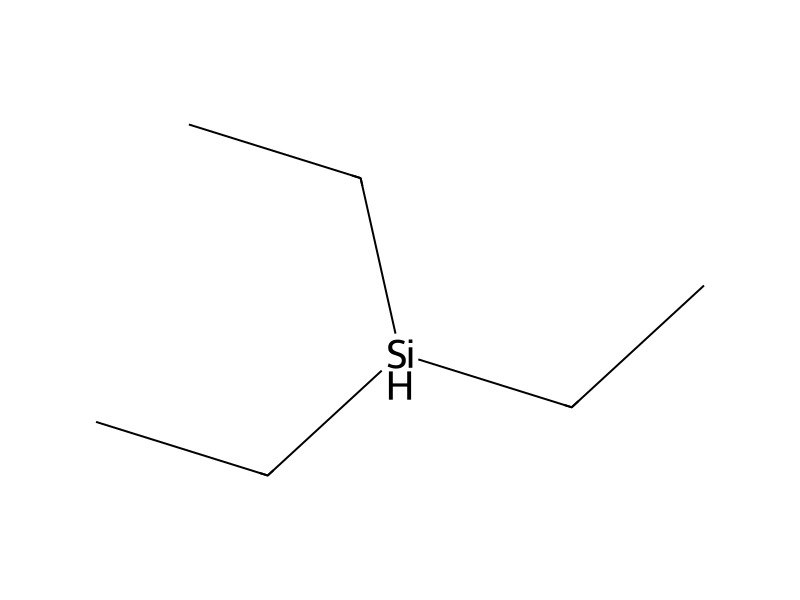
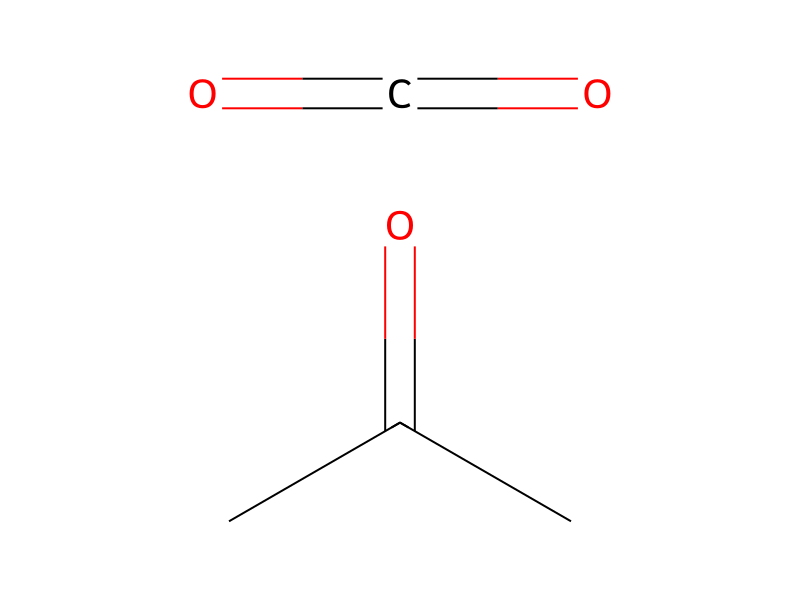
Br[C:2]1[O:3][C:4]2[CH:10]=[CH:9][CH:8]=[CH:7][C:5]=2[CH:6]=1.C[C@H]1[C@@H]2CC[C@]3(C)OO[C@]42[C@H]([C@@H](C)C(O[C@@H]4O3)=O)CC1.C(=O)=O.CC(C)=O.[Li]CCCC.C(OC(=O)C)(=O)C.C([SiH](CC)CC)C.C(=O)(O)[O-].[Na+]>ClCCl.C1COCC1.CCOCC>[O:3]1[C:4]2[CH:10]=[CH:9][CH:8]=[CH:7][C:5]=2[CH:6]=[CH:2]1Participants
Reactant 7





Product 1

Reagents, catalysts & solvents 3



Procedure
A 10 mL flame-dried RBF was loaded with a stir-bar, 2-bromo-1-benzofuran (160.3 mg, 0.81 mmol), and ether (3 mL). An addition 10 mL flame-dried RBF was loaded with a stir bar, artemisinin (67.4 mg, 0.24 mmol) and THF (3 mL). Both flasks were immersed into dry ice/acetone baths and n-BuLi (0.33 mL, 1.6 M sol, 0.53 mmol) was added over 14 minutes to the flask containing the 2-bromo-1-benzofuran which was then stirred at RT for nine minutes. The flask was then re-immersed in the dry ice/acetone bath. The resulting solution became pale yellow. After 41 additional minutes, the artemisinin solution was added via cannula and the resulting solution became deeper orange in color. After 30 minutes of stirring at −78° C., the TLC showed consumption of artemisinin and the formation of 2 new spots, with a lower Rf. Acetic anhydride (0.14 mL, 1.51 mmol) was added 25 minutes later. After for 2 hours, the new spot was observed to have disappeared, triethylsilane (0.68 mL, 4.21 mmol), and trimethylsilyl trifluorosulfonate (0.58 mL, 3.2 mmol) were added and the reaction became fuchsia in color. Then, TEA (2 mL) was added 2.5 hours later. The reaction was then poured into a reparatory funnel containing dichloromethane and saturated aqueous sodium bicarbonate. The organic layer was washed with saturated aqueous sodium bicarbonate (3×30 mL). The organic layer was then washed with saturated aqueous sodium chloride, dried over magnesium sulfate, filtered, and evaporated. The residue was purified using two flash chromatography columns (first column: silica gel, packed with 100% hexanes, eluted with 5% ethyl acetate in hexanes; second column: silica gel, packed with 100% hexanes, eluted with 50% dichloromethane in hexanes) to give the product as a yellow film that turned into a foamy solid on prolonged high-vacuum drying (17.3 mg, 0.05 mmol, 19%). 1H NMR (CDCl3, 400 MHz): δ 7.59-7.57 (m, 1H), 7.53-7.48 (m, 2H), 7.39-7.18 (m, 2H), 6.91 (s, 1H), 5.79 (s, 1H), 2.49-2.41 (m, 1H), 2.15-2.00 (m, 5H), 2-1.92 (m, 2H), 1.79-1.73 (m 1H), 1.65-1.30 (m, 8H), 1.22-1.15 (m, 1H), 1.04-1.03 (d, J=4 Hz, 3H). 13C NMR (CDCl3, 100 MHz): δ 154.5, 152.1, 136.1, 128.3, 124.0, 122.7, 120.9, 111.2, 109.4, 105.1, 104.6, 90.1, 78.6, 50.9, 47.6, 37.7, 36.3, 34.2, 29.2, 25.8, 24.5, 20.2, 17. IR (thin film): 2927, 2365, 2331, 1459, 1134, 1027. HRMS (FAB+): calculated for C23H26O5: 382.1780, found 382.1785. [α]D26=+41.0 (c 1.25, CHCl3)
Workup
- customA 10 mL flame-dried RBF
- customwas loaded with a stir-bar
- additionAn addition 10 mL
- customflame-dried RBF
- customwas loaded with a stir bar
- additionwas added over 14 minutes to the flask
- stirringAfter 30 minutes of stirring at −78° C.
- customconsumption of artemisinin
- waitAfter for 2 hours
- additionThe reaction was then poured into a reparatory funnel
- washThe organic layer was washed with saturated aqueous sodium bicarbonate (3×30 mL)
- washThe organic layer was then washed with saturated aqueous sodium chloride
- dry with materialdried over magnesium sulfate
- filtrationfiltered
- customevaporated
- customThe residue was purified
- washtwo flash chromatography columns (first column: silica gel, packed with 100% hexanes, eluted with 5% ethyl acetate in hexanes; second column: silica gel, packed with 100% hexanes, eluted with 50% dichloromethane in hexanes)
- customto give the product as a yellow film that
- customdrying (17.3 mg, 0.05 mmol, 19%)
Sources & evidence
- ORD record
- ord-f35b9b211d7a4844b4005070548867a1
- Source dataset
- uspto-grants-2013_04
- Patent number
- US08431611B2
Reaction notes
Loading…