Hydrochloric Acid → 1-(Benzenesulfonyl)piperazine hydrochloride
Reaction equation

C([N:8]1[CH2:13][CH2:12][NH:11][CH2:10][CH2:9]1)(OC(C)(C)C)=O.C(N(CC)CC)C.[C:21]1([S:27]([Cl:30])(=[O:29])=[O:28])[CH:26]=[CH:25][CH:24]=[CH:23][CH:22]=1.Cl>O.CCOC(C)=O.O1CCOCC1.C(Cl)Cl>[ClH:30].[C:21]1([S:27]([N:8]2[CH2:9][CH2:10][NH:11][CH2:12][CH2:13]2)(=[O:29])=[O:28])[CH:26]=[CH:25][CH:24]=[CH:23][CH:22]=1Participants
9
Reactant 4

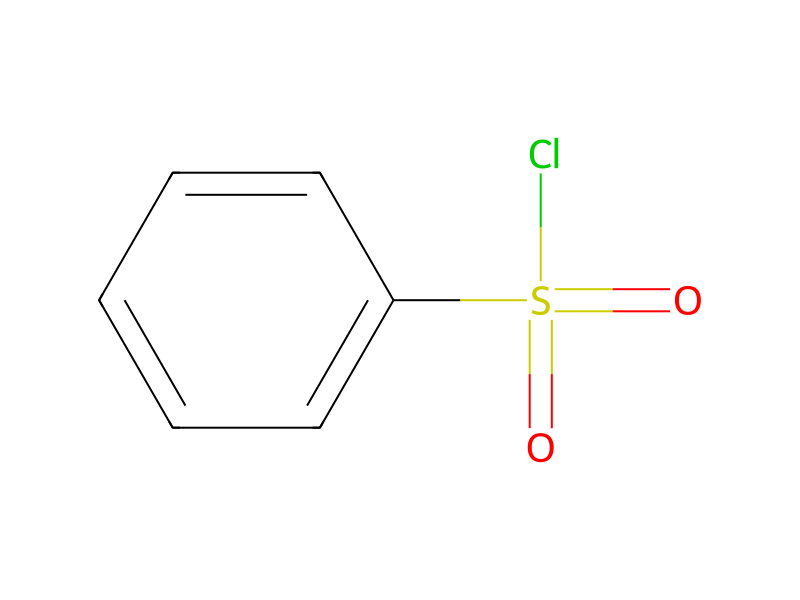


Product 1

Reagents, catalysts & solvents 4




Procedure
A 500 ml, round-bottomed flask was charged with 1-Boc-piperazine (18.55 g, 100 mmol, Sigma-Aldrich, St. Louis, Mo.), triethylamine (18.05 mL, 129 mmol), and 200 mL of CH2Cl2. To this was added benzenesulfonyl chloride (16.05 mL, 124 mmol, Sigma-Aldrich, St. Louis, Mo.). After 15 min, the mixture was diluted with water (150 mL) and the layers were separated. The organics were dried (MgSO4) and concentrated to give a white solid. This solid was dissolved in EtOAc (300 mL) and 150 mL of 4N HCl in dioxane. After 3 h at 65° C., the white precipitate was filtered to give 1-(phenylsulfonyl)piperazine hydrochloride (21.0 g) as a white solid.
Workup
- customthe layers were separated
- dry with materialThe organics were dried (MgSO4)
- concentrationconcentrated
- customto give a white solid
- waitAfter 3 h at 65° C.
- filtrationthe white precipitate was filtered
Sources & evidence
- ORD record
- ord-d55463ece36b4734b69e9ae9fb7da8a7
- Source dataset
- uspto-grants-2013_04
- Patent number
- US08431563B2
Reaction notes
Loading…