Diisopropylethylamine → HCID 86670312, compound
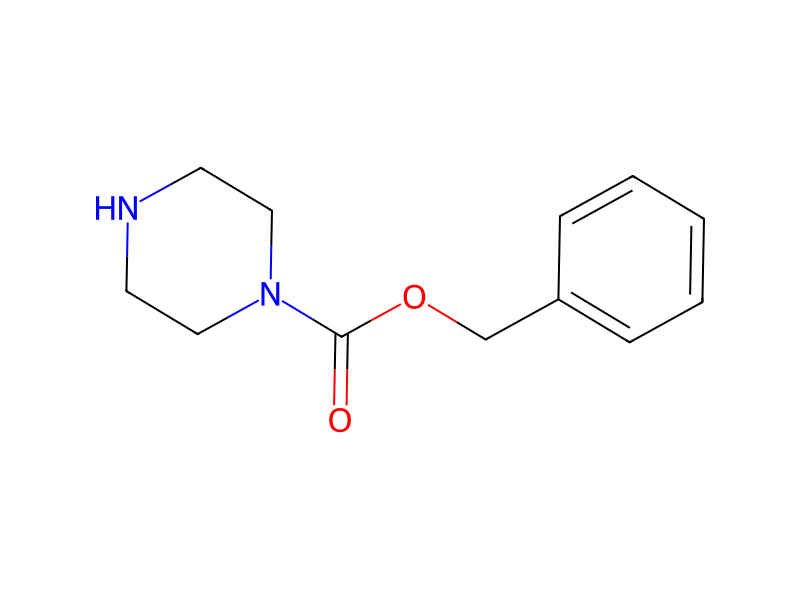
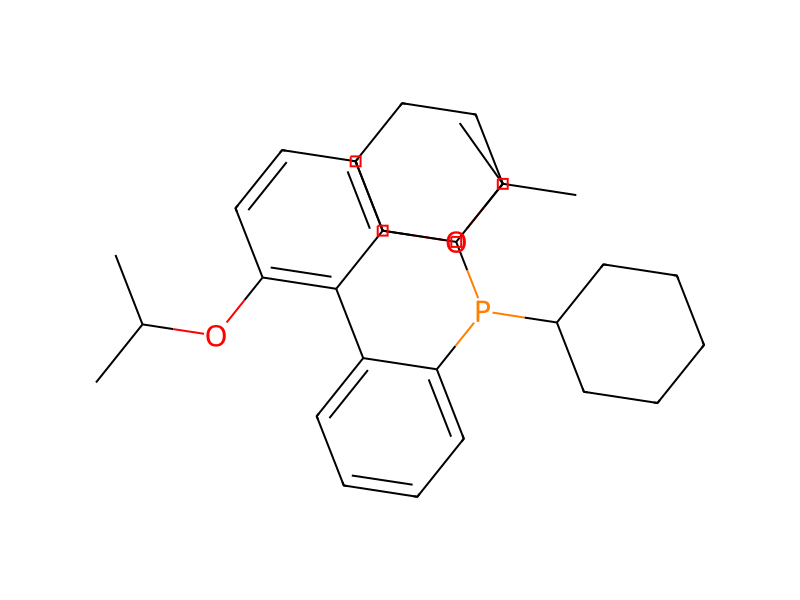
Reaction equation

Br[C:2]1[CH:7]=[CH:6][C:5]([C:8]([OH:14])([CH3:13])[C:9]([F:12])([F:11])[F:10])=[CH:4][CH:3]=1.[N:15]1(C(OCC2C=CC=CC=2)=[O:22])[CH2:20][CH2:19][NH:18][CH2:17][CH2:16]1.C1(P(C2CCCCC2)C2C=CC=CC=2C2C(OC(C)C)=CC=CC=2OC(C)C)CCCCC1.CC(C)([O-])C.[Na+].C(=O)(O)[O-].[Na+].[S:75]1[CH:79]=[CH:78][N:77]=[C:76]1[S:80](Cl)(=[O:82])=[O:81].CCN(C(C)C)C(C)C>C1(C)C=CC=CC=1.C(Cl)Cl.C1C=CC(/C=C/C(/C=C/C2C=CC=CC=2)=O)=CC=1.C1C=CC(/C=C/C(/C=C/C2C=CC=CC=2)=O)=CC=1.C1C=CC(/C=C/C(/C=C/C2C=CC=CC=2)=O)=CC=1.[Pd].[Pd].CCOC(C)=O>[F:10][C:9]([F:12])([F:11])[C:8]([OH:14])=[O:22].[F:10][C:9]([F:12])([F:11])[C:8]([C:5]1[CH:6]=[CH:7][C:2]([N:18]2[CH2:19][CH2:20][N:15]([S:80]([C:76]3[S:75][CH:79]=[CH:78][N:77]=3)(=[O:82])=[O:81])[CH2:16][CH2:17]2)=[CH:3][CH:4]=1)([OH:14])[CH3:13]Participants
Reactant 7





Product 1

Reagents, catalysts & solvents 4




Conditions
- Temperature
- 100 °C
Procedure
2-(4-Bromophenyl)-1,1,1-trifluoro-2-propanol (330 mg, 1.226 mmol, Example 27, step 1), benzyl 1-piperazinecarboxylate (270 mg, 1.226 mmol, Sigma-Aldrich, St. Louis, Mo.), dicyclohexyl(2′,6′-diisopropoxybiphenyl-2-yl)phosphine (RuPhos) (86 mg, 0.184 mmol, Strem Chemical Inc, Newburyport, Mass.), sodium tert-butoxide (283 mg, 2.94 mmol), and tris(dibenzylideneacetone)dipalladium (0) (56.2 mg, 0.061 mmol, Strem Chemical Inc, Newburyport, Mass.) were combined in toluene (5 mL) and stirred in a sealed tube overnight at 100° C. The reaction was poured into saturated aqueous sodium bicarbonate (100 mL) and EtOAc (100 mL). The organic extracts were separated washed with brine (25 mL), dried (Na2SO4), filtered and concentrated. The residue was dissolved in methanol (10 mL). Under nitrogen, 10% Pd/C (100 mg) was added and the resulting black suspension was placed under a hydrogen atmosphere (1 atm) for 1 h. After that time, the mixture was filtered through a 0.45 micron filter and concentrated. This crude material, 2-thiazolesulfonyl chloride (225 mg, 1.225 mmol, Bioorg. Med. Chem., 2006, 14, 6628), and Hünig's base (214 μL, 1.225 mmol) were combined in CH2Cl2 (10 mL). This was allowed to stir for at room temperature 3 h. After that time, the reaction was concentrated then dissolved in methanol (3 mL) and filtered through a 0.45 micron filter. The crude material was purified by reverse-phase preparative HPLC using a Phenomenex Gemini (C18 column (150×30 mm, 10 μm) eluting with a 0.1% TFA in CH3CN/H2O, gradient (10% to 90% over 30 min)) to afford 1,1,1-trifluoro-2-(4-(4-(1,3-thiazol-2-ylsulfonyl)-1-piperazinyl)phenyl)-2-propanol trifluoroacetate (120 mg) as a mixture of two enantiomers.
Workup
- customThe organic extracts were separated
- washwashed with brine (25 mL)
- dry with materialdried (Na2SO4)
- filtrationfiltered
- concentrationconcentrated
- dissolutionThe residue was dissolved in methanol (10 mL)
- additionUnder nitrogen, 10% Pd/C (100 mg) was added
- customfor 1 h
- filtrationAfter that time, the mixture was filtered through a 0.45 micron
- filtrationfilter
- concentrationconcentrated
- stirringto stir for at room temperature 3 h
- concentrationAfter that time, the reaction was concentrated
- dissolutionthen dissolved in methanol (3 mL)
- filtrationfiltered through a 0.45 micron
- filtrationfilter
- customThe crude material was purified by reverse-phase preparative HPLC
- washeluting with a 0.1% TFA in CH3CN/H2O, gradient (10% to 90% over 30 min))
Sources & evidence
- ORD record
- ord-f4e72ff1feeb4fed9079ecf32c4a915a
- Source dataset
- uspto-grants-2013_04
- Patent number
- US08431563B2
Reaction notes
Loading…