1-Bromo-3-chloropropane → 1-(3-Chloropropyl)-4-(2-methylphenyl)piperazine
Reaction equation

[CH3:1][C:2]1[CH:7]=[CH:6][CH:5]=[CH:4][C:3]=1[N:8]1[CH2:13][CH2:12][NH:11][CH2:10][CH2:9]1.Br[CH2:15][CH2:16][CH2:17][Cl:18].C(N(CC)CC)C>O1CCCC1>[CH3:1][C:2]1[CH:7]=[CH:6][CH:5]=[CH:4][C:3]=1[N:8]1[CH2:13][CH2:12][N:11]([CH2:15][CH2:16][CH2:17][Cl:18])[CH2:10][CH2:9]1Participants
5
Reactant 3


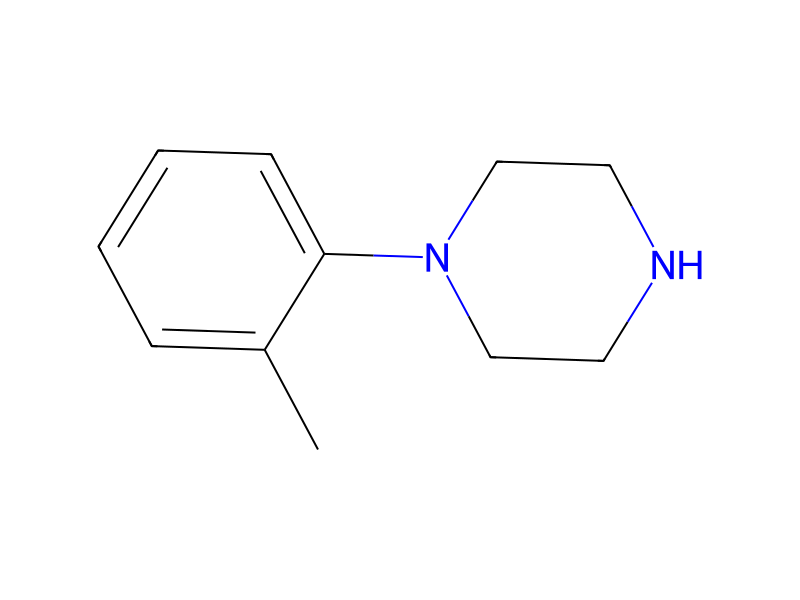
Product 1

Reagents, catalysts & solvents 1

Procedure
A mixture of 35.2 g (0.2 mole) of 1-(2-methyl-phenyl)-piperazine, 31.4 g (0.2 mole) of 1-bromo-3-chloropropane, 40.4 g (0.4 mole) of triethylamine and 100 ml of tetrahydrofurane is refluxed for five hours. After cooling it is filtered, the filtrate is concentrated and the residue is fractionally distilled under vacuum. There are obtained 32.7 g of 3-[4-(2-methyl-phenyl)-piperazino]-propyl chloride (65% of theory) of boiling point 138°-140° C/0.1 mm Hg.
Workup
- temperatureis refluxed for five hours
- temperatureAfter cooling it
- filtrationis filtered
- concentrationthe filtrate is concentrated
- distillationthe residue is fractionally distilled under vacuum
Sources & evidence
- ORD record
- ord-db9027ef334b4ec5a97acce5ff3d6992
- Source dataset
- uspto-grants-1976_12
- Patent number
- US03996361
Reaction notes
Loading…