Ethanol → 4-tert-BUTYLAMINO-5,7-DINITRO-2-TRIFLUOROMETHYLBENZIMIDAZOLE
Reaction equation

Cl[C:2]1[C:10]2[NH:9][C:8]([C:11]([F:14])([F:13])[F:12])=[N:7][C:6]=2[C:5]([N+:15]([O-:17])=[O:16])=[CH:4][C:3]=1[N+:18]([O-:20])=[O:19].C(N(CC)CC)C.[C:28]([NH2:32])([CH3:31])([CH3:30])[CH3:29].C(O)C>O>[C:28]([NH:32][C:2]1[C:10]2[NH:9][C:8]([C:11]([F:14])([F:13])[F:12])=[N:7][C:6]=2[C:5]([N+:15]([O-:17])=[O:16])=[CH:4][C:3]=1[N+:18]([O-:20])=[O:19])([CH3:31])([CH3:30])[CH3:29]Participants
6





Procedure
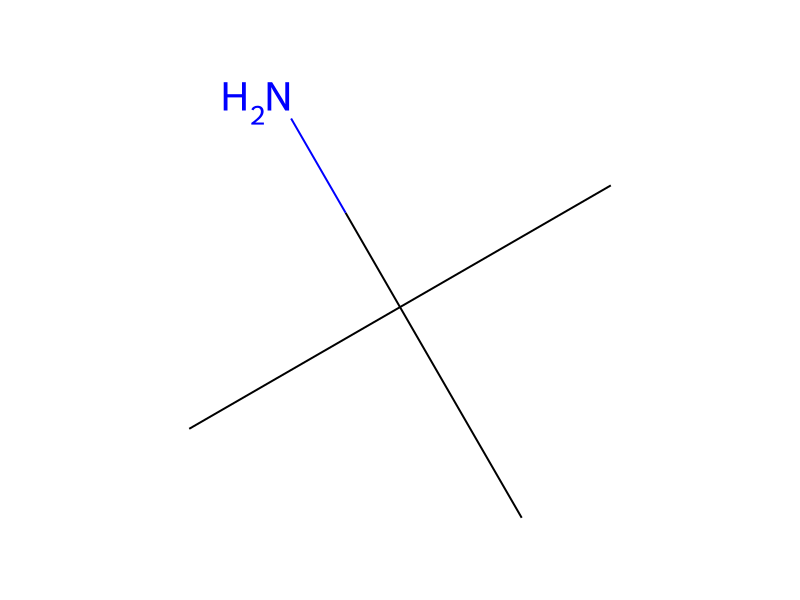
4-Chloro-5,7-dinitro-2-trifluoromethylbenzimidazole (5.0 grams) was mixed with 1.6 grams of triethylamine and 1.2 grams of tert-butylamine in a small amount of ethanol. The resulting reaction mixture was refluxed over a weekend, then poured into water and the resulting aqueous mixture acidified and filtered to separate the expected 4-tert-butylamino-5,7-dinitro-2-trifluoromethylbenzimidazole product. It was recrystallized from ethanol as an orange solid, m.p., 195°-97° C. Elemental analysis confirmed the identity of the product. A second crop melted at 177°-88° C.
Workup
- customThe resulting reaction mixture
- temperaturewas refluxed over a weekend
- filtrationfiltered
- customto separate the expected 4-tert-butylamino-5,7-dinitro-2-trifluoromethylbenzimidazole product
- customIt was recrystallized from ethanol as an orange solid
- custom195°-97° C
Sources & evidence
- ORD record
- ord-19368ad923994039bfe5a79c863c667f
- Source dataset
- uspto-grants-1976_12
- Patent number
- US04000295
Reaction notes
Loading…