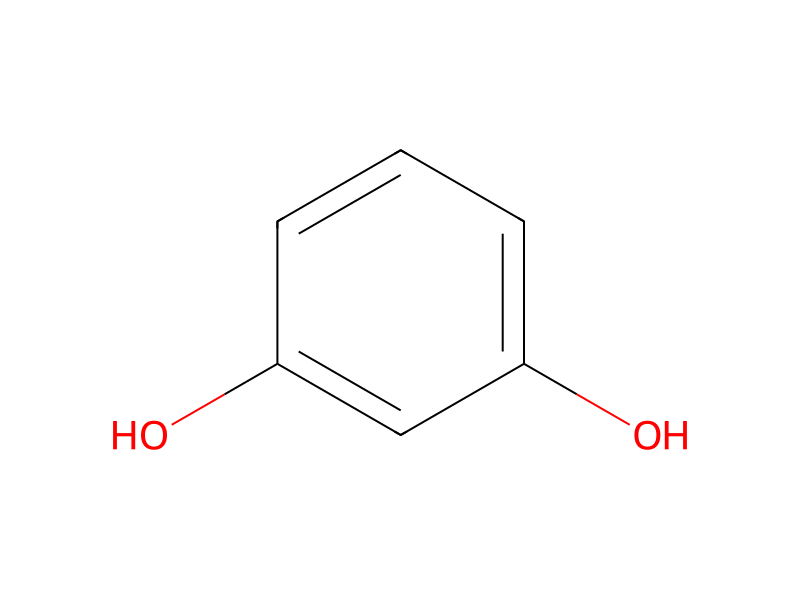
Resorcinol → 3-[3,5-Dimethoxy-benzyloxy]-phenol
Reaction equation

[C:1]1([CH:8]=[CH:7][CH:6]=[C:4]([OH:5])[CH:3]=1)[OH:2].BrC[C:11]1[CH:16]=[CH:15][C:14]([O:17][CH3:18])=[CH:13][C:12]=1[O:19][CH3:20].[C:21](=O)([O-])[O-].[K+].[K+].C1OCCOCCOCCOCCOCCOC1>CC(C)=O>[CH3:18][O:17][C:14]1[CH:15]=[C:16]([CH:11]=[C:12]([O:19][CH3:20])[CH:13]=1)[CH2:21][O:2][C:1]1[CH:3]=[C:4]([OH:5])[CH:6]=[CH:7][CH:8]=1Participants
6
Reactant 4



Product 1

Reagents, catalysts & solvents 1

Procedure
Resorcinol (0.21 g, 1.87 mmol), 4-bromomethyl-1,3-dimethoxybenzene (0.39 g, 1.70 mmol), potassium carbonate (0.26 g, 1.87 mmol) and 18-crown-6-ether (0.09 g, 0.34 mmol) were stirred together in acetone (15 cm3, 99%) under nitrogen at room temperature for 20 hours. The solution was evaporated under reduced pressure, and the residue was taken up in dichloromethane (10 cm3) and water (10 cm3). The aqueous layer was extracted with dichloromethane (2×10 cm3), and the combined extracts were washed with water (2×20 cm3), dried (MgSO4), and evaporated under reduced pressure. The residue was chromatographed (SiO2, dichloromethane) to give the phenol, (0.12 g, 27%), as an oil.
Workup
- customThe solution was evaporated under reduced pressure
- extractionThe aqueous layer was extracted with dichloromethane (2×10 cm3)
- washthe combined extracts were washed with water (2×20 cm3)
- dry with materialdried (MgSO4)
- customevaporated under reduced pressure
- customThe residue was chromatographed (SiO2, dichloromethane)
Sources & evidence
- ORD record
- ord-bfb336cbad644629a1cc2e99b968ade7
- Source dataset
- uspto-grants-2001_05
- Patent number
- US06225352B1
Reaction notes
Loading…