3-Nitrobenzaldehyde → HCID 22000958, compound
Reaction equation

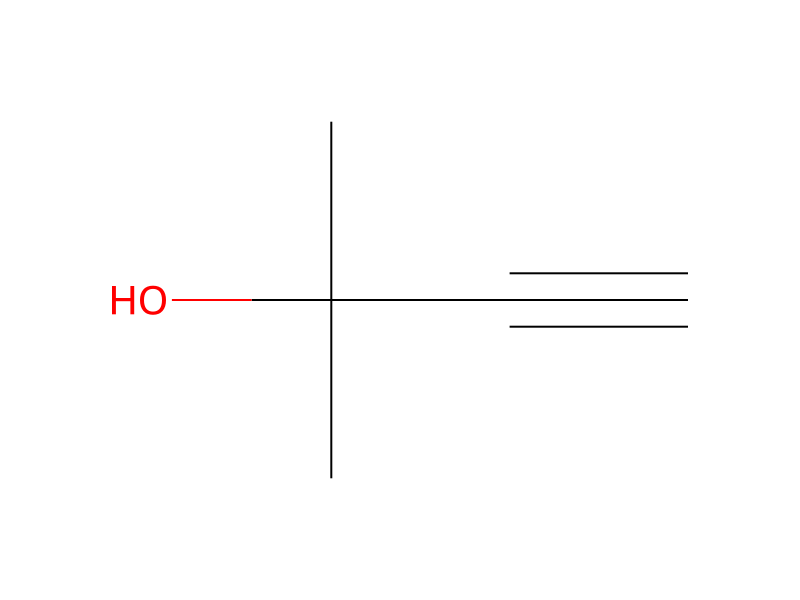
Br[C:2]1[CH:3]=[C:4]([CH:6]=[CH:7][CH:8]=1)[NH2:5].[CH3:9][C:10]([OH:14])(C#C)[CH3:11].[N+]([C:18]1C=C(C=C[CH:25]=1)C=O)([O-])=O.C1(P(C2C=CC=CC=2)C2C=CC=CC=2)C=CC=CC=1>Cl[Pd](Cl)([P](C1C=CC=CC=1)(C1C=CC=CC=1)C1C=CC=CC=1)[P](C1C=CC=CC=1)(C1C=CC=CC=1)C1C=CC=CC=1.C(N(CC)CC)C>[CH3:9][CH:10]([CH3:11])[OH:14].[NH2:5][C:4]1[CH:3]=[C:2]([C:18]#[CH:25])[CH:8]=[CH:7][CH:6]=1Participants
7






Conditions
- Temperature
- 80 °C
Procedure
A mixture of 3-bromoaniline (1.72 g, 10 mmol), 2-methyl-3-butyn-2-ol (1.1 g, 13 mmol), 3-nitrobenzaldehyde (0.5 g, 3.3 mmol), triethylamine (5 g), dichlorobis(triphenylphosphine)palladium (15 mg) and triphenylphosphine (80 mg) was deaerated by bubbling nitrogen. The reaction mixture was heated to 80° C. and treated with CuI (10 mg). After 7 hr at reflux thin-layer chromatography showed nearly complete conversion of the 3-bromoaniline to a mixture of 3-aminophenylacetylene dimethylcarbinol and N-(3-nitrobenzylidene) aminophenyl acetylene dimethylcarbinol.
Workup
- customby bubbling nitrogen
- additiontreated with CuI (10 mg)
- temperatureAfter 7 hr at reflux thin-layer chromatography
- additionto a mixture of 3-aminophenylacetylene dimethylcarbinol and N-(3-nitrobenzylidene) aminophenyl acetylene dimethylcarbinol
Sources & evidence
- ORD record
- ord-cf38f956d40a41d29cf7f5d1742c80bb
- Source dataset
- uspto-grants-2001_05
- Patent number
- US06225499B1
Reaction notes
Loading…