Hydrochloric Acid → 5-Chloro-salicylaldehyde
Reaction equation

[Cl:1][C:2]1[CH:7]=[CH:6][C:5]([OH:8])=[CH:4][CH:3]=1.C(N(CCCCCCCC)CCCCCCCC)CCCCCCC.[Sn](Cl)(Cl)(Cl)Cl.[CH2:39]=[O:40].Cl>C1(C)C=CC=CC=1.O>[Cl:1][C:2]1[CH:7]=[C:6]([CH:39]=[O:40])[C:5]([OH:8])=[CH:4][CH:3]=1Participants
8


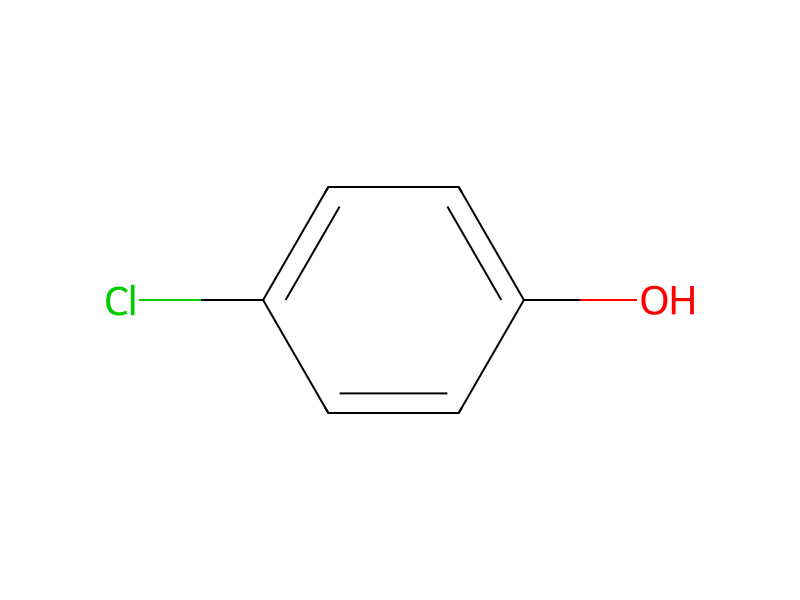


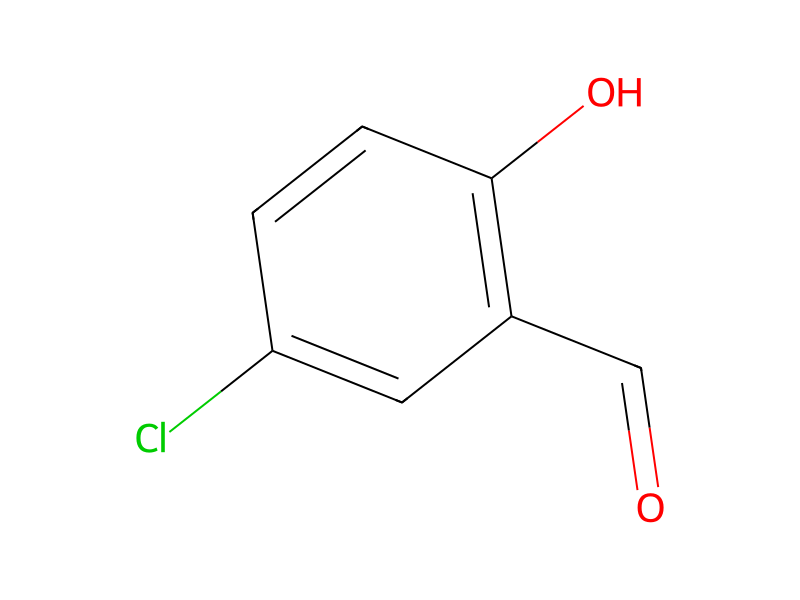


Conditions
- Temperature
- 100 °C
Procedure
64.25 g (0.5 mole) of p-chlorophenol and 55 g (0.2 mole) of trioctylamine are dissolved in 100 ml of toluene. Under N2, 13 g of tin tetrachloride are added dropwise at 0° C. After 20 min at room temperature, 33 g of dried paraformaldehyde are added, and the mixture is heated at 100° C. for 5 hours. After cooling, the mixture is poured onto 2.5 l of H2O, and the mixture is acidified to pH 2 with 2N HCl and extracted with diethyl ether. The ether phase is washed with saturated NaCl solution and dried with Na2SO4 and concentrated. Chromatography on silica gel using ethyl acetate/cyclohexane (1:6) provides 24 g of the title compound, melting point 99° C.
Workup
- temperatureAfter cooling
- extractionextracted with diethyl ether
- washThe ether phase is washed with saturated NaCl solution
- dry with materialdried with Na2SO4
- concentrationconcentrated
Sources & evidence
- ORD record
- ord-bc8a473bf41f484b9fcbea8b92d9ea00
- Source dataset
- uspto-grants-1986_06
- Patent number
- US04595685
Reaction notes
Loading…