2-Phenylethanol → Triphenylphosphine Oxide
Reaction equation

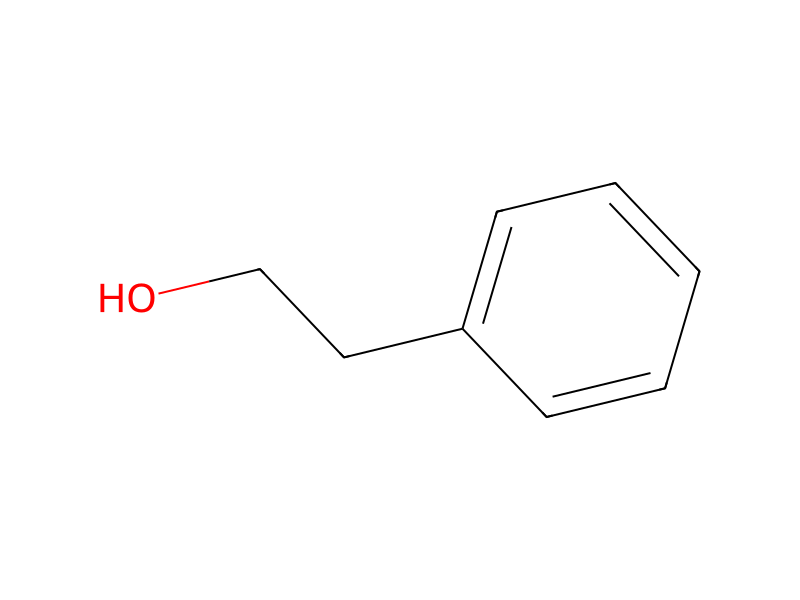
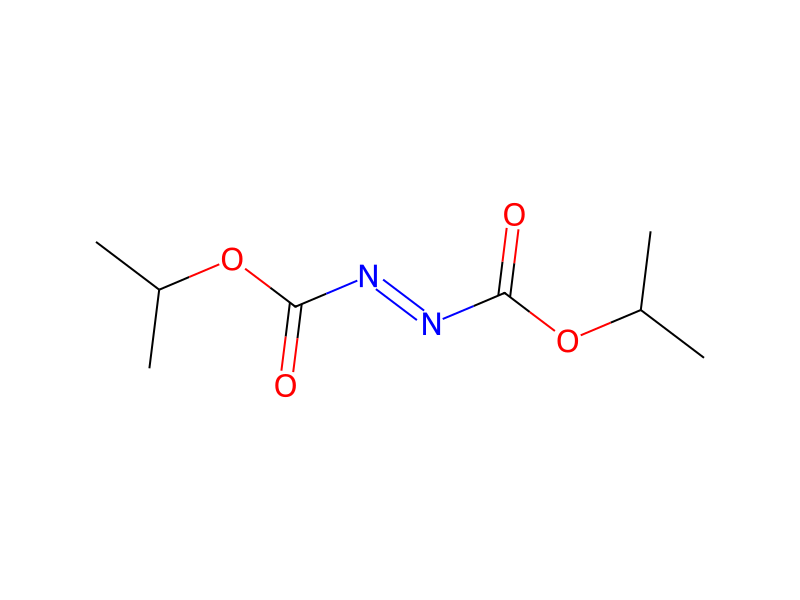
[C:1]1([P:7]([C:14]2[CH:19]=[CH:18][CH:17]=[CH:16][CH:15]=2)[C:8]2[CH:13]=[CH:12][CH:11]=[CH:10][CH:9]=2)[CH:6]=[CH:5][CH:4]=[CH:3][CH:2]=1.C1(CC[OH:28])C=CC=CC=1.CC(OC(/N=N/C(OC(C)C)=O)=O)C>O1CCOCC1>[C:14]1([P:7](=[O:28])([C:1]2[CH:2]=[CH:3][CH:4]=[CH:5][CH:6]=2)[C:8]2[CH:13]=[CH:12][CH:11]=[CH:10][CH:9]=2)[CH:15]=[CH:16][CH:17]=[CH:18][CH:19]=1Participants
5
Reactant 3

Product 1

Reagents, catalysts & solvents 1

Procedure
Triphenylphosphine (1.2 g, 5.4 mmol) and 2-phenylethanol (0.65 g, 5.4 mmol) were sequentially added to a solution of tri-N2,1,2′-O-acetyl-L-biopterin (1.5 g, 4.21 mmol) in 1,4-dioxane (7 ml). To this mixture diisopropylazodicarboxylate (1.05 ml, 5.4 mmol) was added dropwise and the reaction mixture was stirred at room temperature for 18 h. Evaporation and column chromatography on silica gel eluting with AcOEt (1:2) followed by AcOEt gave the expected product together with triphenylphosphine oxide.
Workup
- customEvaporation and column chromatography on silica gel eluting with AcOEt (1:2)
Sources & evidence
- ORD record
- ord-9a2138b605af4915820e36b725b6a4a6
- Source dataset
- uspto-grants-2009_06
- Patent number
- US07541360B2
Reaction notes
Loading…