Hydrochloric Acid → HCID 12583800, compound
Reaction equation

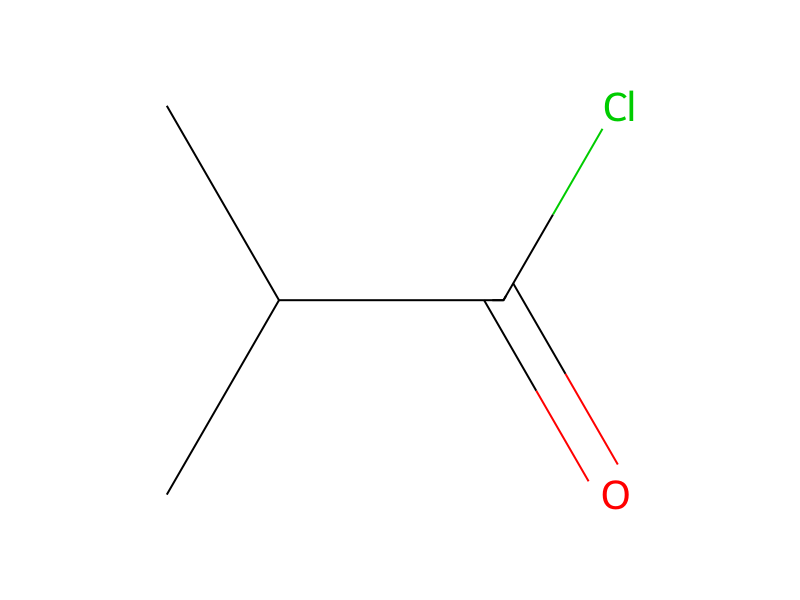
[C:1](Cl)(=[O:5])[CH:2]([CH3:4])[CH3:3].[CH3:7][C:8]1[CH:9]=[CH:10][CH:11]=[CH:12][C:13]=1[CH3:14].[Cl-].[Al+3].[Cl-].[Cl-].Cl>O>[CH3:7][C:8]1[CH:9]=[C:10]([C:1](=[O:5])[CH:2]([CH3:4])[CH3:3])[CH:11]=[CH:12][C:13]=1[CH3:14]Participants
Reactant 4



Product 1

Reagents, catalysts & solvents 1

Conditions
- Temperature
- 2.5 °C
Procedure
In a nitrogen atmosphere, 213.1 g (2.0 mol) of isobutyryl chloride and 400 g of o-xylene are introduced into a 1.5 litre reaction flask. The solution is cooled to 5-0° C. Then, over about three hours, 293.3 g (2.2 mol) of aluminium chloride are added in small portions at 0-5° C. After the evolution of HCl gas has ceased, the reaction is checked using GC. The dark-red reaction solution is then poured into ice and water and stirred to complete the reaction. The two phases are separated in a separating funnel. The organic phase is washed with water and is then concentrated using a vacuum rotary evaporator. The last remnants of solvent are removed under a high vacuum. 329.1 g of faintly yellowish oil remain behind. The product is checked using GC and a 1H NMR spectrum. The product, 1-(3,4-dimethyl-phenyl)-2-methyl-propan-1-one, is used directly in the next reaction.
Workup
- customthe reaction
- customThe two phases are separated in a separating funnel
- washThe organic phase is washed with water
- concentrationis then concentrated
- customa vacuum rotary evaporator
- customThe last remnants of solvent are removed under a high vacuum
- customThe product, 1-(3,4-dimethyl-phenyl)-2-methyl-propan-1-one, is used directly in the next reaction
Sources & evidence
- ORD record
- ord-7c49016f4cb74752bc1cf8d3b336cbe3
- Source dataset
- uspto-grants-2010_01
- Patent number
- US07642296B2
Reaction notes
Loading…