Bromide ion → [4-(5-Cyano-1-methyl-1H-pyrrol-2-yl)-2-propylphenyl]cyanamide
Reaction equation

Br[CH2:2][CH2:3][CH2:4][C:5]1[CH:10]=[CH:9][C:8]([NH:11][C:12]#[N:13])=[CH:7][CH:6]=1.[CH3:14][N:15]1[C:19]([C:20]#[N:21])=CC=C1B(O)O.C(=O)([O-])[O-].[K+].[K+].[C:31](P(C(C)(C)C)C(C)(C)C)(C)([CH3:33])[CH3:32].[Br-]>C1COCC1>[C:20]([C:19]1[N:15]([CH3:14])[C:4]([C:5]2[CH:10]=[CH:9][C:8]([NH:11][C:12]#[N:13])=[C:7]([CH2:32][CH2:31][CH3:33])[CH:6]=2)=[CH:3][CH:2]=1)#[N:21]Participants
Reactant 5




Product 1

Reagents, catalysts & solvents 1

Procedure
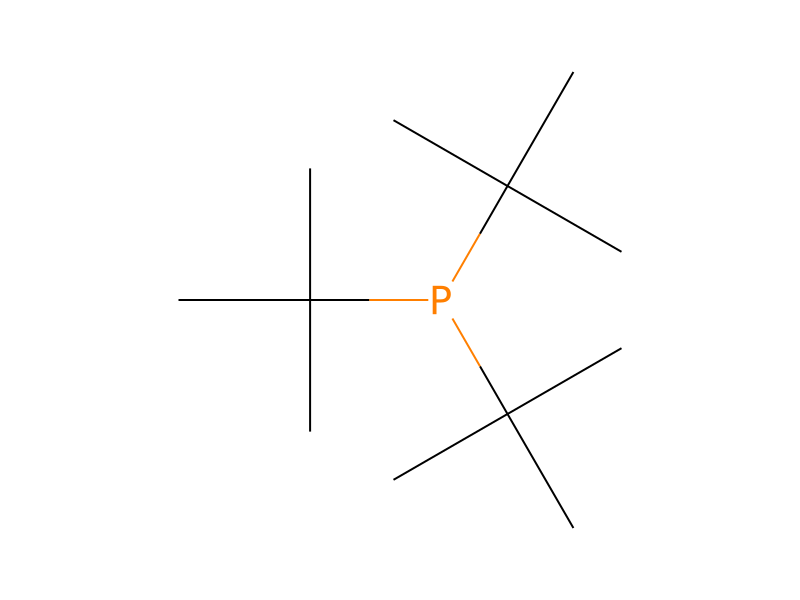
4-bromopropylphenylcyanamide (0.125 g, 5 mmol) tris(dibenzylideneacetone) dipalladium (11.6 mg, 0.0126 mmol), N-methyl-5-cyanopyrroleboronic acid (0.150 g, 1 mmol), and potassium carbonate (0.276 g, 2 mmol) were placed in a 40 mL vial fitted with a septa. The vial was then filled with a continuous flow of nitrogen and THF (2 mL) was added with stirring. Tri-tert-butylphosphine (0.0486 mL, 0.0252 mmol) was added to the mixture and allowed to stir until the starting bromide was consumed. The mixture was then diluted with 1/1 hexane/ethylacetate and filtered through a plug of silica gel, solvent was evaporated and the residue was flash chromatographed using 4/1 Hexane/THF to give (0.025 g, 18%) of [4-(5-cyano-1-methyl-1H-pyrrol-2-yl)-2-propylphenyl]cyanamide.
Workup
- customvial fitted with a septa
- additionwas added
- customwas consumed
- additionThe mixture was then diluted with 1/1 hexane/ethylacetate
- filtrationfiltered through a plug of silica gel, solvent
- customwas evaporated
- customchromatographed
Sources & evidence
- ORD record
- ord-09ab76a83d0746639eee1c8c3503ee98
- Source dataset
- uspto-grants-2010_01
- Patent number
- US07652062B2
Reaction notes
Loading…