Hydrochloric Acid → HCID 86691273, compound
Reaction equation

[CH2:1]([Zn]CC)C.FC(F)(F)C(O)=O.ICI.[CH2:16]([O:23][C:24]([NH:26][C@@:27]1([C:39]([O:41][CH2:42][CH3:43])=[O:40])[CH2:32][C:31](=[CH2:33])[C@@H:30]2[C@H:28]1[C@H:29]2[C:34]([O:36][CH2:37][CH3:38])=[O:35])=[O:25])[C:17]1[CH:22]=[CH:21][CH:20]=[CH:19][CH:18]=1.Cl>ClC(Cl)C>[CH2:16]([O:23][C:24]([NH:26][C@@:27]1([C:39]([O:41][CH2:42][CH3:43])=[O:40])[CH2:32][C:31]2([CH2:1][CH2:33]2)[C@@H:30]2[C@H:28]1[C@H:29]2[C:34]([O:36][CH2:37][CH3:38])=[O:35])=[O:25])[C:17]1[CH:18]=[CH:19][CH:20]=[CH:21][CH:22]=1Participants
Reactant 5

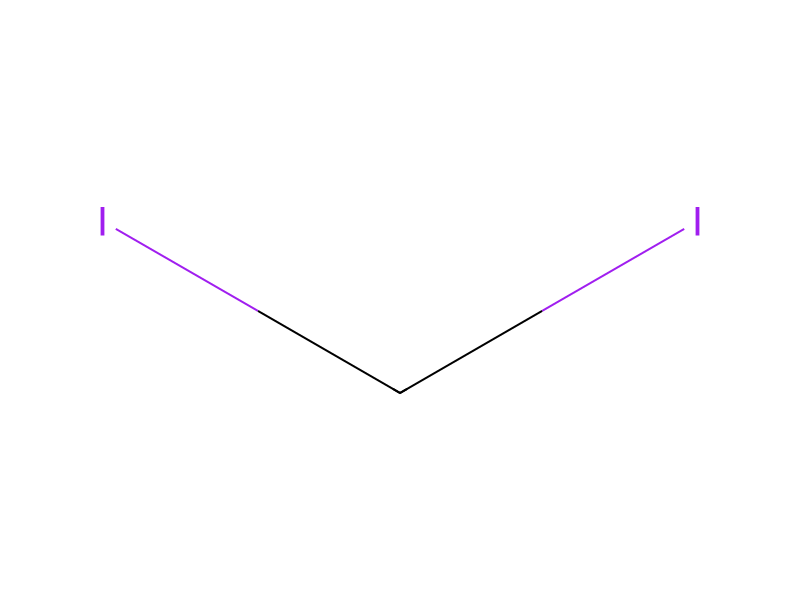


Product 1

Reagents, catalysts & solvents 1

Conditions
- Temperature
- -15 °C
Procedure
To a jacketed reaction flask connected to a chiller unit, add diethylzinc solution (157.2 mL, 157.2 mmol, 1M in heptanes) under a nitrogen atmosphere. Cool the solution to −15° C. and dilute with cold (−15° C.), dry dichloroethane (157.2 mL). Dissolve trifluoroacetic acid (11.1 mL, 146.7 mmol) in dichloroethane (11.1 mL) and add to the reaction vessel over 50 minutes, keeping the internal temperature below −10° C. Stir the resulting suspension at −10 to −15° C. for 30 minutes. Dissolve diiodomethane (12.7 mL, 42.1 g, 157.2 mmol) in dichloroethane (12.7 mL) and add to the reaction mixture over 50 minutes, keeping the internal temperature below −10° C. Stir the resulting thin, white suspension at −10 to −15° C. for 30 minutes. Dissolve diethyl (1S,2S,5R,6S)-2-benzyloxycarbonylamino-4-methylene-bicyclo[3.1.0]hexane-2,6-dicarboxylate (20.3 g, 87.9% potency, 46.0 mmol) in dichloroethane (30.4 mL) and add to the reaction mixture over 10 minutes, keeping the internal temperature below −10° C. Stir the clear, pale yellow solution at −10° C. for 5 minutes and monitor for latent exotherms. Change the set point on the chiller to 0° C. and stir the reaction mixture at that temperature for 48 hours. Quench the reaction mixture by addition of 5N HCl (62.9 mL, 314.4 mmol) over 15 minutes, keeping the internal temperature below 6° C. Stir the resulting mixture at 0-5° C. for 20 minutes, then transfer to a funnel and separate the layers. Wash the organic layer with 1N HCl (2×50 mL) followed by 1:1 saturated NaHCO3/H2O (60 mL), 1:1 saturated Na2CO3/H2O (60 mL) and water (50 mL). Dry the organics over Na2SO4 and concentrate in vacuo to afford the title compound as a pale yellow oil (19.6 g, 60.3% potent, 63.9% corrected yield). 1H NMR (DMSO-d6) δ 0.37 (m, 2H), 0.52-0.55 (dm, 2H), 1.13-1.17 (m, 6H), 1.49-1.50 (m, 1H), 1.51-1.56 (m, 1H), 1.60-1.79 (m, 2H), 3.97-4.10 (m, 5H), 5.00 (s, 2H), 7.29-7.34 (m, 5H), 8.04 (s, 1H).
Workup
- customTo a jacketed reaction flask connected to a chiller unit
- customthe internal temperature below −10° C
- customthe internal temperature below −10° C
- stirringStir the resulting thin, white suspension at −10 to −15° C. for 30 minutes
- customthe internal temperature below −10° C
- stirringStir the clear, pale yellow solution at −10° C. for 5 minutes
- stirringChange the set point on the chiller to 0° C. and stir the reaction mixture at that temperature for 48 hours
- customQuench the reaction mixture
- customthe internal temperature below 6° C
- stirringStir the resulting mixture at 0-5° C. for 20 minutes
- customtransfer to a funnel
- customseparate the layers
- washWash the organic layer with 1N HCl (2×50 mL)
- dry with materialDry the organics over Na2SO4
- concentrationconcentrate in vacuo
Sources & evidence
- ORD record
- ord-a555521eb23147408decbd6ca84cbaca
- Source dataset
- uspto-grants-2013_11
- Patent number
- US08575214B2
Reaction notes
Loading…