Diethyl Oxalate → ethyl 2-oxo-2-(2-oxocyclopentyl)acetate
Reaction equation

[C:1]1(=[O:6])[CH2:5][CH2:4][CH2:3][CH2:2]1.[C:7](OCC)(=[O:13])[C:8]([O:10][CH2:11][CH3:12])=[O:9].[H-].[Na+]>O1CCCC1>[O:13]=[C:7]([CH:2]1[CH2:3][CH2:4][CH2:5][C:1]1=[O:6])[C:8]([O:10][CH2:11][CH3:12])=[O:9]Participants
5
Reactant 3

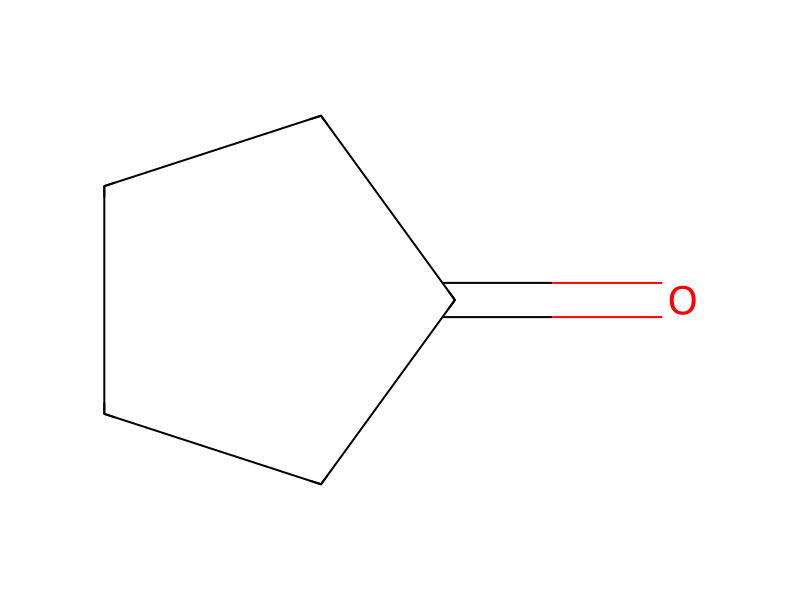

Product 1

Reagents, catalysts & solvents 1

Conditions
- Temperature
- 0 °C
Procedure
A solution of 15.5 mL (0.175 mol) of cyclopentanone and 23.8 mL (0.175 mol) of diethyl oxalate in 90 mL of tetrahydrofuran are added dropwise at 0° C. to a suspension of 7.0 g (0.175 mol) of sodium hydride (50% in oil) in 60 mL of tetrahydrofuran. The mixture is stirred for another 10 minutes at 0° C. and then heated to ambient temperature. After 5 hours, an exothermic reaction sets in and the mixture heats up to 50° C. After 16 hours, it is combined with ice water and extracted with ether. The aqueous phase is adjusted to pH 4 with glacial acetic acid and extracted with ethyl acetate, dried and concentrated by evaporation. The residue is distilled in vacuo. BP(23 mbar)=135° C.-141° C. Yield: 19.6 g (61%).
Workup
- temperatureheated to ambient temperature
- waitAfter 5 hours
- customan exothermic reaction sets in and the mixture
- customheats up to 50° C
- waitAfter 16 hours
- extractionextracted with ether
- extractionextracted with ethyl acetate
- customdried
- concentrationconcentrated by evaporation
- distillationThe residue is distilled in vacuo
- customBP(23 mbar)=135° C.-141° C
Sources & evidence
- ORD record
- ord-efd20165feec4afeb89e2cb06dc80392
- Source dataset
- uspto-grants-2008_02
- Patent number
- US07326791B2
Reaction notes
Loading…