Formaldehyde → HCID 2247112, compound
Reaction equation

C1(O)C=CC=CC=1.C=O.C(NCC)C.N1CCCC1.C(NCCC)CC.[CH2:27]([N:29]([CH2:32][C:33]1[CH:38]=[CH:37][CH:36]=[CH:35][C:34]=1[OH:39])[CH2:30][CH3:31])[CH3:28].C(N(CC1C=CC=CC=1O)CCC)CC>C(OC(C)C)(C)C>[OH:39][C:34]1[CH:35]=[CH:36][CH:37]=[CH:38][C:33]=1[CH2:32][N:29]1[CH2:30][CH2:31][CH2:28][CH2:27]1Participants
9
Reactant 7



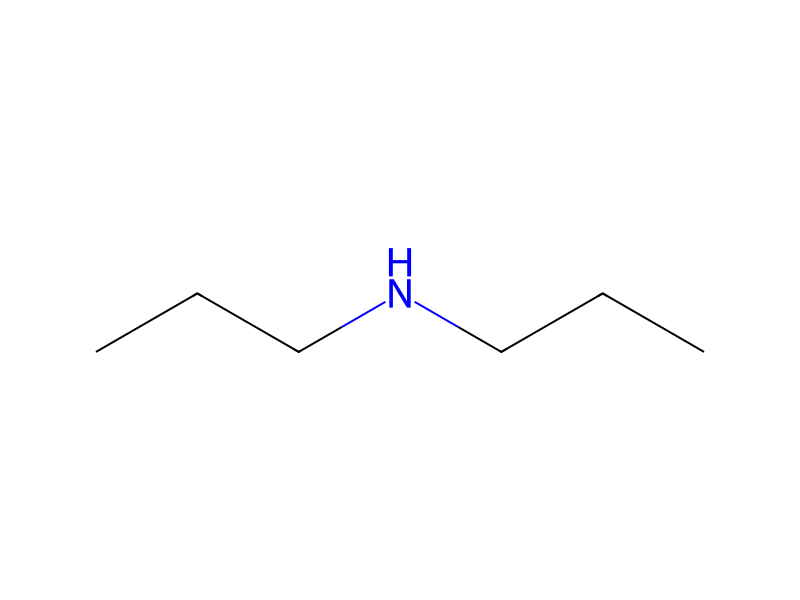



Product 1

Reagents, catalysts & solvents 1

Procedure
The procedure was as described in Example 1, but the phenol and paraformaldehyde in diisopropyl ether were reacted at 50° C. in separate runs with (a) 0.65 kg of diethylamine, (b) 0.632 kg pyrrolidine and (c) 0.90 kg of dipropylamine. Under the same reaction conditions and isolation conditions, 1.49 kg (about 93% of theory, relative to converted phenol) of o-diethylaminomethylphenol, 1.77 kg (about 96% of theory, relative to converted phenol) of o-dipropylaminomethylphenol and 1.50 kg (about 95% of theory, relative to converted phenol) of o-hydroxy-N-benzylpyrrolidine were obtained in (a), (b) and (c) respectively.
Sources & evidence
- ORD record
- ord-148be0567c004aa4b9d9cbe7d83cdf84
- Source dataset
- uspto-grants-1980_07
- Patent number
- US04212822
Reaction notes
Loading…