Chloride → Sulfate Ion
Reaction equation

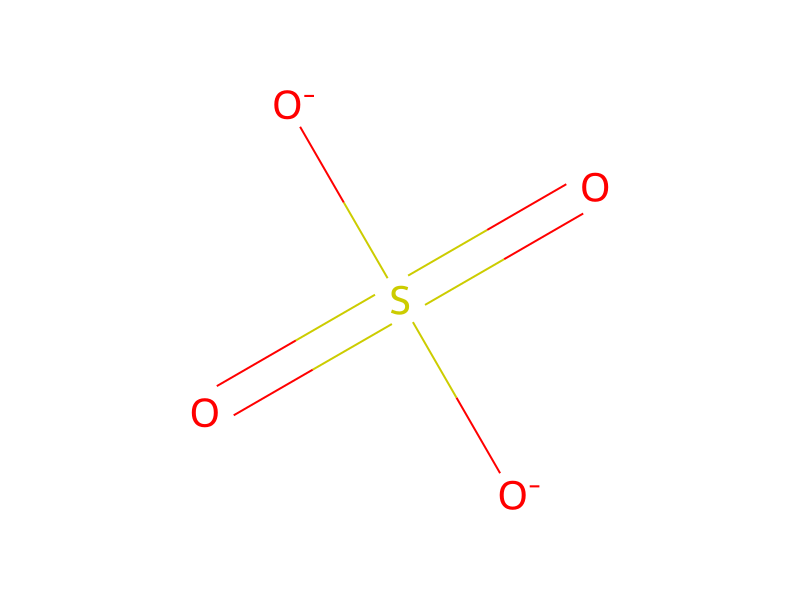
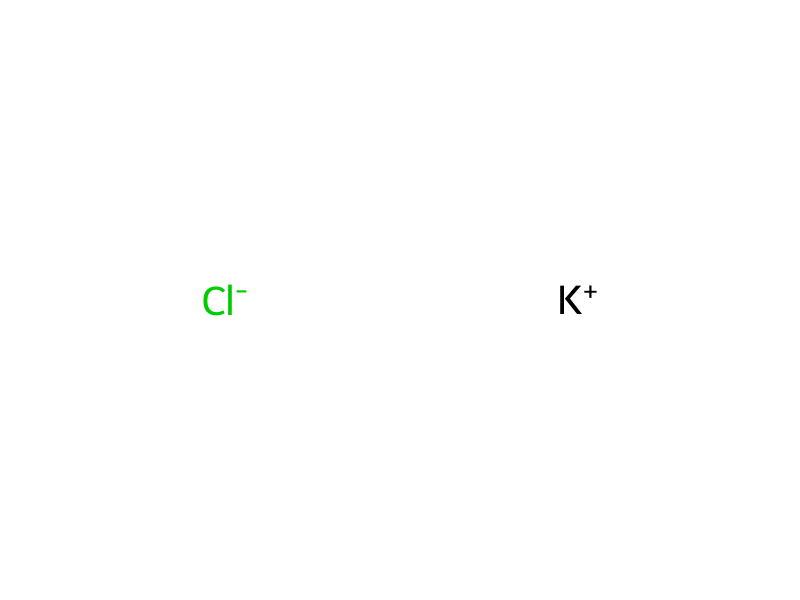
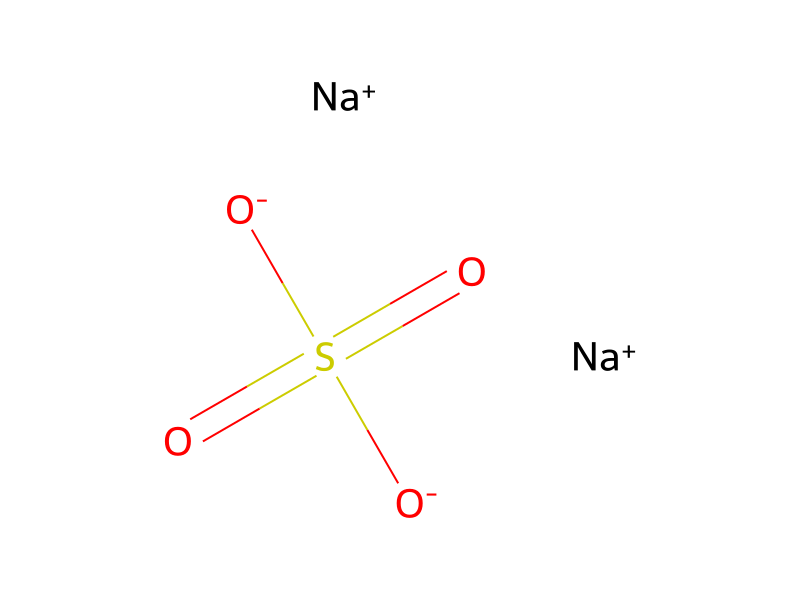
[Cl-].[K+:2].[S:3]([O-:7])([O-:6])(=[O:5])=[O:4].[O-:8][S:9]([O-:12])(=[O:11])=[O:10].[Na+].[Na+].[Cl-]>>[S:3]([O-:7])([O-:6])(=[O:5])=[O:4].[K+:2].[K+:2].[S:9]([O-:12])([O-:11])(=[O:10])=[O:8]Participants


Procedure
Used as the starting sulfate-containing material to produce potassium sulfate was mirabilite (Na2SO4.10H2O). To 1.883 kg of mirabilite were added 0.100 kg of potassium chloride, 1.918 kg of a concentrated sulfate solution of the following composition, in % by weight: Na2SO4 --2to 3; KCl--24 to 25; NaCl--9 to 10; H2O--the balance, 3.440 kg of a sulfate suspension containing 0.598 kg of mirabilite and 2.858 kg of a concentrated chloride solution of the following composition, in % by weight: Na2SO4 --4; KCl--15 to 16; NaCl--17 to 18; H2O--the balance. Obtained as a result were 1.013 kg of glaserite and 6.344 kg of a glaserite solution of the following composition, in % by weight: Na2SO4 --5 to 6; KCl--7 to 8; NaCl--17; H2O-- the balance. The glaserite was treated with a potassium chloride solution (0.710 kg of potassium chloride and 1.815 kg of water) at a temperature of 30° C. for 45 minutes to obtain 1 kg of potassium sulfate and 2.538 kg of a sulfate solution of the following composition, in % by weight: Na2SO4 --2; KCl--18 to 20; NaCl--6 to 7; H2O--the balance. The sulfate solution was evaporated, the amount of evaporated water being 0.620 kg. The resulting concentrated solution was returned to the first stage of conversion.
Workup
- customObtained as a result
Sources & evidence
- ORD record
- ord-12eb58974a23424c9f892da8f4d8d95a
- Source dataset
- uspto-grants-1980_07
- Patent number
- US04215100
Reaction notes
Loading…