Hydrochloric Acid → HCID 54696180, compound
Reaction equation

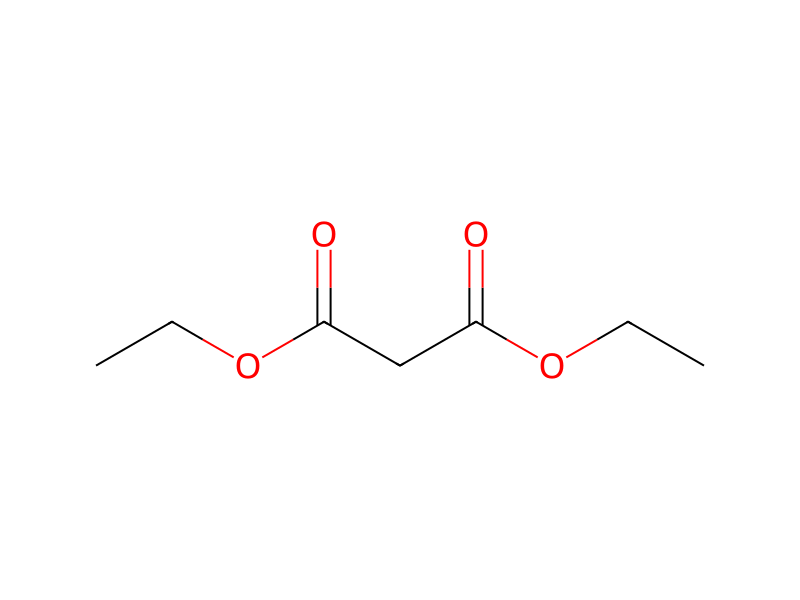
[Na].[C:2]([O:10][CH2:11][CH3:12])(=[O:9])[CH2:3][C:4]([O:6]CC)=O.[CH2:13]([N:15]1[C:20]2[N:21]=[CH:22][CH:23]=[CH:24][C:19]=2C(=O)[O:17][C:16]1=O)[CH3:14].Cl>O.C(O)C>[CH2:13]([N:15]1[C:20]2[C:19](=[CH:24][CH:23]=[CH:22][N:21]=2)[C:4]([OH:6])=[C:3]([C:2]([O:10][CH2:11][CH3:12])=[O:9])[C:16]1=[O:17])[CH3:14]Participants
7
Reactant 4



Product 1

Reagents, catalysts & solvents 2


Procedure
To a solution of 0.115 g. (0.005 g. atom) of sodium in 20 ml. of ethanol was added 1.6 g. (0.01 mole) of diethyl malonate. After stirring for 5 minutes the solution was evaporated in a rotary evaporator. The residue was dissolved in 15 ml. of N,N-dimethylformamide and 0.96 g. (0.005 mole) of 1-ethyl-2H-pyrido[2,3-d]-[1,3]oxazine-2,4[1H]dione was added. The mixture was heated under reflux for 1.5 hours. The mixture was cooled, diluted with a little water and was acidified with concentrated hydrochloric acid. The precipitate which formed was collected, air dried and was recrystallized from heptane to give 0.2 g. of the title product, m.p. 120°-2° C.
Workup
- customwas evaporated in a rotary evaporator
- dissolutionThe residue was dissolved in 15 ml
- temperatureThe mixture was heated
- temperatureunder reflux for 1.5 hours
- temperatureThe mixture was cooled
- customThe precipitate which formed
- customwas collected
- customair dried
- customwas recrystallized from heptane
- customto give 0.2 g
Sources & evidence
- ORD record
- ord-e8e5931adaf34e3b82380872b45f123e
- Source dataset
- uspto-grants-1980_07
- Patent number
- US04215123
Reaction notes
Loading…