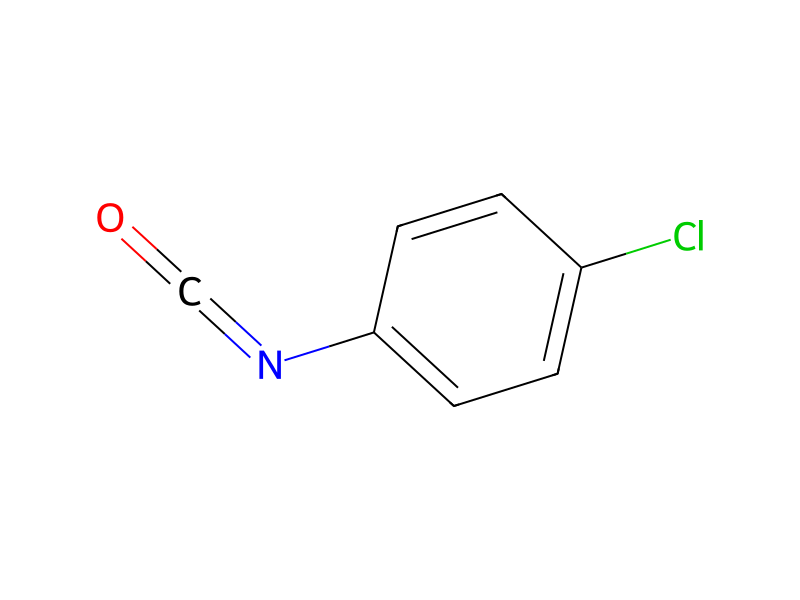
4-Chlorophenyl Isocyanate → HCID 21413417, compound
Reaction equation

[Cl:1][C:2]1[CH:7]=[CH:6][C:5](N=C=O)=[CH:4][CH:3]=1.[CH3:11][C:12]1[NH:13][C:14]([N+:17]([O-:19])=[O:18])=[CH:15][N:16]=1.C([N:22]([CH2:25]C)CC)C.[O:27]1CCCC1>>[Cl:1][C:2]1[CH:7]=[CH:6][C:5]([N:13]2[C:14]([N+:17]([O-:19])=[O:18])=[C:15]([C:25](=[O:27])[NH2:22])[N:16]=[C:12]2[CH3:11])=[CH:4][CH:3]=1Participants
5




Procedure
A solution of 17.0 g. (0.11 mol.) of 4-chlorophenyl-isocyanate in 71 ml. of tetrahydrofuran is added at room temperature to the stirred suspension of 12.7 g. (0.1 mol.) of 2-methyl-5-nitroimidazole and 0.5 g. of triethylamine in 70 ml. of tetrahydrofuran. A slightly exothermic reaction sets in, which terminates after 4 hours of stirring. The separated product is filtered off, washed with toluene and dried. 25 g. (89.5%) of 1-(4-chlorophenyl)-carbamoyl-2-methyl-5-nitroimidazole are obtained. The white, crystalline substance melts above 240° C.
Workup
- customA slightly exothermic reaction sets in, which
- filtrationThe separated product is filtered off
- washwashed with toluene
- customdried
Sources & evidence
- ORD record
- ord-63ddd395d0a84f20969005c4cfb39f8c
- Source dataset
- uspto-grants-1977_09
- Patent number
- US04046773
Reaction notes
Loading…