2-Bromopropane → Sodium, 2,4-cyclopentadien-1-yl-
Reaction equation

[Na].[CH:2]1[CH2:6][CH:5]=[CH:4][CH:3]=1.C(Br)(C)C.[Na+:11].[Br-].[CH:13]([C:16]1[CH2:20][CH:19]=[CH:18][CH:17]=1)([CH3:15])[CH3:14]>O1CCCC1>[CH-:2]1[CH:6]=[CH:5][CH:4]=[CH:3]1.[Na+:11].[CH:13]([C:16]1[CH2:20][CH:19]=[CH:18][CH:17]=1)([CH3:15])[CH3:14]Participants

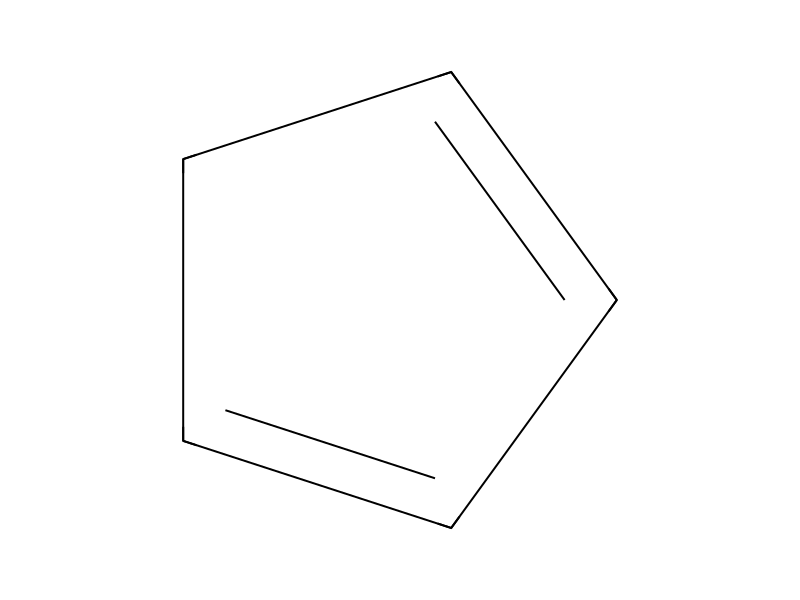





Procedure
Sodium cyclopentadienide is prepared by using 30 g of fine sodium beads (a two fold excess) and 50 ml of monomeric cyclopentadiene in 500 ml of tetrahydrofuran (THF). This solution is then transferred to another vessel (away from excess sodium) and stirred while adding 60 ml of isopropyl bromide from a dropping funnel. After completion the NaBr is allowed to settle. The slightly yellow solution containing isopropylcyclopentadiene is then transferred to a still pot for the separation of THF by fractional distillation. Pure isopropylcyclopentadiene thus produced is mixed with prepurified argon and passed downwardly through a vertical quartz tube 1/2 in o.d. which is heated electrically to 500°-600° C. by an electrical resistance heater in a tube furnace mounted vertically. Strontium metal chips are supported in the quartz tube by a platinum foil with many holes on it at a tube constriction. The product, which flows down the tube walls as a viscous liquid, is collected in a three-necked flask connected to the bottom end of the tube.
Workup
- customThis solution is then transferred to another vessel
- customstill pot for the separation of THF
- distillationby fractional distillation
Sources & evidence
- ORD record
- ord-1452c9fa708244aab815d7431cb0f069
- Source dataset
- uspto-grants-1990_04
- Patent number
- US04915988
Reaction notes
Loading…