Hydrochloric Acid → 3-(4-Methyl-4-pentenyl)pyridine
Reaction equation

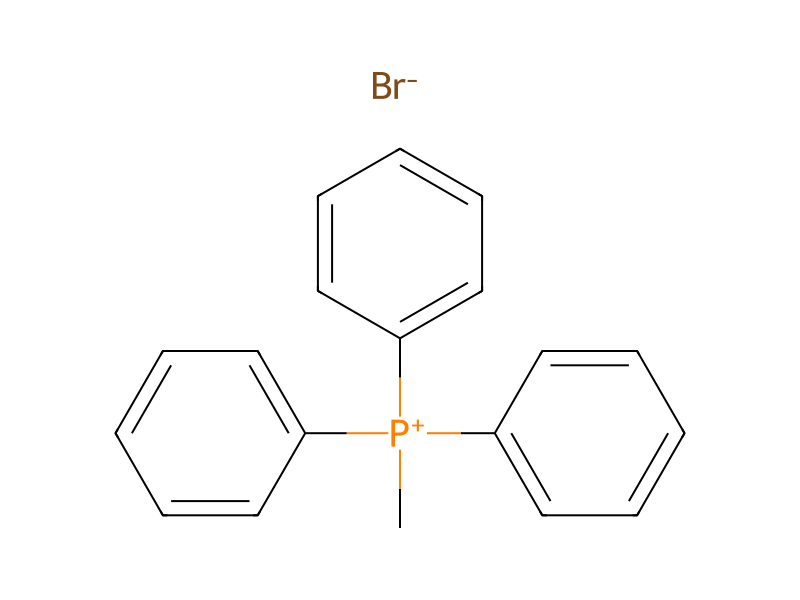
[H-].[Na+].[H][H].[N:5]1[CH:10]=[CH:9][CH:8]=[C:7]([CH2:11][CH2:12][CH2:13][C:14](=O)[CH3:15])[CH:6]=1.Cl.[CH3:18]S(C)=O>[Br-].C[P+](C1C=CC=CC=1)(C1C=CC=CC=1)C1C=CC=CC=1>[CH3:18][C:14](=[CH2:15])[CH2:13][CH2:12][CH2:11][C:7]1[CH:6]=[N:5][CH:10]=[CH:9][CH:8]=1Participants
Reactant 5





Product 1

Reagents, catalysts & solvents 1
Procedure
A suspension of 7.0 g of sodium hydride (60% dispersion in oil) in 75 mL of dry dimethylsulfoxide was stirred at 75° C. under argon for 45 minutes at which time the evolution of hydrogen had ceased. After the solution was cooled, 61 g of methyltriphenylphosphonium bromide was added and the mixture was stirred at room temperature for 30 minutes before the addition of 25 g of 5-(3-pyridinyl)-2-pentanone in 125 mL of dimethylsulfoxide. The reaction was then stirred at room temperature overnight. After the addition of 1 L of 1N hydrochloric acid solution, the precipitated triphenylphosphine oxide was removed by filtration, and the filtrate was basified with 110 mL of 10N sodium hydroxide. The product was extracted with dichloromethane (4×300 ml) and the extracts were washed with brine, then were combined. dried (K2CO3) and evaporated to give 25 g of crude product. The material was purified by HPLC (ethyl acetate:hexane: 1:1) to yield 17.5 g of 3-(4-methyl-4-pentenyl)pyridine as a colorless oil.
Workup
- temperatureAfter the solution was cooled
- customthe precipitated triphenylphosphine oxide was removed by filtration
- extractionThe product was extracted with dichloromethane (4×300 ml)
- washthe extracts were washed with brine
- dry with materialdried (K2CO3)
- customevaporated
- customto give 25 g of crude product
- customThe material was purified by HPLC (ethyl acetate:hexane: 1:1)
Sources & evidence
- ORD record
- ord-be57324441124865a6065831eb0b085a
- Source dataset
- uspto-grants-1990_04
- Patent number
- US04916145
Reaction notes
Loading…