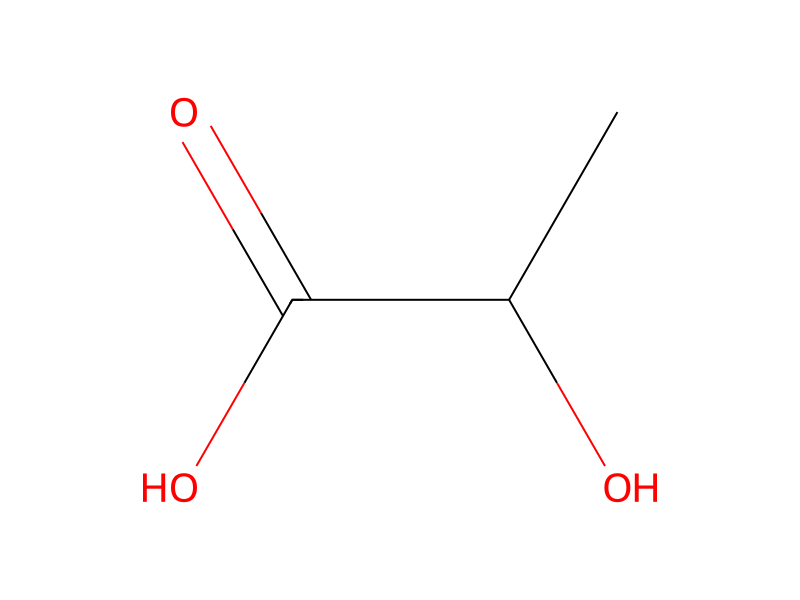
Lactic Acid → HCID 66916938, compound
Reaction equation

Br[C:2]1[CH:7]=[CH:6][C:5]([C:8]([CH:10]2[CH2:15][CH2:14][NH:13][CH2:12][CH2:11]2)=[O:9])=[CH:4][CH:3]=1.[Cl:16][C:17]1[CH:18]=[C:19](B(O)O)[CH:20]=[CH:21][CH:22]=1.C(=O)([O-])[O-].[K+].[K+].C(O)(=O)C(C)O.[OH-].[Na+]>C(O)(C)C.C(OC(C)C)(=O)C.O>[ClH:16].[ClH:16].[Cl:16][C:17]1[CH:22]=[C:21]([C:2]2[CH:7]=[CH:6][C:5]([C:8]([CH:10]3[CH2:15][CH2:14][NH:13][CH2:12][CH2:11]3)=[O:9])=[CH:4][CH:3]=2)[CH:20]=[CH:19][CH:18]=1Participants
Reactant 5




Product 2


Reagents, catalysts & solvents 3



Conditions
- Temperature
- 80 °C
Procedure
(4-Bromophenyl)(piperidine-4-yl)methanone (1, 22 kg, 82.1 mol), 3-chlorophenyl boronic acid (14.1 kg, 1.1 equiv), aqueous potassium carbonate (35 kg, 3 equiv, in 66 L water), (Ph3)2PdCl2 (0.28 kg, 0.5% mol) were mixed in isopropanol (IPA, 264 L) in a 300-gallon reactor. The cloudy yellow mixture was heated to 75-85° C. until the reaction is complete. The batch was cooled to 45-55° C. and the aqueous layer was separated. The organic layer was filtered through a diatomaceous earth pad and vacuum concentrated to about 100 L to give a cloudy yellow solution, which was diluted with isopropyl acetate (IPAc, 176 L). The resulting mixture was washed with 1 N NaOH (18 L) and separated and the aqueous phase was extracted with IPAc (44 L). The combined organic layers were washed with 1 N NaOH (18 L), and then water (18 L) and transferred to a clean 300-gallon reactor followed by water (176 L) and 85% lactic acid (30 kg, 3.3 equiv). The batch was heated to 50-60° C. and stirred at this temperature for 2 h before separation. The aqueous phase containing the batch was transferred to a clean 100-gallon reactor followed by the addition of 25% (w/w) NaOH (about 44 L) while maintaining the temperature at 30-40° C. until the pH was between 10.5-11. The aqueous phase was then extracted with IPAc (2×88 L) and the resulting combined organic layers were filtered through an in-line filter into a clean 300-gallon reactor. IPAc (147 L) and IPA (20 L) were charged to the batch before being heated to 45-55° C. Aqueous 6 N hydrochloric acid (20 L) was then added via the drop tank while maintaining the batch temperature at ≦55° C. After 30 min, the heating was discontinued and the resulting slurry was cooled to 15-25° C. The batch was filtered and the filter cake washed with IPAc (2×31 L) and dried at 40-50° C. under vacuum to afford HCl salt Compound 2 (23.4 kg, 84% yield, >99% purity) as an off-white crystalline solid.
Workup
- temperatureThe batch was cooled to 45-55° C.
- customthe aqueous layer was separated
- filtrationThe organic layer was filtered through a diatomaceous earth pad and vacuum
- concentrationconcentrated to about 100 L
- customto give a cloudy yellow solution, which
- washThe resulting mixture was washed with 1 N NaOH (18 L)
- customseparated
- extractionthe aqueous phase was extracted with IPAc (44 L)
- washThe combined organic layers were washed with 1 N NaOH (18 L)
- customwater (18 L) and transferred to a clean 300-gallon reactor
- temperatureThe batch was heated to 50-60° C.
- additionThe aqueous phase containing the batch
- customwas transferred to a clean 100-gallon reactor
- temperaturewhile maintaining the temperature at 30-40° C. until the pH
- extractionThe aqueous phase was then extracted with IPAc (2×88 L)
- filtrationwere filtered through
- filtrationan in-line filter into a clean 300-gallon reactor
- additionIPAc (147 L) and IPA (20 L) were charged to the batch
- temperaturebefore being heated to 45-55° C
- additionAqueous 6 N hydrochloric acid (20 L) was then added via the drop tank
- temperaturewhile maintaining the batch temperature at ≦55° C
- waitAfter 30 min
- temperaturethe resulting slurry was cooled to 15-25° C
- filtrationThe batch was filtered
- washthe filter cake washed with IPAc (2×31 L)
- customdried at 40-50° C. under vacuum
Sources & evidence
- ORD record
- ord-045318607c1f49e087e5fc1160311cf6
- Source dataset
- uspto-grants-2011_04
- Patent number
- US07919618B2
Reaction notes
Loading…