Ninhydrin → Tacrolimus
Reaction equation

[CH2:1]([CH:4]1[CH:30]=[C:29]([CH3:31])[CH2:28][CH:27]([CH3:32])[CH2:26][CH:25]([O:33][CH3:34])[CH:24]2[O:35][C:20]([OH:39])([CH:21]([CH3:38])[CH2:22][CH:23]2[O:36][CH3:37])[C:19](=[O:40])[C:18](=[O:41])[N:17]2[CH:12]([CH2:13][CH2:14][CH2:15][CH2:16]2)[C:11](=[O:42])[O:10][CH:9]([C:43]([CH3:65])=[CH:44][CH:45]2[CH2:50][CH2:49][CH:48]([O:51]C(=O)CCCCCCC(O)=O)[CH:47]([O:63][CH3:64])[CH2:46]2)[CH:8]([CH3:66])[CH:7]([OH:67])[CH2:6][C:5]1=[O:68])[CH:2]=[CH2:3].C(Cl)CCl.Cl.ON1C2C=CC=CC=2N=N1.C1C=C2C(C(O)(O)C(=O)C2=CC=1)=O>CN(C)C=O>[CH3:32][C@H:27]1[CH2:28][C:29]([CH3:31])=[CH:30][C@@H:4]([CH2:1][CH:2]=[CH2:3])[C:5](=[O:68])[CH2:6][C@H:7]([OH:67])[C@@H:8]([CH3:66])[C@@H:9](/[C:43](/[CH3:65])=[CH:44]/[C@H:45]2[CH2:46][C@@H:47]([O:63][CH3:64])[C@H:48]([OH:51])[CH2:49][CH2:50]2)[O:10][C:11](=[O:42])[C@H:12]2[N:17]([CH2:16][CH2:15][CH2:14][CH2:13]2)[C:18](=[O:41])[C:19](=[O:40])[C@:20]2([OH:39])[O:35][C@@H:24]([C@@H:23]([O:36][CH3:37])[CH2:22][C@H:21]2[CH3:38])[C@@H:25]([O:33][CH3:34])[CH2:26]1Participants
Reactant 4




Product 1
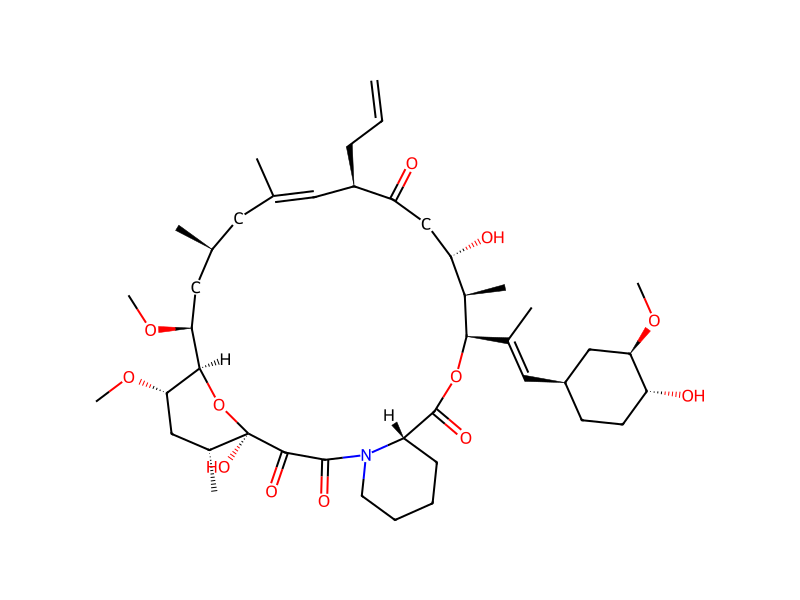
Reagents, catalysts & solvents 1

Procedure
A mixture of the 17-allyl-1,14-dihydroxy-12-{2-[4-(7-carboxy-heptanoyl-oxy)-3-methoxy-cyclohexyl]-1-methyl-vinyl}-23,25-dimethoxy-13,19,21,27-tetramethyl-11,28-dioxa-4-aza-tricyclo[22.3.1.04,9]octacos-18-ene-2,3,10,16-tetraone prepared in Production Example 2 (38.4 mg, 0.04 mmol), TOYO-Pearl resin (TSKgel AF-amino, 100 μl, free amino group (available amino group) content 0.01 mmol), EDC/HCl (9.2 mg, 0.048 mmol), 1-hydroxybenzotriazol (HOBt; 6.5 mg, 0.048 mmol) and dimethylformamide (DMF; 1 ml) was stirred at room temperature for 6 hours. The reaction end point was confirmed as the time when no residual amino group became visually observable by the ninhydrin reaction. The reaction rate at this time was calculated to be about 82%. After confirmation of completion of the reaction, the resin was washed with DMF five times. Acetic anhydride (100 μl) and DMF (400 μl) were added thereto, and this was followed by stirring at room temperature for 1 hour. Subsequently, the resin was thoroughly washed with DMF, and the TOYO-Pearl resin with FK506 obtained was used in the binding experiments described below. In the groups that interlie between the TOYO-Pearl resin and FK506, the number of HBA is 4 and the number of HBD is 3 (however, those coming from the groups introduced to FK506 in advance are not counted). The number of HBA and the number of HBD come from the commercially available linker of TOYO-Pearl resin.
Workup
- customAfter confirmation of completion of the reaction
- washthe resin was washed with DMF five times
- additionAcetic anhydride (100 μl) and DMF (400 μl) were added
- stirringby stirring at room temperature for 1 hour
- washSubsequently, the resin was thoroughly washed with DMF
Sources & evidence
- ORD record
- ord-5a89fd0907fd4e4a859d55f93a9c0ddc
- Source dataset
- uspto-grants-2011_04
- Patent number
- US07919653B2
Reaction notes
Loading…