Water → 1H-Pyrrolo[2,3-b]pyridine-5-carbonitrile
Reaction equation

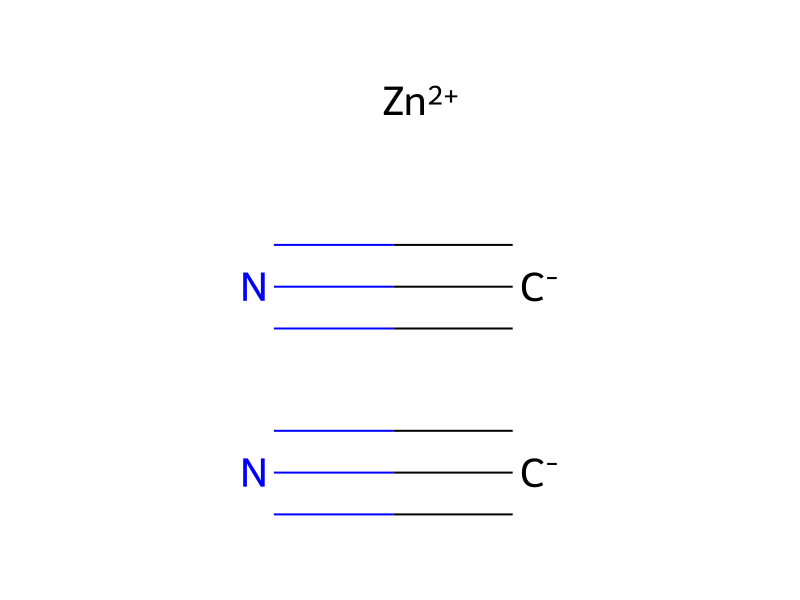
Br[C:2]1[CH:3]=[C:4]2[CH:10]=[CH:9][NH:8][C:5]2=[N:6][CH:7]=1.O.C(OCC)(=O)C.[CH3:18][N:19]1CCCC1=O>[C-]#N.[Zn+2].[C-]#N.C1C=CC([P]([Pd]([P](C2C=CC=CC=2)(C2C=CC=CC=2)C2C=CC=CC=2)([P](C2C=CC=CC=2)(C2C=CC=CC=2)C2C=CC=CC=2)[P](C2C=CC=CC=2)(C2C=CC=CC=2)C2C=CC=CC=2)(C2C=CC=CC=2)C2C=CC=CC=2)=CC=1>[NH:8]1[C:5]2=[N:6][CH:7]=[C:2]([C:18]#[N:19])[CH:3]=[C:4]2[CH:10]=[CH:9]1Participants
Reactant 4




Product 1

Reagents, catalysts & solvents 2

Conditions
- Temperature
- 110 °C
Procedure
5-Bromo-1H-pyrrolo[2,3-b]pyridine described in Preparation Example R-5 (90 mg, 0.46 mmol), zinc cyanide (80 mg, 0.69 mmol) and tetrakis(triphenylphosphine)palladium(0) (53 mg, 46 μmol) were dissolved in N-methyl-2-pyrrolidinone (2 mL), and the mixture was stirred for 4.5 hours at 110° C. under nitrogen atmosphere. The reaction mixture was cooled to room temperature, water and ethyl acetate were added to the reaction mixture, the organic layer was partitioned, the organic layer was washed with brine and dried over anhydrous magnesium sulfate. The solvent was evaporated in vacuo, the residue was purified by silica gel column chromatography (hexane:ethyl acetate=5:1), and the title compound (48 mg, 0.34 mmol, 73%) was obtained as a white solid.
Workup
- temperatureThe reaction mixture was cooled to room temperature
- customthe organic layer was partitioned
- washthe organic layer was washed with brine
- dry with materialdried over anhydrous magnesium sulfate
- customThe solvent was evaporated in vacuo
- customthe residue was purified by silica gel column chromatography (hexane:ethyl acetate=5:1)
Sources & evidence
- ORD record
- ord-d9c699f3a85f4143b2b23a29a00dfbc9
- Source dataset
- uspto-grants-2011_04
- Patent number
- US07932272B2
Reaction notes
Loading…