Diphosgene → HCID 19780807, compound
Reaction equation

[O:1]=[C:2](Cl)OC(Cl)(Cl)Cl.[NH2:9][C:10]1[CH:11]=[CH:12][C:13]([Cl:27])=[C:14]([CH:26]=1)[C:15]([O:17][C:18]([CH3:25])([CH3:24])[C:19]([O:21][CH2:22][CH3:23])=[O:20])=[O:16]>C(OCC)(=O)C>[Cl:27][C:13]1[CH:12]=[CH:11][C:10]([N:9]=[C:2]=[O:1])=[CH:26][C:14]=1[C:15]([O:17][C:18]([CH3:24])([CH3:25])[C:19]([O:21][CH2:22][CH3:23])=[O:20])=[O:16]Participants
4
Reactant 2
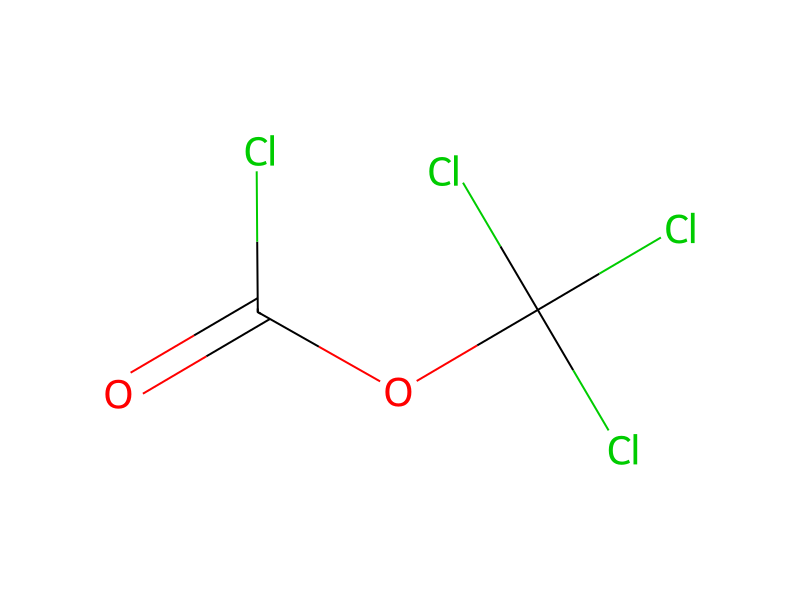

Product 1

Reagents, catalysts & solvents 1

Procedure
A solution of 40 g of diphosgene in 150 ml of ethyl acetate is heated to 65° C. while stirring. To this solution is added dropwise a solution of 40 g of ethyl 2-(5-amino-2-chloro-benzoyloxy)-2-methyl-propionate in 70 ml of ethyl acetate. After completion of the addition the reaction mixture is heated to reflux temperature for 3 hours. Thereafter, the solvent is distilled off. The residue is distilled in a bulb-tube at 200°-230° C. and 0.1 torr. In this manner there is obtained ethyl 2-(2-chloro-5-isocyanato-benzoyloxy)-2-methyl-propionate,
Workup
- additionAfter completion of the addition the reaction mixture
- temperatureis heated
- temperatureto reflux temperature for 3 hours
- distillationThereafter, the solvent is distilled off
- distillationThe residue is distilled in a bulb-tube at 200°-230° C.
Sources & evidence
- ORD record
- ord-4d2ab530a8e04d6e9cf85db421d1997e
- Source dataset
- uspto-grants-1993_02
- Patent number
- US05183492
Reaction notes
Loading…