Piperidine → HCID 4649960, compound
Reaction equation

[NH:1]1[CH2:6][CH2:5][CH2:4][CH2:3][CH2:2]1.Br[CH2:8][CH2:9][CH2:10][CH2:11][CH2:12][CH2:13][CH2:14][CH2:15][CH2:16][CH3:17].C(=O)([O-])[O-].[K+].[K+]>CC(C)=O>[CH2:8]([N:1]1[CH2:6][CH2:5][CH2:4][CH2:3][CH2:2]1)[CH2:9][CH2:10][CH2:11][CH2:12][CH2:13][CH2:14][CH2:15][CH2:16][CH3:17]Participants
Reactant 3

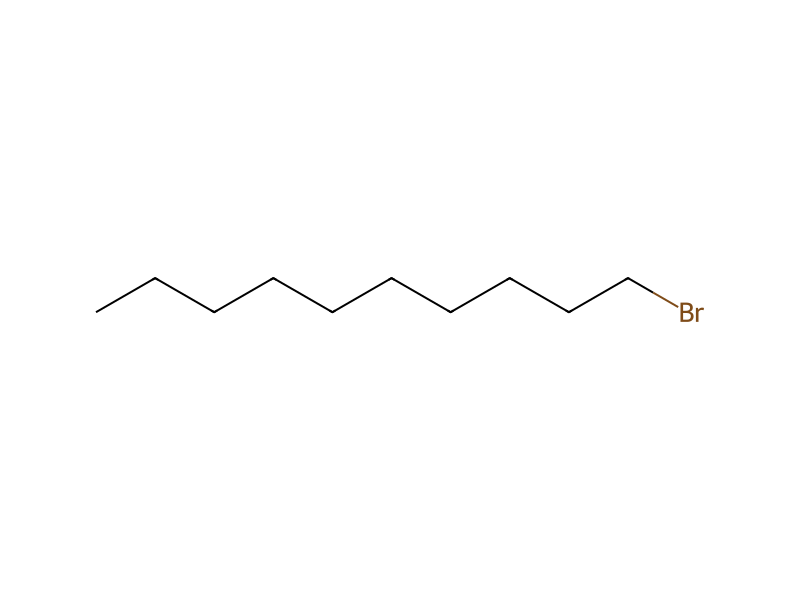

Product 1

Reagents, catalysts & solvents 1

Conditions
- Temperature
- 55 °C
Procedure
N-decylpiperidine was synthesized by reacting 45.7 g of piperidine with 118.7 g of 1-bromodecane in 237 mL of acetone in the presence of 74 g of potassium carbonate. After refluxing this reaction mixture at 55° C. for 24 hr, it was filtered and acetone was removed from the filtrate to yield 61 g of N-decylpiperidine. N-decylpiperidine (5 g) and 42 g of 1-bromo-3-chloropropane were dissolved in 50 mL of methanol and the reaction mixture was heated to 65° C. for 18 hr. After cooling to room temperature, methanol was removed under reduced pressure. The residue was poured into 2 L of tert-butylmethyl ether with stirring and then the mixture was allowed to stand for 6 hr. The white precipitate was collected by filtered and was dried at 400 C under vacuum for 24 hr yielding 68 g of (3-chloropropyl)decylpiperidinium bromide as a light yellow solid.
Workup
- customN-decylpiperidine was synthesized
- filtrationit was filtered
- customacetone was removed from the filtrate
Sources & evidence
- ORD record
- ord-0f4496b7f6254147ba6662b2306a81d3
- Source dataset
- uspto-grants-2004_04
- Patent number
- US06726905B1
Reaction notes
Loading…