Isopropanol → 4-Bromo-2-(trifluoromethoxy)benzaldehyde
Reaction equation

[Br:1][C:2]1[CH:7]=[CH:6][C:5](I)=[C:4]([O:9][C:10]([F:13])([F:12])[F:11])[CH:3]=1.C([Li])CCC.[CH:19](N1CCOCC1)=[O:20].C(O)(C)C>C1COCC1.CCCCCC.ClCCl.O>[Br:1][C:2]1[CH:7]=[CH:6][C:5]([CH:19]=[O:20])=[C:4]([O:9][C:10]([F:13])([F:12])[F:11])[CH:3]=1Participants
Reactant 4



Product 1

Reagents, catalysts & solvents 4




Conditions
- Temperature
- -78 °C
Procedure
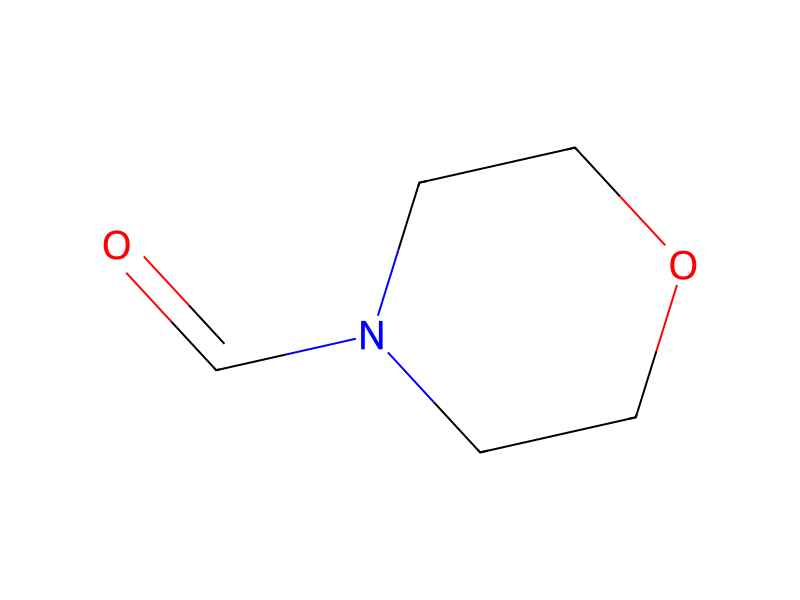
20.00 g (54.51 mmol) of 4-bromo-2-(trifluoromethoxy)iodobenzene are dissolved in 200 ml of THF and cooled to −78° C. Then 26.16 ml (65.41 mmol) of a 2.5 M solution of n-butyllithium in hexane are added dropwise. The mixture is stirred for 30 min and then 14.43 g (125.37 mmol) of N-formylmorpholine are metered in. After complete conversion is detected (TLC check), solvolysis is carried out at −78° C. with isopropanol. Warming to room temperature is followed by addition of water and extraction twice with dichloromethane. The combined organic phases are washed with saturated sodium chloride solution and dried with sodium sulfate, and the solvent is distilled out under reduced pressure. The residue is purified by column chromatography (silica gel, mobile phase: cyclohexane/ethyl acetate 5:1). 11.43 g (78% of theory) of the title compound are obtained.
Workup
- temperatureWarming to room temperature
- washThe combined organic phases are washed with saturated sodium chloride solution
- dry with materialdried with sodium sulfate
- distillationthe solvent is distilled out under reduced pressure
- customThe residue is purified by column chromatography (silica gel, mobile phase: cyclohexane/ethyl acetate 5:1)
Sources & evidence
- ORD record
- ord-57bab9a1a28240a58c40263cc6c2637e
- Source dataset
- uspto-grants-2013_05
- Patent number
- US08436180B2
Reaction notes
Loading…