4-Methylmorpholine → HCID 49830366, compound
Reaction equation

[NH2:1][C:2]1[C:7]2[C:8]([C:11]3[CH:16]=[CH:15][C:14]([NH:17][C:18]([NH:20][C:21]4[CH:26]=[CH:25][CH:24]=[C:23]([F:27])[CH:22]=4)=[O:19])=[CH:13][CH:12]=3)=[CH:9][S:10][C:6]=2[C:5]([C:28](O)=[O:29])=[CH:4][N:3]=1.[CH2:31]([N:33]([CH2:38][CH3:39])[CH2:34][CH2:35][CH2:36][NH2:37])[CH3:32].Cl.C(N=C=NCCCN(C)C)C.O.ON1C2C=CC=CC=2N=N1.CN1CCOCC1>CO.O1CCCC1>[NH2:1][C:2]1[C:7]2[C:8]([C:11]3[CH:12]=[CH:13][C:14]([NH:17][C:18](=[O:19])[NH:20][C:21]4[CH:26]=[CH:25][CH:24]=[C:23]([F:27])[CH:22]=4)=[CH:15][CH:16]=3)=[CH:9][S:10][C:6]=2[C:5]([C:28]([NH:37][CH2:36][CH2:35][CH2:34][N:33]([CH2:38][CH3:39])[CH2:31][CH3:32])=[O:29])=[CH:4][N:3]=1Participants
Reactant 5




Product 1

Reagents, catalysts & solvents 2


Procedure
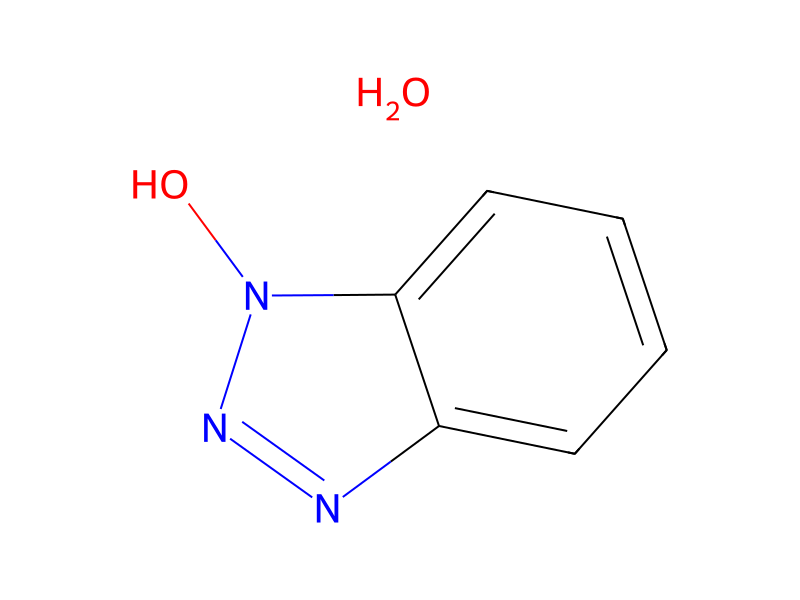
As shown in the Scheme above, 1-(4-(4-aminothieno[3,2-c]pyridin-3-yl)phenyl)-3-(3-fluorophenyl)urea ((1), prepared as described in WO2005/10009), in a mixture of pyridine and tetrahydrofuran can be treated with iodine at room temperature, followed by treatment with potassium hydroxide at elevated temperature to provide 1-(4-(4-amino-7-iodothieno[3,2-c]pyridin-3-yl)phenyl)-3-(3-fluorophenyl)urea (2). Methyl 4-amino-3-(4-(3-(3-fluorophenyl)ureido)phenyl)thieno[3,2-c]pyridine-7-carboxylate (3) can be prepared by reacting 1-(4-(4-amino-7-iodothieno[3,2-c]pyridin-3-yl)phenyl)-3-(3-fluorophenyl)urea (2) with carbon monoxide gas in the presence of a catalyst such as but not limited to [1,1′-bis(diphenylphosphino)ferrocene]dichloropalladium(II) dichloromethane, and a base such as but not limited to triethylamine. The reaction is typically performed under pressure and at an elevated temperature. Methyl 4-amino-3-(4-(3-(3-fluorophenyl)ureido)phenyl)thieno[3,2-c]pyridine-7-carboxylate (3) can be reacted with aqueous lithium hydroxide to provide 4-amino-3-(4-(3-(3-fluorophenyl)ureido)phenyl)thieno[3,2-c]pyridine-7-carboxylic acid (4). The reaction is typically performed at elevated temperature in a solvent such as but not limited to tetrahydrofuran and methanol. 4-Amino-3-(4-(3-(3-fluorophenyl)ureido)phenyl)thieno[3,2-c]pyridine-7-carboxylic acid (4) can be reacted with N,N-diethyl-1,3-propanediamine in the presence of a coupling agent such as but not limited to 1-ethyl-3-[3-(dimethylamino)propyl]-carbodiimide hydrochloride, an auxiliary coupling reagent such as but not limited to 1-hydroxybenzotriazole hydrate, and a base such as but not limited to N-methylmorpholine to provide 4-amino-N-[3-(diethylamino)propyl]-3-(4-{[(3-fluorophenyl)carbamoyl]amino}phenyl)thieno[3,2-c]pyridine-7-carboxamide (5). The reaction is typically performed in a solvent such as but limited to N,N-dimethylformamide.
Sources & evidence
- ORD record
- ord-d6ea21f395f341079f8d4f844573d34f
- Source dataset
- uspto-grants-2013_05
- Patent number
- US08436179B2
Reaction notes
Loading…