Hydrazine hydrate (1:1) → HCID 178469919, compound
Reaction equation

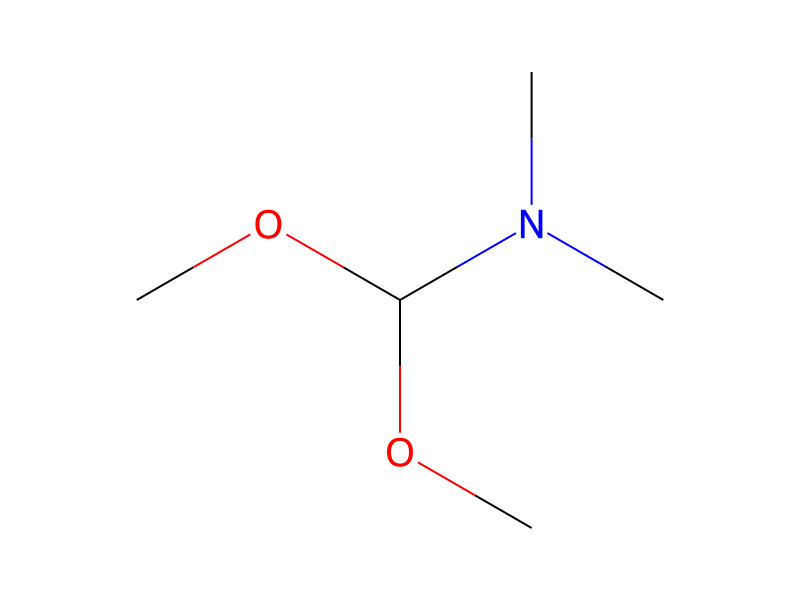
O=[C:2]([CH2:9][CH2:10][C:11]1[CH:16]=[CH:15][CH:14]=[CH:13][CH:12]=1)[CH2:3][C:4]([O:6][CH2:7][CH3:8])=[O:5].COC(OC)[N:20]([CH3:22])C.O.[NH2:26]N>>[C:11]1([CH2:10][CH2:9][C:2]2[C:3]([C:4]([O:6][CH2:7][CH3:8])=[O:5])=[CH:22][NH:20][N:26]=2)[CH:16]=[CH:15][CH:14]=[CH:13][CH:12]=1Participants
4



Procedure
Using ethyl 3-oxo-5-phenylpentanoate (5.8 g), dimethylformamide dimethylacetal (3.6 mL) and hydrazine monohydrate (1.3 mL) and in the same manner as in Example 1(3), a crude product of ethyl 3-(2-phenylethyl)-1H-pyrazole-4-carboxylate was obtained. This was dissolved in dimethylformamide (30 ml), potassium carbonate (5.5 g) and 2-chloro-5-trifluoromethylpyridine (4.8 g) were added, and the mixture was stirred at 100° C. overnight. In the same manner as in Example 1(4), the title object compound (5.2 g, 50%) was obtained as a white solid.
Sources & evidence
- ORD record
- ord-05aa2d00ce994d9f93f40987f30f3e93
- Source dataset
- uspto-grants-2013_05
- Patent number
- US08436043B2
Reaction notes
Loading…