Propargyl alcohol → 3-(2-Chloro-4-morpholin-4-yl-thieno[3,2-d]pyrimidin-6-yl)-prop-2-yn-1-ol
Reaction equation

[Cl:1][C:2]1[N:3]=[C:4]([N:12]2[CH2:17][CH2:16][O:15][CH2:14][CH2:13]2)[C:5]2[S:10][C:9](I)=[CH:8][C:6]=2[N:7]=1.[CH2:18]([OH:21])[C:19]#[CH:20].C(N(CC)CC)C>[Cu](I)I.Cl[Pd](Cl)([P](C1C=CC=CC=1)(C1C=CC=CC=1)C1C=CC=CC=1)[P](C1C=CC=CC=1)(C1C=CC=CC=1)C1C=CC=CC=1.O1CCCC1>[Cl:1][C:2]1[N:3]=[C:4]([N:12]2[CH2:17][CH2:16][O:15][CH2:14][CH2:13]2)[C:5]2[S:10][C:9]([C:20]#[C:19][CH2:18][OH:21])=[CH:8][C:6]=2[N:7]=1Participants
7
Reactant 3



Product 1

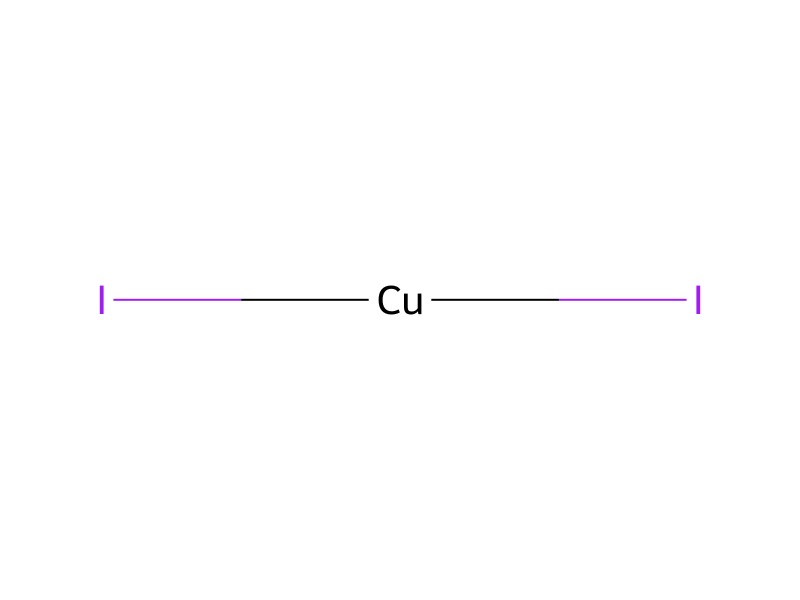
Reagents, catalysts & solvents 3


Procedure
A mixture of 2-chloro-6-iodo-4-morpholin-4-yl-thieno[3,2-d]pyrimidine 19, prepared according to Example 12, (1.57 g), propargyl alcohol (288 μL), copper iodide (39 mg), bis(triphenylphosphine)palladium(II) chloride (146 mg), triethylamine (25 ml), and tetrahydrofuran (30 ml) were stirred under nitrogen for 10 days. The reaction mixture was then partitioned between chloroform and brine, the combined organics were then dried (MgSO4). The solvents were removed in vacuo. The crude product was then purified using flash chromatography to yield 3-(2-chloro-4-morpholin-4-yl-thieno[3,2-d]pyrimidin-6-yl)-prop-2-yn-1-ol (1.2 g).
Workup
- customprepared
- customThe reaction mixture was then partitioned between chloroform and brine
- dry with materialthe combined organics were then dried (MgSO4)
- customThe solvents were removed in vacuo
- customThe crude product was then purified
Sources & evidence
- ORD record
- ord-adf33fcb00df4b3ab863397f80cac4c3
- Source dataset
- uspto-grants-2013_05
- Patent number
- US08450315B2
Reaction notes
Loading…