Sodium Carbonate → HCID 57803041, compound
Reaction equation

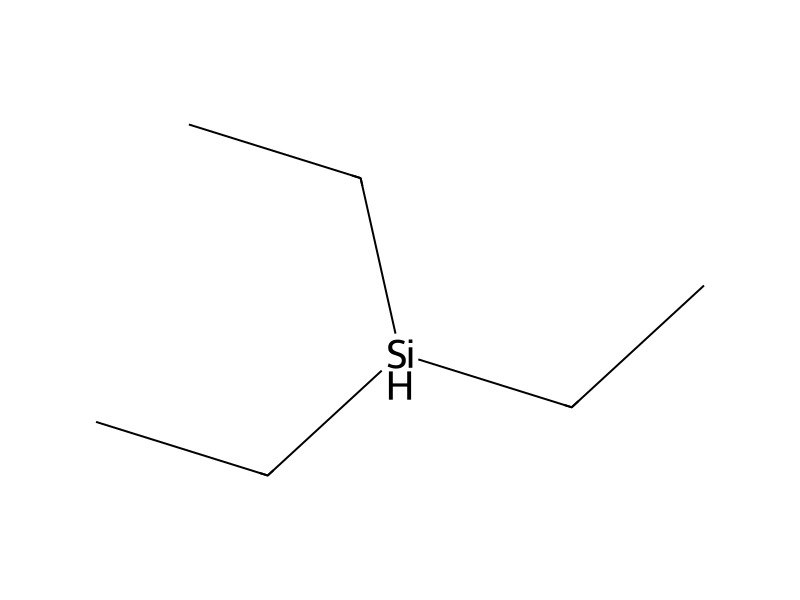
[Cl:1][C:2]1[CH:10]=[C:9]2[C:5]([C:6]([C:13]3[CH:18]=[CH:17][C:16]([Cl:19])=[CH:15][CH:14]=3)(O)[C:7](=[O:11])[NH:8]2)=[CH:4][CH:3]=1.C([SiH](CC)CC)C.C(=O)([O-])[O-].[Na+].[Na+]>FC(F)(F)C(O)=O.C(OCC)(=O)C>[Cl:1][C:2]1[CH:10]=[C:9]2[C:5]([CH:6]([C:13]3[CH:18]=[CH:17][C:16]([Cl:19])=[CH:15][CH:14]=3)[C:7](=[O:11])[NH:8]2)=[CH:4][CH:3]=1Participants
Reactant 3


Product 1

Reagents, catalysts & solvents 2


Conditions
- Temperature
- 90 °C
Procedure
Crude rac-6-chloro-3-(4-chloro-phenyl)-3-hydroxy-1,3-dihydro-indol-2-one (from Example 7a supra) was suspended in a mixture of triethylsilane (5 mL, 31.3 mmol) (Aldrich) and trifluoroacetic acid (12.5 mL) and heated in an 90° C. oil bath for 17 hours. After cooling to room temperature, mixture was diluted with ethyl acetate (100 mL) and treated with solid sodium carbonate (10.5 g). After stirring for 30 minutes, mixture was extracted with water (2×100 mL) and brine (100 mL). Aqueous layers were back washed with ethyl acetate (100 mL). Organic layers were combined, dried (MgSO4), filtered and concentrated. Residue was recrystallized from ethyl acetate-hexanes to give rac-6-chloro-3-(4-chloro-phenyl)-1,3-dihydro-indol-2-one as white needles. (Yield 2.20 g, 79.1% over two steps).
Workup
- temperatureAfter cooling to room temperature
- extractionmixture was extracted with water (2×100 mL) and brine (100 mL)
- washAqueous layers were back washed with ethyl acetate (100 mL)
- dry with materialdried (MgSO4)
- filtrationfiltered
- concentrationconcentrated
- customResidue was recrystallized from ethyl acetate-hexanes
Sources & evidence
- ORD record
- ord-a46fd013fc114b199cba2059457237ea
- Source dataset
- uspto-grants-2009_08
- Patent number
- US07576082B2
Reaction notes
Loading…