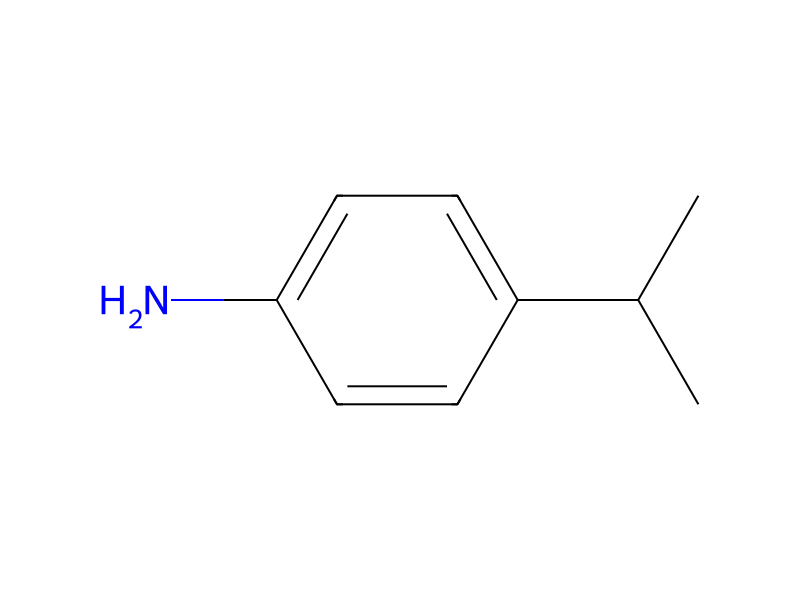
4-Isopropylaniline → HCID 773658, compound
Reaction equation

[Cl:1][C:2]1[N:10]=[CH:9][CH:8]=[CH:7][C:3]=1[C:4]([OH:6])=O.[CH:11]([C:14]1[CH:20]=[CH:19][C:17]([NH2:18])=[CH:16][CH:15]=1)([CH3:13])[CH3:12].CCN(C(C)C)C(C)C.C1C=CC2N(O)N=NC=2C=1>C(Cl)Cl.C(Cl)CCl>[Cl:1][C:2]1[C:3]([C:4]([NH:18][C:17]2[CH:19]=[CH:20][C:14]([CH:11]([CH3:13])[CH3:12])=[CH:15][CH:16]=2)=[O:6])=[CH:7][CH:8]=[CH:9][N:10]=1Participants
7






Procedure
To a mixture of 2-chloronicotinic acid (6.3 g) and 4-isopropylaniline (5.26 ml) and DIEA (10 ml) in CH2Cl2 (200 ml) was added EDC (10 g) and HOBt (5.4 g). The reaction was stirred at RT overnight and washed with 2N NaOH (100 ml), H2O (250 ml) and brine (100 ml). The organic layer was dried over Na2SO4 and evaporated to give (2-chloro(3-pyridyl))-N-(4-isopropylphenyl)carboxamide.
Workup
- washwashed with 2N NaOH (100 ml), H2O (250 ml) and brine (100 ml)
- dry with materialThe organic layer was dried over Na2SO4
- customevaporated
Sources & evidence
- ORD record
- ord-d9f2a12476d64f80b096e99c5c0d7411
- Source dataset
- uspto-grants-2009_04
- Patent number
- US07514564B2
Reaction notes
Loading…