Trifluoroacetic acid → Ethyl[(4,5-dichloro-2-nitrophenyl)oxy]acetate
Reaction equation

[Cl:1][C:2]1[CH:7]=[C:6]([N+:8]([O-:10])=[O:9])[C:5](F)=[CH:4][C:3]=1[Cl:12].[C:13]([O:17][CH2:18][CH3:19])(=[O:16])[CH2:14][OH:15].[F-].[K+].FC(F)(F)C(O)=O>O.CC#N.O.O1CCOCC1>[Cl:1][C:2]1[C:3]([Cl:12])=[CH:4][C:5]([O:15][CH2:14][C:13]([O:17][CH2:18][CH3:19])=[O:16])=[C:6]([N+:8]([O-:10])=[O:9])[CH:7]=1Participants
Reactant 4




Product 1

Reagents, catalysts & solvents 3


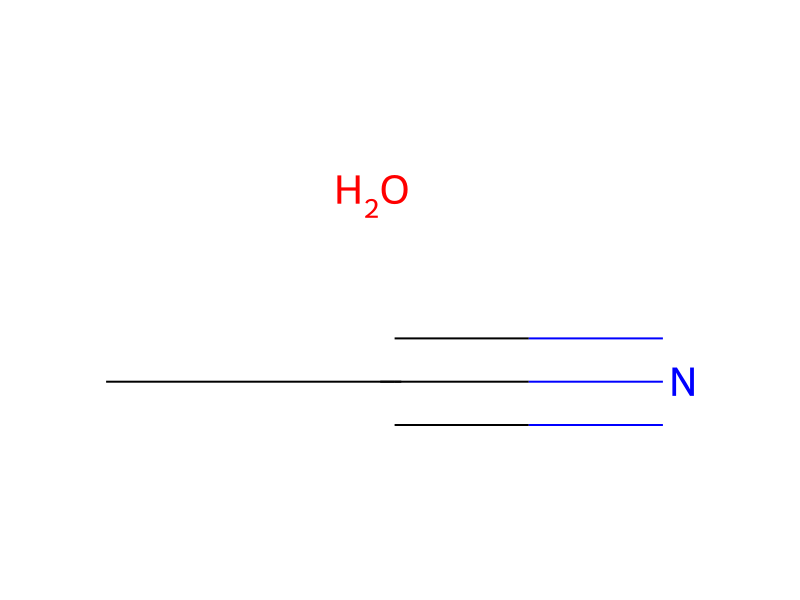
Conditions
- Temperature
- 100 °C
Procedure
1,2-Dichloro-4-fluoro-5-nitrobenzene (50 g, 0.238 mol), ethyl glycolate (90.1 mL, 0.952 mol), and potassium fluoride (76.1 g, 1.31 mol) were added to a 1 L round-bottom flask containing 200 mL of anhydrous dioxane. The mixture was magnetically stirred and heated to 100° C. in an oil bath. After two hours, HPLC (Eclipse XDB-C18, 4.6×250 mm, 5 micron, 1-99% CH3CN/H2O with 0.1% trifluoroacetic acid) showed that all of the starting material (Rt=7.5 min) was gone and that one major peak (Rt=7.8 min) had formed. The reaction mixture was poured into 4 L of water, which resulted in precipitation of the product. The solid was filtered off and dried under vacuum to give ethyl [(4,5-dichloro-2-nitrophenyl)oxy]acetate (67.4 g, 0.229 mol, 96%) as a tan solid. MS (ES) m/e 294 [M+H]+.
Workup
- customhad formed
- customresulted in precipitation of the product
- filtrationThe solid was filtered off
- customdried under vacuum
Sources & evidence
- ORD record
- ord-2ec62aac7a3f41e9971291d713488cd0
- Source dataset
- uspto-grants-2008_10
- Patent number
- US07432258B2
Reaction notes
Loading…