Triphenylphosphine → HCID 86606906, compound
Reaction equation

BrBr.[N:3]1([NH:9][C:10](=[O:19])[C:11]2[CH:16]=[CH:15][C:14]([OH:17])=[C:13](Br)[CH:12]=2)[CH2:8][CH2:7][O:6][CH2:5][CH2:4]1.C1(P(C2C=CC=CC=2)C2C=CC=CC=2)C=CC=CC=1.C[C:40]([N:42](C)C)=O>[Zn].[C-]#N.[Zn+2].[C-]#N.[C].[Pd]>[N:3]1([NH:9][C:10](=[O:19])[C:11]2[CH:16]=[CH:15][C:14]([OH:17])=[C:13]([C:40]#[N:42])[CH:12]=2)[CH2:8][CH2:7][O:6][CH2:5][CH2:4]1Participants
Reactant 4




Product 1

Reagents, catalysts & solvents 3
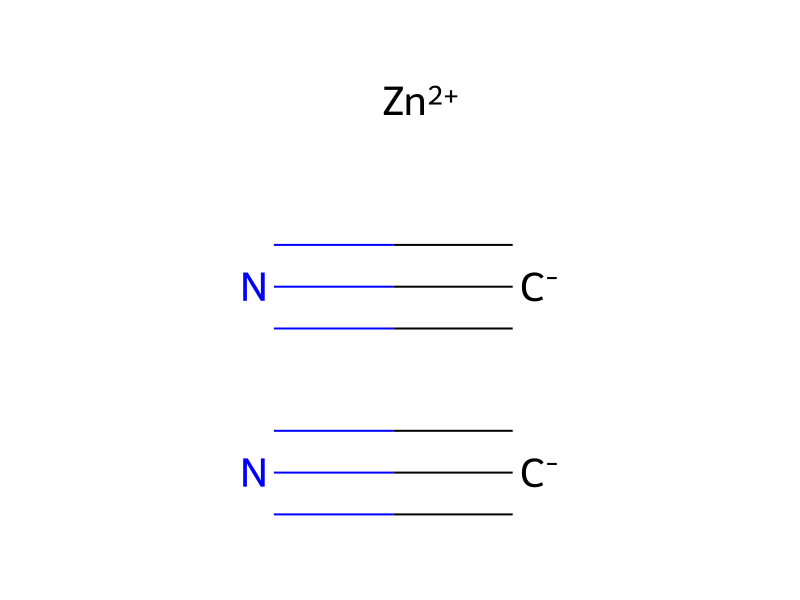


Conditions
- Temperature
- 120 °C
Procedure
Zinc powder (78 mg, 1.2 mmol) is suspended into dimethylacetamide (5.7 mL), and thereto is added bromine (20 μl, 0.4 mmol) at room temperature under nitrogen. The mixture is stirred until the color of bromine disappears (15-25 ), and thereto are added 3-bromo-4-hydroxybenzoic acid (4-morpholinyl)amide (572 mg, 2 mmol), zinc cyanide (118 mg, 1.0 mmol), 5% palladium-carbon (170 mg, 0.08 mmol) and triphenylphosphine (84 mg, 0.32 mmol). The vacuum deaeration and the nitrogen introduction are repeated five times. The mixture is heated at 120° C. (internal temperature) for one hour, when the inversion rate is confirmed to be 99% by HPLC. After cooling to 25° C., the insoluble materials are separated by filtration to give 3-cyano-4-hydroxybenzoic acid (4-morpholinyl)amide. The yield is 453 mg (97.6%) when determined by HPLC.
Workup
- temperatureAfter cooling to 25° C.
- customthe insoluble materials are separated by filtration
Sources & evidence
- ORD record
- ord-455e868709f8450e84a9943d03daf273
- Source dataset
- uspto-grants-2008_10
- Patent number
- US07439368B2
Reaction notes
Loading…