2,6-Dichloropyridine → (2,6-Dichloropyridin-4-yl)boronic acid
Reaction equation

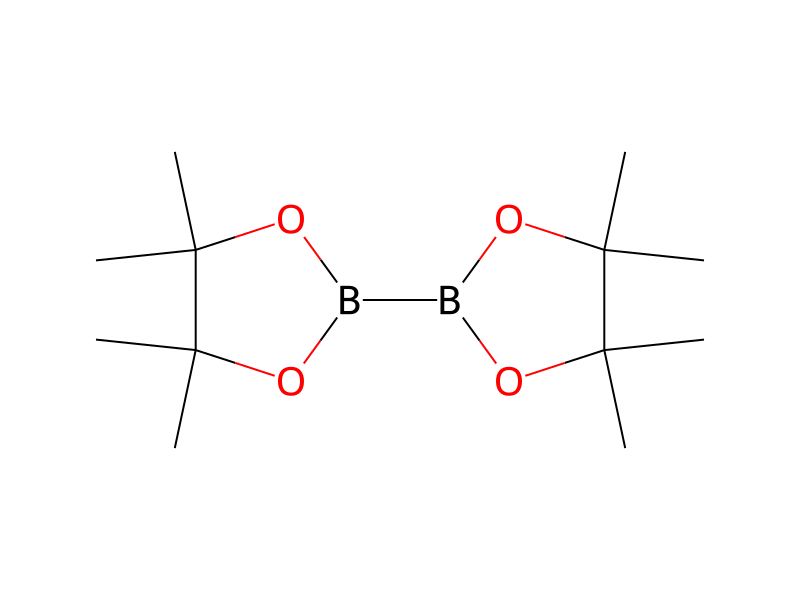
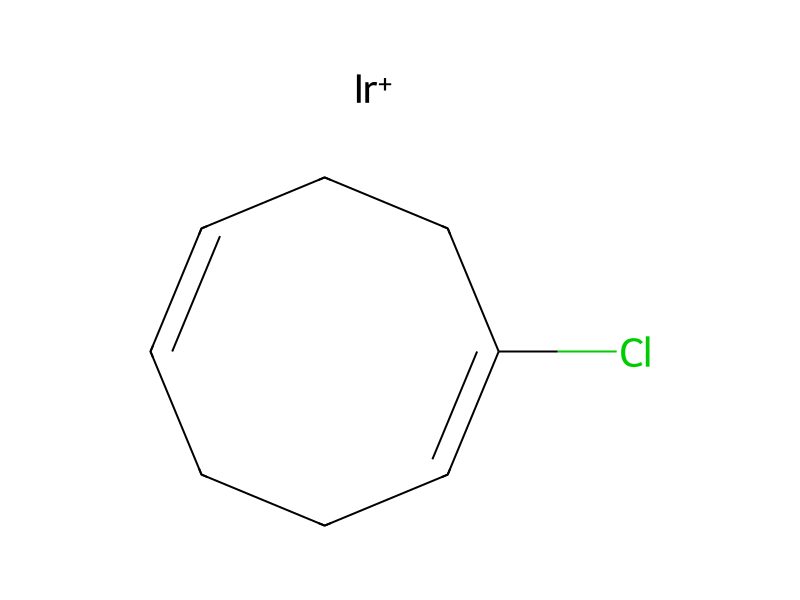
[Cl:1][C:2]1[CH:7]=[CH:6][CH:5]=[C:4]([Cl:8])[N:3]=1.[B:9]1(B2OC(C)(C)C(C)(C)O2)[O:13]C(C)(C)C(C)(C)[O:10]1>[Ir+].ClC1CCC=CCCC=1.N1C2C(=CC=C3C=2N=CC=C3)C=CC=1.ClCCCl>[Cl:1][C:2]1[CH:7]=[C:6]([B:9]([OH:13])[OH:10])[CH:5]=[C:4]([Cl:8])[N:3]=1Participants




Conditions
- Temperature
- 100 °C
Procedure
To a mixture of 2,6-dichloropyridine (3.28 g, 22.2 mmol) and bis(pinacolato)diboron (6.2 g, 24.4 mmol) was added 1,10-phenanthroline (0.24 g, 1.3 mmol) and chloro-1,5-cyclooctadiene iridium (I) dimer (0.44 g, 0.66 mmol) under nitrogen followed by anhydrous 1,2-dichloroethane. Nitrogen was bubbled through the mixture for 5 minutes and the reaction was then heated with stirring at 100° C. for 15 hours under an atmosphere of nitrogen. The mixture was allowed to cool to room temperature, poured onto diethylether/4N sodium hydroxide (50 ml 200 ml) and the phases separated. The aqueous phase was acidified with 6N hydrochloric acid and the resulting solid was filtered, washed with water and dried on the sinter to yield the pinacol ester of 2,6-dichloropyridin-4-ylboronic acid (3.5 g, 58%) as a grey solid.
Workup
- customNitrogen was bubbled through the mixture for 5 minutes
- temperaturethe reaction was then heated
- temperatureto cool to room temperature
- additionpoured onto diethylether/4N sodium hydroxide (50 ml 200 ml)
- customthe phases separated
- filtrationthe resulting solid was filtered
- washwashed with water
- customdried on the sinter
Sources & evidence
- ORD record
- ord-c03f36c985a44c7eb62a36691693bf56
- Source dataset
- uspto-grants-2008_10
- Patent number
- US07442701B2
Reaction notes
Loading…