Hydrochloric Acid → benzyl N-(2-fluoro-4-chloro-5-methoxycarbonyloxyphenyl)carbamate
Reaction equation

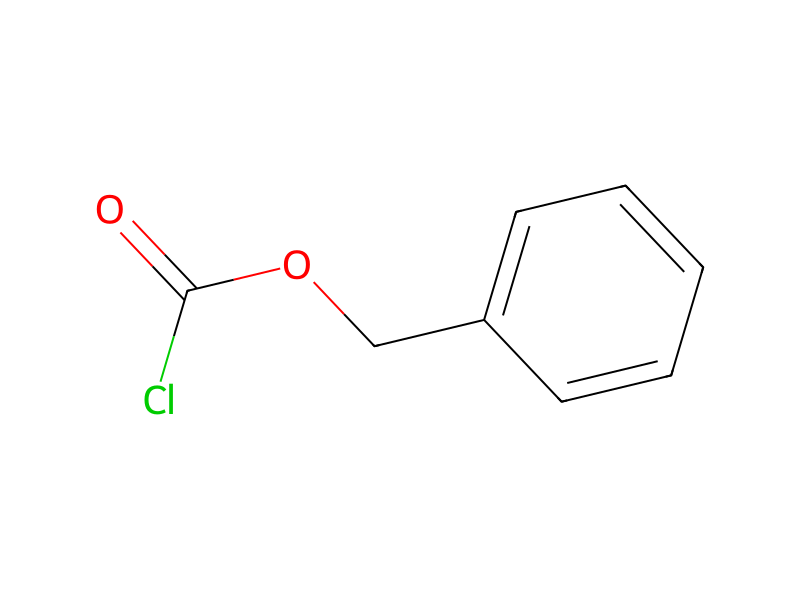
[F:1][C:2]1[CH:8]=[C:7]([Cl:9])[C:6]([O:10][C:11]([O:13][CH3:14])=[O:12])=[CH:5][C:3]=1[NH2:4].C(=O)([O-])[O-].[K+].[K+].Cl[C:22]([O:24][CH2:25][C:26]1[CH:31]=[CH:30][CH:29]=[CH:28][CH:27]=1)=[O:23].Cl>CC(C)=O>[F:1][C:2]1[CH:8]=[C:7]([Cl:9])[C:6]([O:10][C:11]([O:13][CH3:14])=[O:12])=[CH:5][C:3]=1[NH:4][C:22](=[O:23])[O:24][CH2:25][C:26]1[CH:31]=[CH:30][CH:29]=[CH:28][CH:27]=1Participants
6
Reactant 4



Product 1

Reagents, catalysts & solvents 1

Procedure
2-Fluoro-4-chloro-5-methoxycarbonyloxyaniline (2.00 g, 6.86 mmol), potassium carbonate (1.42 g, 10.3 mmol), benzyl chloroformate (1.17 g, 6.86 mmol) and acetone (20 ml) as a solvent were charged into a 100 cc two-necked flask, and heated for 2 hours while refluxing. After completion of the reaction, the mixture was added to 1H hydrochloric acid (50 ml), and extracted with ethyl acetate (50 ml×3). After drying, the organic layer was concentrated to obtain substantially pure benzyl N-(2-fluoro-4-chloro-5-methoxycarbonyloxyphenyl)carbamate as a solid (2.21 g, 91.1% yield).
Workup
- temperatureheated for 2 hours
- temperaturewhile refluxing
- customAfter completion of the reaction
- extractionextracted with ethyl acetate (50 ml×3)
- customAfter drying
- concentrationthe organic layer was concentrated
Sources & evidence
- ORD record
- ord-24393e1d720f4d3f907623e90df8f15c
- Source dataset
- uspto-grants-1995_06
- Patent number
- US05424277
Reaction notes
Loading…