1,4-Dibromobutane → Ethyl 1-(3-bromophenyl)cyclopentanecarboxylate
Reaction equation

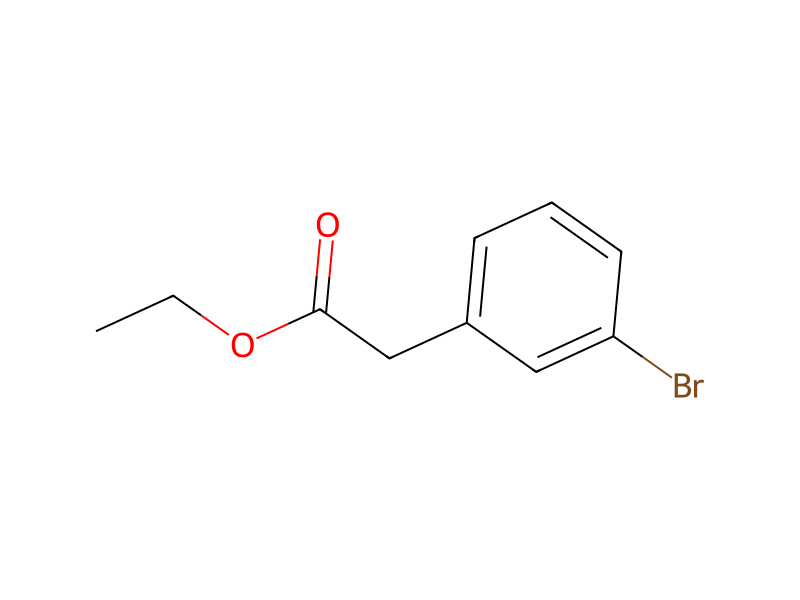
[H-].[Na+].[CH2:3]([O:5][C:6](=[O:15])[CH2:7][C:8]1[CH:13]=[CH:12][CH:11]=[C:10]([Br:14])[CH:9]=1)[CH3:4].C1OCCOCCOCCOCCOCCOC1.Br[CH2:35][CH2:36][CH2:37][CH2:38]Br>CN(C=O)C.O>[CH2:3]([O:5][C:6]([C:7]1([C:8]2[CH:13]=[CH:12][CH:11]=[C:10]([Br:14])[CH:9]=2)[CH2:38][CH2:37][CH2:36][CH2:35]1)=[O:15])[CH3:4]Participants
7






Procedure
Sodium hydride (60% in oil, 1.07 g, 26.8 mmol) is added to a solution of (3-bromo-phenyl)-acetic acid ethyl ester [2.59 g, 10.7 mmol] and 18-crown-6 (catalytic amount) in N,N′-dimethylformamide (50 mL). The mixture is stirred for 25 minutes and 1,4-dibromobutane (1.41 mL, 11.8 mmol) is added dropwise via syringe. The mixture is stirred for 18 hours at ambient temperature, diluted with water (100 mL) and extracted thrice with EtOAc (60 mL). The organic extracts are combined and dried over magnesium sulfate, filtered and concentrated to afford 1-(3-bromo-phenyl)-cyclopentanecarboxylic acid ethyl ester [2.9 g, 91%] as an oil, which is used without further purification.
Workup
- stirringThe mixture is stirred for 18 hours at ambient temperature
- extractionextracted thrice with EtOAc (60 mL)
- dry with materialdried over magnesium sulfate
- filtrationfiltered
- concentrationconcentrated
Sources & evidence
- ORD record
- ord-a00b33af7e924d9bbc59240a8dc8f0f3
- Source dataset
- uspto-grants-2012_06
- Patent number
- US08193183B2
Reaction notes
Loading…