4-Aminophenol → Urea, N'-(4-hydroxyphenyl)-N,N-dimethyl-
Reaction equation

[CH:1]1[C:6]([NH2:7])=[CH:5][CH:4]=[C:3]([OH:8])[CH:2]=1.[CH3:9][N:10]([CH3:14])[C:11](Cl)=[O:12].C(=O)([O-])O.[Na+]>CC(C)=O>[OH:8][C:3]1[CH:4]=[CH:5][C:6]([NH:7][C:11]([N:10]([CH3:14])[CH3:9])=[O:12])=[CH:1][CH:2]=1Participants
5
Reactant 3

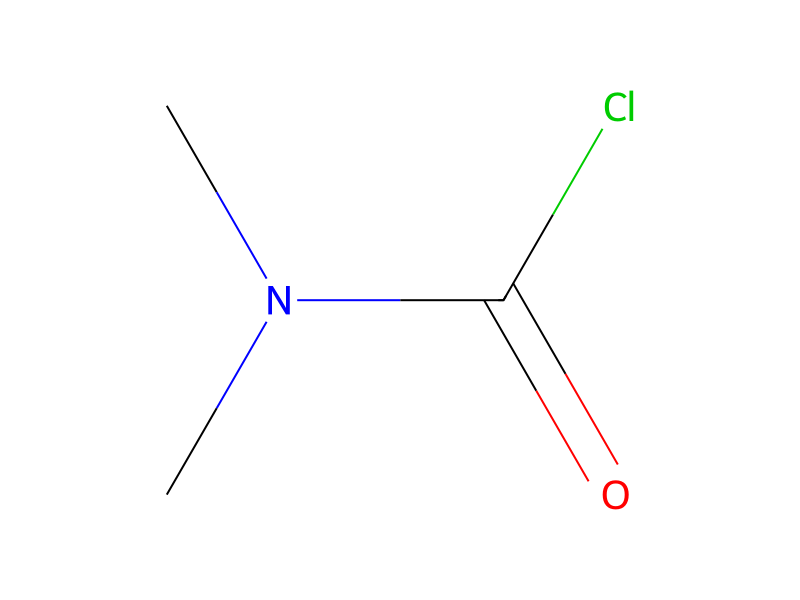

Product 1

Reagents, catalysts & solvents 1

Procedure
This is made as described in British Patent Spectification No. 999 862. Thus, p-aminophenol (30 g), dimethylcarbamoyl chloride (30 g), sodium hydrogen carbonate (28 g), and dry acetone (600 ml) are stirred and heated under reflux for 3 hours. The mixture is filtered hot and the filtrate is allowed to cool overnight. The crystals which form are filtered off to give the desired urea, m.pt. 205° C. (decomp.). as measured on a Kofler bench (British Patent Specification No. 999 862 reports m.pt. 205°-206° C.).
Workup
- temperatureheated
- temperatureunder reflux for 3 hours
- filtrationThe mixture is filtered hot
- temperatureto cool overnight
- filtrationThe crystals which form are filtered off
Sources & evidence
- ORD record
- ord-bdc06951d16144a38a4d14da7b3546ca
- Source dataset
- uspto-grants-1985_03
- Patent number
- US04507445
Reaction notes
Loading…