Potassium Carbonate → 3-[(2-Methylquinolin-4-yl)amino]propane-1,2-diol
Reaction equation

Cl[C:2]1[C:11]2[C:6](=[CH:7][CH:8]=[CH:9][CH:10]=2)[N:5]=[C:4]([CH3:12])[CH:3]=1.[NH2:13][CH2:14][CH:15]([OH:18])[CH2:16][OH:17].C(=O)([O-])[O-].[K+].[K+]>O>[OH:18][CH:15]([CH2:16][OH:17])[CH2:14][NH:13][C:2]1[C:11]2[C:6](=[CH:7][CH:8]=[CH:9][CH:10]=2)[N:5]=[C:4]([CH3:12])[CH:3]=1Participants
5
Reactant 3

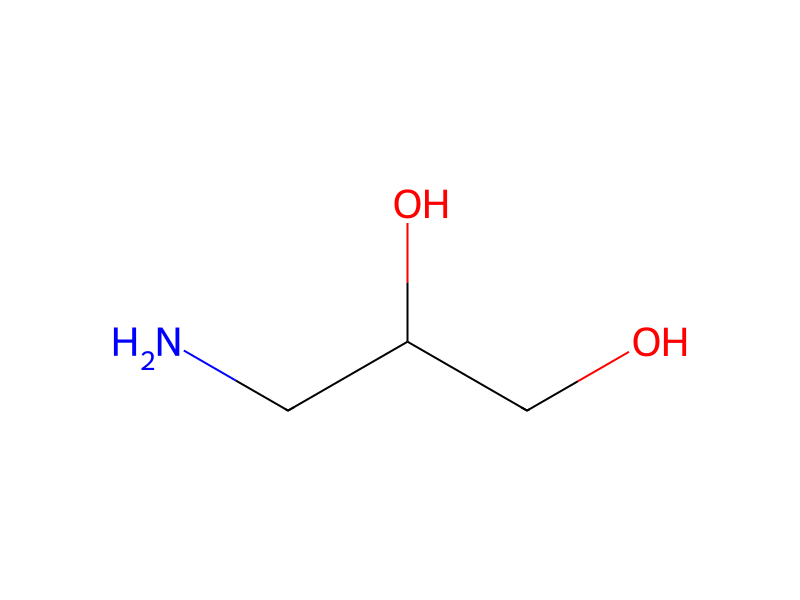

Product 1

Reagents, catalysts & solvents 1

Conditions
- Temperature
- 160 °C
Procedure
A mixture of 4-chloro-2-methylquinoline (50 g) and 3-amino-1,2-propandiol (51 g) was heated at 160° C. for 1 hour. The mixture while still hot was poured into 700 ml of water. The mixture was saturated with potassium carbonate and cooled in an ice bath, whereupon the product crystallized. It was filtered and recrystallized from ethanol. The yield was 55 g, mp 167°-168° C.
Workup
- temperaturecooled in an ice bath, whereupon the product
- customcrystallized
- filtrationIt was filtered
- customrecrystallized from ethanol
Sources & evidence
- ORD record
- ord-d7144421a1174c65aa74084ca306f64c
- Source dataset
- uspto-grants-1990_07
- Patent number
- US04942168
Reaction notes
Loading…