Triisopropylsilyl chloride → 5-Bromo-1-(triisopropylsilyl)-1H-pyrrolo[2,3-b]pyridine
Reaction equation

[Br:1][C:2]1[CH:3]=[C:4]2[CH:10]=[CH:9][NH:8][C:5]2=[N:6][CH:7]=1.C[Si](C)(C)[N-][Si](C)(C)C.[Li+].[CH3:21][CH:22]([Si:24](Cl)([CH:28]([CH3:30])[CH3:29])[CH:25]([CH3:27])[CH3:26])[CH3:23]>O1CCCC1.CCOCC>[Br:1][C:2]1[CH:3]=[C:4]2[CH:10]=[CH:9][N:8]([Si:24]([CH:28]([CH3:30])[CH3:29])([CH:25]([CH3:27])[CH3:26])[CH:22]([CH3:23])[CH3:21])[C:5]2=[N:6][CH:7]=1Participants
6
Reactant 3

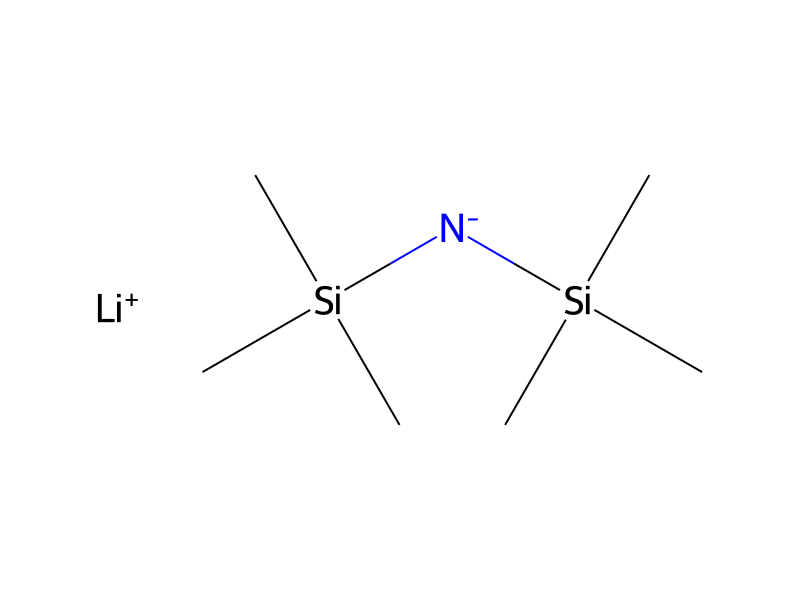

Product 1

Reagents, catalysts & solvents 2


Procedure
To a mixture of 5-bromo-1H-pyrrolo[2,3-b]pyridine (15.4 g) in tetrahydrofuran (250 mL) was added 1M lithium hexamethyldisilazide in tetrahydrofuran (86 mL), and after 10 minutes, TIPS-Cl (triisopropylchlorosilane) (18.2 mL) was added. The mixture was stirred at room temperature for 24 hours. The reaction was diluted with ether, and the resulting solution was washed twice with water. The extracts were dried (Na2SO4), filtered, and concentrated. The crude product was chromatographed on silica gel with 10% ethyl acetate/hexanes.
Workup
- washthe resulting solution was washed twice with water
- dry with materialThe extracts were dried (Na2SO4)
- filtrationfiltered
- concentrationconcentrated
- customThe crude product was chromatographed on silica gel with 10% ethyl acetate/hexanes
Sources & evidence
- ORD record
- ord-ae08efef325f4683aa2e0a2ea086880f
- Source dataset
- uspto-grants-2015_06
- Patent number
- US09045475B2
Reaction notes
Loading…